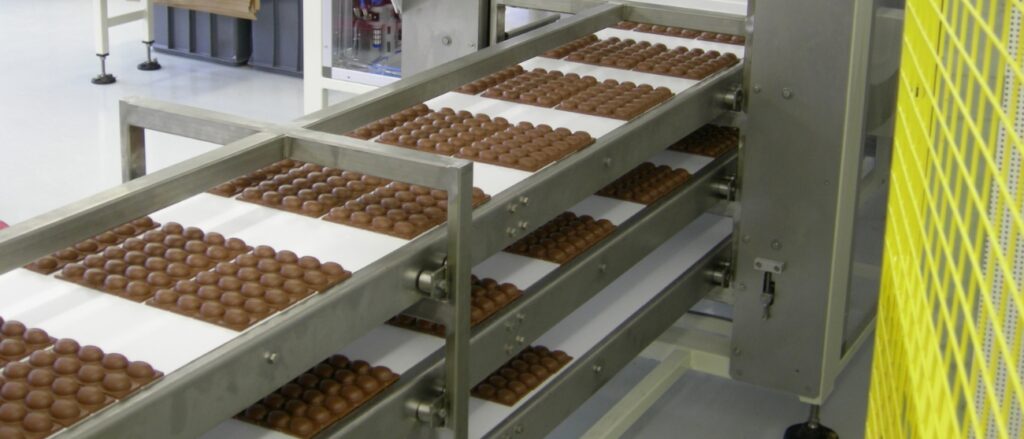
When a company decides to automate, the production plant is usually already in place, perhaps with just the processing line and primary packaging still fed manually. In this situation, automation means adding machines where there were none before, rather than replacing existing ones. And it is precisely at this stage that actual productivity can fall short of expectations. Each machine may perform exactly as intended, yet problems can arise from how the machines are connected and how the line operates as a whole.
Although the most common question is which packaging machine to buy, the outcome depends on how the product flows along the entire line without coming to a stop at any point.
We have seen this pattern for forty years, on lines installed on every continent. The success of a project depends not only on the performance of individual machines, but also on decisions made before purchasing them and on how they are integrated.
Let us look at these decisions one by one.
1. Production Targets: The Figure That Determines Everything Else
Before choosing any machine, it is essential to establish how many products per minute the line needs to handle.
It may sound obvious, but everything else depends on that figure. It affects every downstream decision, from conveyor sizing and the capacity of buffering and accumulation systems to packaging machine speed. An error at this stage has consequences throughout the entire line.
A clear target helps identify the right technology, but above all it allows the line to be designed around the actual production cadence rather than an assumed one.
In the confectionery industry, for example, a chocolate line may be designed to operate over multiple shifts in winter and slow down in summer. Seasonality then becomes a design parameter rather than a problem to be dealt with.
Not Just How Many Products: How Many Formats?
There is a second question that must be highlighted when defining production targets: how many different product types need to run on the same line?
This question arises precisely when moving from manual to automated operations. On a manually operated line, format changeovers are far more flexible because operators adapt their tasks to different product types. With automated machinery, the situation changes: format changeovers involve significant costs and introduce operational challenges that do not arise on a manual line.
This leads to a consequence that must be considered from the outset. It is not possible to automate while retaining 100% flexibility, because the cost would outweigh the return on investment. If the objective is a very high-speed line, the range of product types it handles must be limited, since it is difficult for the same line to offer both high speed and extensive flexibility.
2. Financial Resources: Automate in Stages, Not All at Once
There is a widespread belief that the best automated line is one that is fully equipped from day one. But that is often not the case.
Investment in automation can be spread over time. You can start with an essential configuration and expand it as demand grows. This distributes costs over several years and avoids tying up capital in production capacity that may remain unused for a long time. It is an appropriate approach for businesses expecting gradual growth or a rise in demand that has yet to be confirmed.
There is one condition, however: the line must be designed for future expansion from the very beginning. A plant conceived in stages reserves the necessary space and provisions where they will be needed later. If, instead, the layout is designed as a closed system and expansion is attempted afterwards, it is still possible, but at a higher cost and with more complications.
Adding Technology to an Existing Line: The Limitations
Beyond the financial rationale, there is another reason to make a project scalable: production downtime.
A line undergoing expansion cannot produce while work is being carried out. Spreading the intervention over time also helps avoid excessive production downtime.
Managing space and material flow on an existing line requires careful planning; otherwise, bottlenecks emerge. Adding machines or conveyors without an overall design can obstruct operators’ movements and complicate maintenance. These costs only become apparent later, once the work is complete.
It is no coincidence that our Engineering Department treats every new project as a “prototype”. Every plant has its own constraints, and the solution is designed around the specific challenge rather than selected off the shelf.
Taking a phased approach is often the most sensible choice, not a compromise made simply to spend less.
3. Available Space: The Constraint That Determines Project Feasibility
In most cases, factory space is the most restrictive constraint. In European markets, where floor space is both costly and scarce, it can determine whether an automation project is feasible at all.
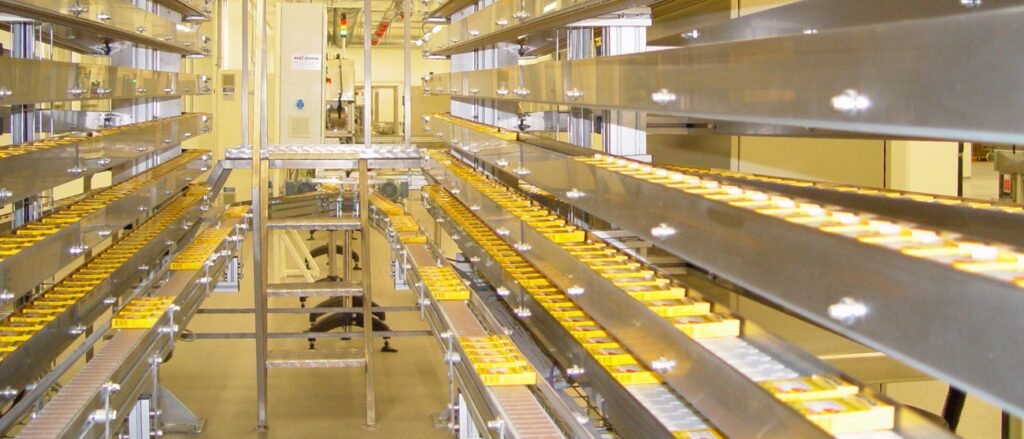
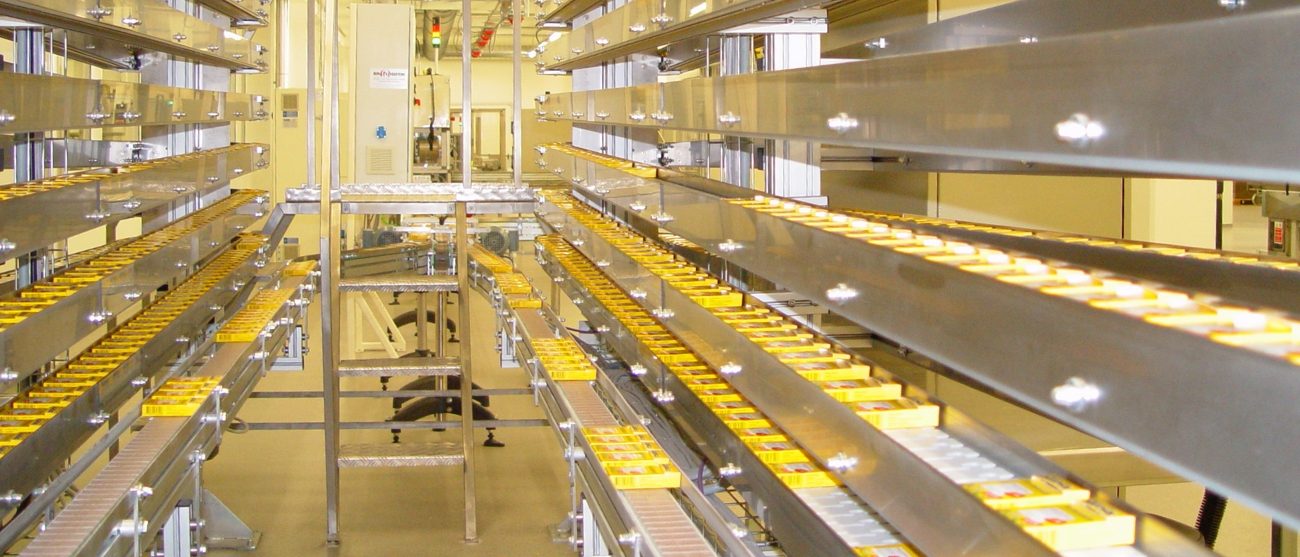
This is where technologies that operate vertically rather than horizontally make the difference, such as spiral conveyors, elevators and overhead conveyor lines. They free up floor space without reducing line capacity.
However, space utilisation goes beyond logistics. It has a direct impact on operating efficiency and can reduce the cost of extending the production building.
Some of the principles we apply to projects of this kind include:
- Overhead conveyor lines connect production and palletising areas without interfering with movement at floor level.
- For bulk products, it is preferable to keep processing on the same level and within the same environment to comply with hygiene standards. Moving such products across multiple levels requires much more complex and costly solutions than handling products that have already been packaged.
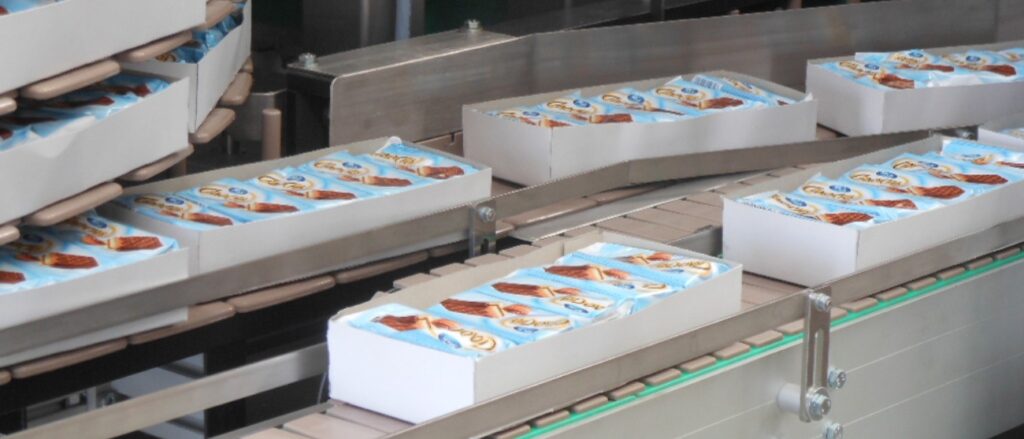
- After primary packaging, however, elevators, spiral conveyors and multi-level conveyor lines can connect production departments and warehouses located at different heights.
Ultimately, a packaging line works like a circulatory system. Machines are the heart that drives performance; conveyors and buffering and accumulation systems are the circulation that distributes the product and maintains its pace. If the flow stops somewhere, even the most powerful heart is of no use. Designing the layout means managing that circulation.
The Return Comes Shift After Shift
A well-automated line should not be judged on the day of commissioning, but six months later: when it runs without jams, a format changeover does not disrupt the entire day, and operators can work around it without conveyors getting in their way. That is when the investment begins to pay off.
That is why, when working with a customer, we start with their production facility and their figures, even before opening a catalogue.
If you are considering automating or upgrading a line, get in touch. We will start with your constraints and work together to identify the solution that delivers more from your plant.

Co-Owner M.H. Material Handling Spa – For almost twenty years he has been working in the field of product handling during packaging, supporting companies that want to optimize the entire line. Always up-to-date on industry innovations and new materials, he makes his experience available to clients with the ultimate goal of eliminating interruptions and inefficiencies in the packaging process. Voracious reader, overnight writer and content creator.