M.H. – Material Handling

Luca Fontana

As I mentioned in a previous video, the need for space is widespread and extremely common. In the last post, I spoke about the benefits of spiral conveyors over traditional conveyors. Today, I’d like to focus on a few alternative solutions.

The bucket elevator belts, intermittent or continuous cleated belts and BAT-Vertical are relevant only in specific situations, and their maintenance costs are higher than those of spiral conveyors; that is why we recommend installing spiral conveyors whenever possible.

If you also have this type of need, do not hesitate to contact us; we are able to create any type of buffer system between packaging machines, paying particular attention to specific production needs, such as optimizing packaging space in a production facility.

I’ve been involved in product conveyor systems for years now, and one of the most frequent recurring challenges is space. Companies often contact me because they need to “find” space so they can optimise their production.

It is critical to start by accurately surveying the site to understand the state of play and evaluating all necessary factors. Only after that can we evaluate where in the production line it is possible and beneficial to install a device that will help to optimise the space, as well as determine the type of device to use.

If you also have this type of need, do not hesitate to contact us; we are able to create any type of buffer system between packaging machines, paying particular attention to specific production needs, such as optimizing packaging space in a production facility.

On this blog, I often discuss packaging process optimization and the machinery that can be installed to achieve this goal. Designing a line from scratch, perhaps even with ample space available, is one thing; intervening on an existing line with its mechanisms already in motion is another.

Is it still possible to optimize the process in these cases? Good question! The answer is yes, but there are multiple paths to take.

Today, I want to outline some solutions to this issue because more and more companies already have a packaging line but need to make it more efficient, both in terms of performance and ergonomics.

Recently, we’ve encountered many with this problem… just think of the contacts we made during Cibus Tec at the end of 2023.

What do these production realities need?

  1. To gain space in facilities where square meters are limited and often fully utilized.
  2. To increase packaging speed.
  3. To free up floor space and develop the process vertically (returning to point 1).
  4. To make the phase from primary to secondary packaging more efficient.
  5. To adapt to changes related to seeking greater sustainability in processes.

What are the solutions in these cases?

T o create overpasses and free up floor space, some technologically advanced solutions can be introduced, such as:

  • Operator passages with gate-opening belts;
  • Retractable systems;
  • Spiral conveyors.

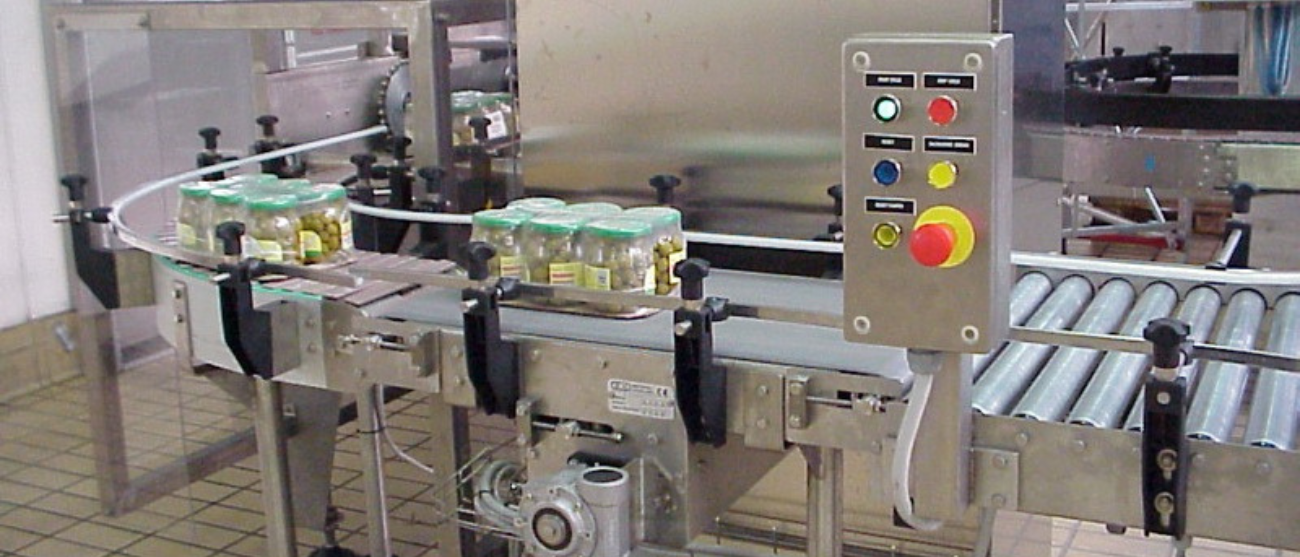
I want to focus on spiral conveyors because, in these cases, I consider them a valid solution.

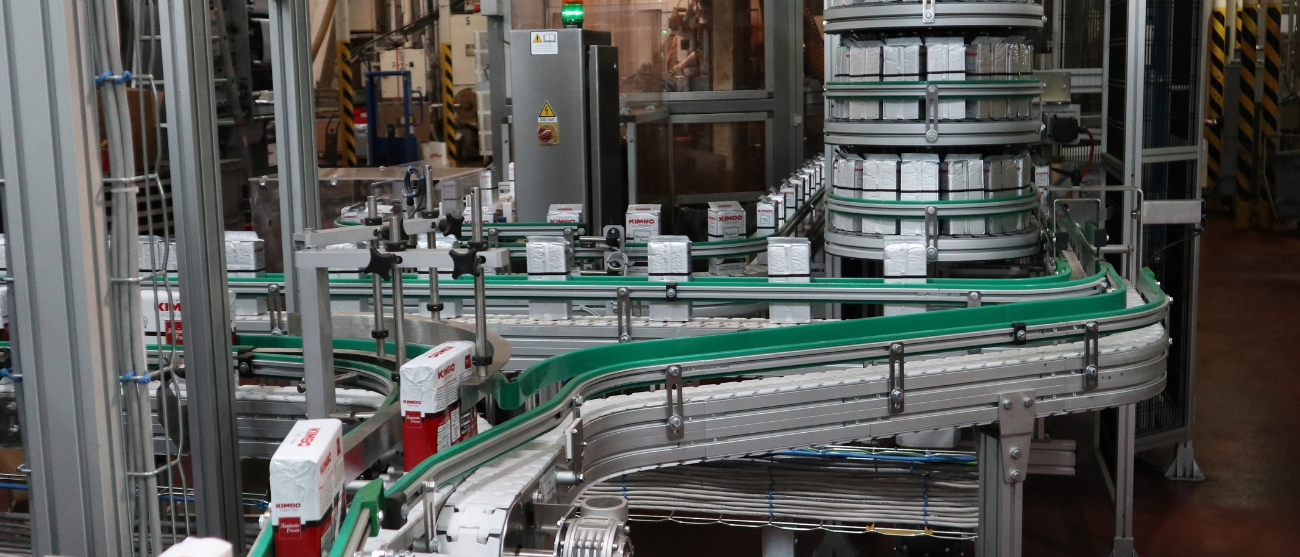
It’s no coincidence that at Cibus Tec 2023, we presented the SVn-Bare lightweight spiral in collaboration with Ambaflex, specifically designed for agile aerial connections between primary and secondary packaging with significant economic advantage without compromising on quality and achievable peak speeds.

Another “powerful weapon” to improve the efficiency of packaging lines is represented by buffer systems; at MH, we can’t talk about them enough because they can really make a difference.

Buffer systems, for example, allow for:

  • Compensating for operational differences between two machines connected in series;
  • Regularizing the flow and preventing the processing line from constantly stopping;
  • Recovering productivity in the event of micro-stops on downstream machines.

However, integrating a buffer system at a later stage into an existing line is not straightforward; this operation requires significant attention and a series of specific evaluations regarding the performance outcomes to be achieved.

Adaptations to environmentally friendly packaging.

Another highly topical issue leading companies to plan a series of investments to modify their packaging lines is the need to adapt to the use of low-environmental-impact packaging.

When I talk about “low-environmental-impact packaging,” numerous possibilities open up that include solutions aimed at reducing packaging material or actually replacing plastic with paper, cardboard, or compostable material.

In these cases, the packaging process must keep up with progress. And keep in mind that companies will increasingly have to deal with changes imposed by a search for sustainability in processes.

To this end, at M.H., we are continuously investing in research and development of products capable of offering customers innovative and sustainable solutions in line with new market needs and regulatory requirements.

For example, the Sani-Flex hygienic design transport system, our standard for the transport of naked products, is specifically designed to meet stricter regulations; Saniflex takes into account the sanitization needs of some products to help reduce bacterial load during the process.

Another example is our partnership with Intralox for the construction or development of special products such as spiral elevators, ThermoDrive belts, and passive ARB conveyors.

These mentioned are just some of the solutions designed by M.H. to support companies in the process of modernizing their packaging lines.

If you also need to make your lines more functional and efficient, do not hesitate to contact us; we will guide you on a path to optimizing productivity specifically tailored to your needs.

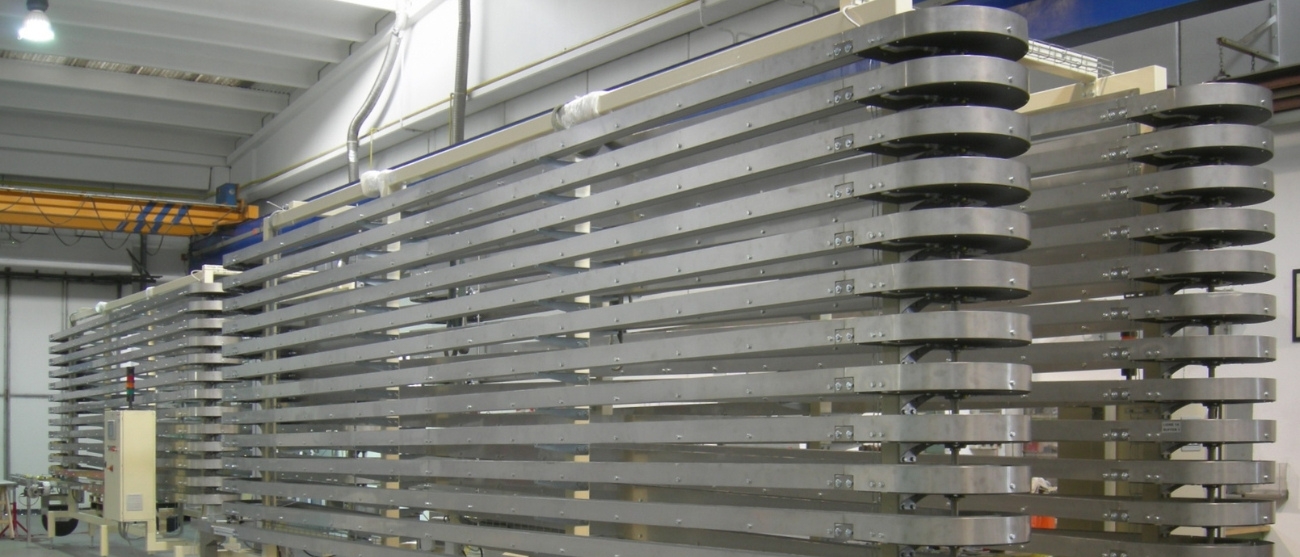
Heliflex is a particularly interesting LIFO buffer system, because it is able to resolve not only complicated buffer problems, but also address challenges regarding the product’s condition.

This conveyor system is unique in its class and it makes the system an incredibly cost-effective solution. More important still is that the system enables the cooling or heating of the goods, making it incredibly versatile in several ways.

If you also have this type of need, do not hesitate to contact us; we able to create any type of buffer system between packaging machines, paying particular attention to specific production needs, such as temperature maintenance.

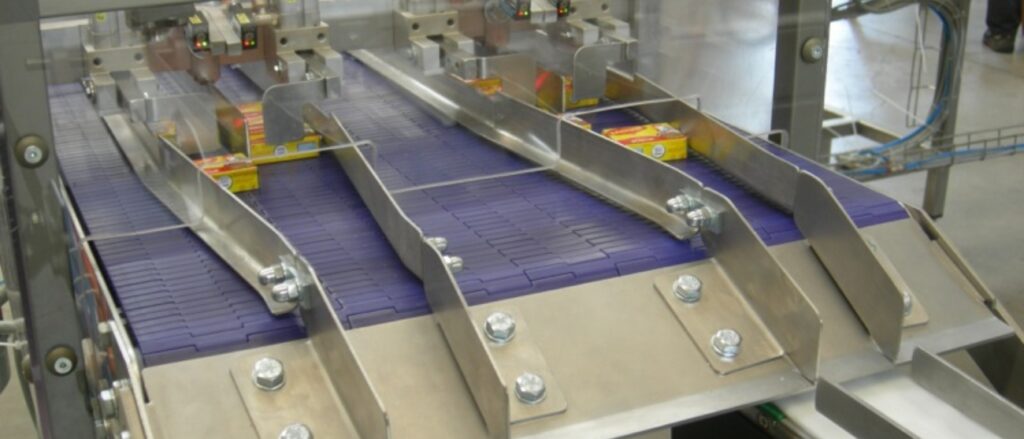
Crackers, rusks and biscuits are goods that require particular care and are always packaged in a stack, one on top of the other.
Because of their form and the method of primary packaging, they require special conveyor systems.

To meet this specific need, in the phase after cooling that usually takes place on wide conveyor belts, we at M.H. Material Handling have developed a dedicated line of conveyors with a modular plastic chain system, FDA certified for use in the food industry.

Compared to traditional belt systems, this solution offers significant benefits in terms of ease of use and maintenance.

Our decade of experience has taught us how much demand there is for systems that can be easily adapted to align with companies’ packaging process and to optimise their productivity.

BAT Buffer is a LIFO buffer system that we developed to address a series of recurring issues that have come up time and again in our two decades of industry experience.

Its uniqueness lies both in its speed, which can be regulated to ensure numerous benefits, as well as the possibility to continue or discontinue the buffer, making it possible to restore a product to the line at any time.

That makes BAT Buffer the ideal solution to absorb any inefficiencies caused by micro-stops, enabling a 10-20% recovery of productivity; by introducing the system upstream of the packaging machines, it is even possible to continue production without interruptions even if the machine stops.

Once the problem has been resolved, the product can be immediately restored to the packaging line without any further pauses.

With MH Buffer Systems, you will no longer have to worry about inefficiencies. Take advantage of our expertise and technology to become a reference for efficiency in your sector.

A few months ago at Cibus Tec, the fair dedicated to food and beverage technology, some topics were discussed that are of interest to the various players in the sector at this historical moment.

These themes include:

  • Food Safety, characterized by increasingly stringent regulations;
  • Environmental Sustainability: a constant commitment for food companies striving to develop effective strategies to reduce their environmental impact.

Over the past two years, the convergence of these issues has driven companies to innovate and introduce new products, often requiring novel packaging solutions. Current results are promising in terms of material reduction, use of environmentally friendly materials and proper disposal methods.

As a result, those of us involved in packaging need to be aware of the new challenges facing the food sector and be able to respond to market needs in a timely manner.

New types of packaging and regulations on food contamination have made our field of research extremely challenging, as in many cases these two aspects are not always easy to reconcile. On the contrary, recent developments in the sector have highlighted how the relationship between food safety and environmental sustainability can also become contradictory.

Consider, for example, the different approaches of EU countries to this issue: Italy is a pioneer in recycling technologies, while the European Union, pushed by the Nordic countries, wants to focus more on reuse, without taking into account that reuse raises a number of important issues related to the contamination of materials.

In addition to these problems, there are also issues that we have always had to deal with, such as optimising factory floor space, making processes more efficient, improving the management of complex lines, and so on.

Well, the issue is complex and therefore the answers to these problems are different. At M.H., we have addressed these issues by presenting a series of innovations at Cibus Tec, the success of which confirms that we are on the right track.

Given the complexity of the issue, our contribution does not end here. In addition to developing new products, we have initiated a book that will focus on current challenges and will be published next year.

M.H.’s Answer: Saniflex

One of the solutions that we have developed to meet these new requirements and that we presented at Cibus Tec is Saniflex.

Saniflex is our standard for the transport of naked products, specially designed to meet the most stringent requirements, and has been created taking into account certain typical situations that occur when there is a need to reduce the bacterial load of the production and packaging line.

First of all, the product handling structure must be completely washable in all its parts; therefore, there must be no areas that are difficult to access for the cleaning system. In addition to an open and accessible structure, the operator carrying out the washing must be able to disassemble the components requiring more thorough sanitisation without the use of tools.

Secondly, the materials that make up the handling systems must “withstand” the frequent washes that are usually carried out with rather aggressive chemical products in order to guarantee the reduction of the bacterial load.

In fact, when a customer expresses this need to us, we pay particular attention to the materials and mechanical components of the product to be proposed: for this reason, many of our conveyor belts can also be manufactured in stainless steel.

All these characteristics influence the technological aspects of the production process: packaging and handling machines must not only fulfil their primary function, but also preserve the organoleptic characteristics of the products.

Taking all this into account, we have created Saniflex, which is characterised by:

  • the use of materials certified for direct contact with food;
  • cavity-free components to simplify the sanitising process;
  • all threads are covered,
  • all fasteners and spacers are fitted with gaskets.

In addition, the system is designed to be easily dismantled without the need for tools, in order to simplify and speed up washing and sanitising operations as much as possible.

Saniflex is just one of the solutions proposed by M.H. to meet the current needs of the food packaging sector, but thanks to its thirty years of experience it is able to create any type of connection between packaging machines, including all the product handling accessories to feed the machines properly.

This includes elevators or descent systems to free up floor space and optimise material flow, unitising and sorting systems to handle the most complex lines, and specific accumulation systems to maximise line efficiency.

If you want to optimise your packaging process and would like a free consultation

Let’s start with a premise: buffer systems can make a difference to the line’s efficiency.
The choice of model depends on various considerations (including financial ones) but there are three variables that must be kept in mind.

It is only by carefully considering these factors that we can move to a rapid consideration of the investment in the purchase of a buffer.

With MH Buffer Systems, you will no longer have to worry about inefficiencies. Take advantage of our expertise and technology to become a reference for efficiency in your sector.

When a company needs to install a merge conveyor, there are a range of variables that make the decision a difficult one.

The need for a merge conveyor in a packaging line is itself enough to indicate a process with a very high degree of complexity and automation throughout.

Choosing the right merge conveyor means taking into account:

  • how it protects the quality of the items;
  • making sure the machines downstream work as intended;
  • the efficiency of the entire packaging line.

It is clear therefore that mistakes could be critical.
The risk of ending up with an ineffective and obsolete packaging line is too high. That is why, whenever a client asks me which model is the best fit, I always start with a thorough analysis of their current operations, needs and expectations.

So, let’s start with a quick overview of these machines, explaining their purpose, their benefits and their limitations.

To start with, there are different types of merge conveyors, but the majority fall into one of two broad categories: mechanical (or buffer) merges and dynamic merges.

Buffer merges

This product is equipped with “gates” at the entry lanes that remain closed until the convergence area is free, at which point they let the items through one after the other.

This is a simple and cost-effective solution that works as long as two conditions are met:

  • the items must be able to withstand the pressure during the buffering phase;
  • the downstream machines must be able to receive the items in a convoy without being triggered to do so.

The first point is related to the integrity of the items, and essentially means that it is appropriate only for boxes, trays and products stacked in tight packaging.

The second point requires greater detail.
As they leave the merge, the items are touching each other, or very close to it, but the speed of the conveyor belt is the same as it would be with products that space out the items with one item’s worth of space between one and the next.
The average productivity of the line doesn’t change, but when the convoy arrives downstream, the machine’s productivity at that moment is doubled.

That is why the machine must be able to manage the flow, otherwise it is necessary to regulate the flow with one conveyor belt to increase the speed and another to decrease it after the merge; however, this solution is naturally bulkier, with two more motors and a more complicated logic controller.

Dynamic merges

When handling items that cannot be buffered for fear of overlap (generally pillow pouch or flowpack packaging) or damage caused by excessive pressure or because downstream machines need the items to arrive at a regular frequency and with a certain distance between one item and the next, then it becomes necessary to install a dynamic system.

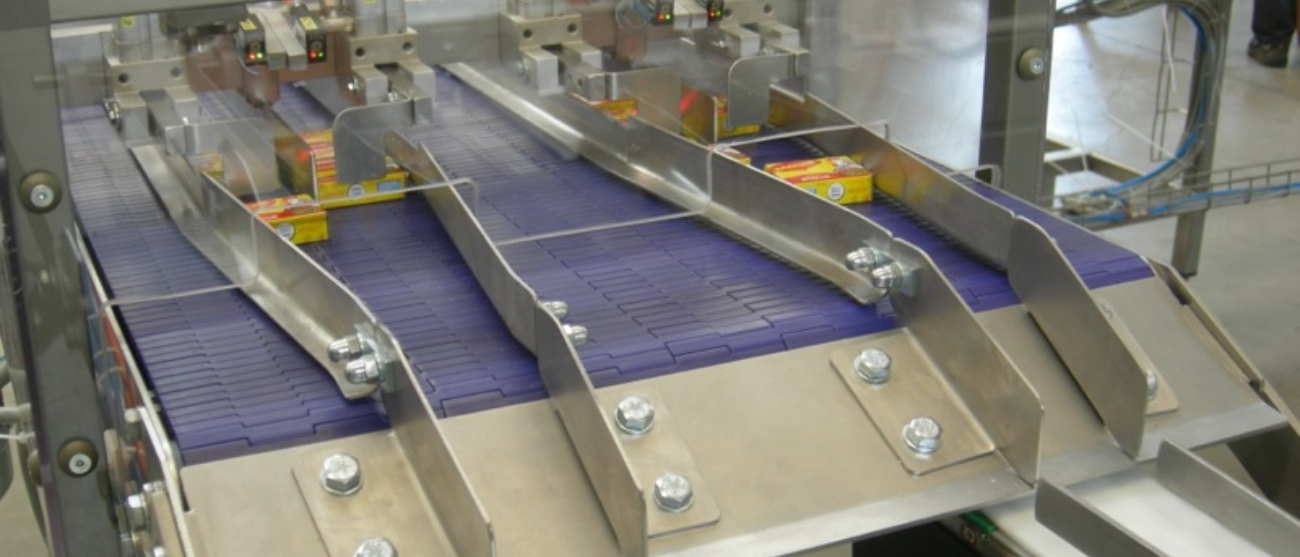
A dynamic belt merge is a scalable system consisting of a series of modulating conveyor belts that increase or decrease the speed of the items as they come through, ensuring enough space to avoid a situation where two items reach the convergence point at the same time.

With these devices, the products are always handled one at a time, thereby avoiding having groups of items together and ensuring regular spacing. As the production pace increases, the number of modulators must also increase.

M.H. is an Italian brand with thirty years of experience with handling movement and logistics within production facilities in every sector of industry, with a range of solutions for buffer systems.

When it comes to dynamic merge conveyors, MH’s fastest system isthe HP dynamic system that can reach manufacturing of up to 600 ppm for 150mm flowpacks. Depending on the weight and packaging of the items, it is possible to use up to five phases of conveyors with brushless DC motor and vacuum suction to manage rapid acceleration.

Our wealth of experience means that M.H. is also able to support companies in optimising and streamlining their packaging lines with our innovative and technologically advanced solutions.

he first questions that we have to ask ourselves in these situations are: Are my packaging machines suited to this system? Can my goods be conveyed using this type of merge?


Buffer or mechanical merges are equipped with “gates” at the entry lanes that remain closed until the convergence area is free; once the gates have been opened, these release the products through one after the other.

If you want to find out more about our products or to discover how you can optimise your packaging process

Insights, ideas and news
about product handling

When designing a packaging line, attention immediately goes to the machines: which packaging machine to choose, what type of labelling machine to install, where to place inspection systems.

However, there is one element that determines the efficiency of the entire system even before thinking about the machines: the layout.

A well-designed layout is almost invisible. Operations flow smoothly, maintenance is quick, and operators move without obstacles.

On the contrary, a poorly designed layout makes itself felt every day, with downtime, bottlenecks, cleaning difficulties, and waste of space and time.

Many issues that seem to originate from the machines actually arise during the layout design phase.

A recurring machine stoppage at the same time every day, for example, may not be due to a technical fault, but to a buffer positioned in the wrong point of the line.

A cleaning process that takes twice as long as expected may be the result of conveyors placed too close to each other, not a surface sanitization issue.

Operators losing valuable minutes moving materials from one area of the line to another may indicate a flow design error, not a lack of staff.

The layout determines how machines interact, how materials move, and how operators work. And when the layout is wrong, even the best machines struggle to perform at their full potential.

Let’s look at the most common mistakes that compromise the performance of a food processing line.

1.   Underestimating space for maintenance and sanitation

This is one of the most frequent mistakes: machines and conveyors positioned too close to each other, without considering that they will need to be accessed for cleaning, inspection, and component replacement.

In the food industry, this becomes a critical issue, as sanitation is not an occasional activity but an integral part of daily operations.

If a conveyor belt is trapped between two machines with insufficient lateral space, cleaning becomes superficial. Operators struggle to reach critical areas, downtime increases, and hygiene risks grow.

Even the most advanced Hygienic Design loses effectiveness if the layout does not support it. An open frame designed for drainage is of little use if there is no physical space to access the surfaces to be cleaned. For this reason, it is essential to consider not only the machine itself, but also the operational space around it: the room needed to open frames, remove components, allow operators to access with cleaning equipment, and move freely during sanitation procedures.

2.   Ignoring material and operator flows

An efficient layout defines clear paths. Raw materials, semi-finished products, finished goods, and waste must each follow a precise flow, ideally unidirectional, from “dirty” to “clean”. When these flows intersect, the risk of cross-contamination increases exponentially.

The same applies to operator movement. If reaching a quality control station requires crossing the entire line and passing near the waste discharge area, there is a design flaw.

Every unnecessary movement is lost time and a potential food safety risk.

Physical separation between areas with different hygiene levels should be planned from the outset. The positioning of buffers and accumulation systems also makes a difference: a BAT Buffer placed in the right position can absorb downstream micro-stoppages without blocking the entire line. Placed incorrectly, it becomes just an obstacle.

3.   Failing to plan for flexibility in format changes and future expansion

Food processing lines are not static. Formats change, production evolves, and volumes grow. Yet many layouts are designed without considering future developments. As a result, when it’s time to introduce a new format or add an inspection station, physical constraints become a barrier. There may be no space to integrate new elements, even if the modularity of conveyors would allow it.

Modularity is not just a feature of machines—it is a design principle that should also guide layout planning.

Systems like BAT are built on this logic: standard components that adapt to different configurations.

However, the layout must also include “growth areas” identified from the beginning—spaces where buffers, additional stations, or line diversions can be added.

Planning for flexibility may involve a slightly higher initial cost, but it leads to significant savings in the medium term, when production changes can be implemented in hours instead of weeks of downtime.

4.   Choosing the wrong accumulation system (or not including one at all)

Every line includes machines operating at different speeds. Without an accumulation system, even a micro-stoppage of a few seconds can halt the entire production flow.

Yet many layouts either do not include buffers or size them incorrectly.

An oversized buffer takes up valuable space without delivering real benefits.
An undersized buffer cannot absorb flow variations and becomes ineffective.

Then there is the choice of system type: accumulation systems with product-to-product contact can damage fragile items such as biscuits or packaged snacks, even when using low-pressure solutions.

The BAT Buffer was developed precisely to address these issues: compact, zero-pressure accumulation that ensures operational continuity even during micro-stoppages.

However, the key point is this: buffers must be planned during the layout design phase and positioned strategically—not added later as a patch once problems arise.

5.   Overlooking heights and elevation changes

It may seem like a minor detail, but operating heights make the difference between an efficient line and one that strains operators. Conveyors placed too high or too low force unnatural postures, increase the risk of errors and injuries, and slow down operations.

Height differences between conveyors must also be carefully calculated.

A sudden drop can destabilize fragile or unstable products.

In some cases, when horizontal space is limited, spiral conveyors provide an effective solution, allowing elevation changes without occupying valuable floor space.

Ergonomics becomes an investment that translates into fewer errors, fewer stoppages, and higher productivity.

And it must be considered from the layout design phase—not added later with stairs, platforms, and walkways that complicate the system and increase costs.

The layout is designed once, but its impact is experienced every day

An effective layout is not the result of compromises between existing constraints—it is a strategic choice that impacts the efficiency, safety, and scalability of a packaging line for years.

Design mistakes come at a cost every single day: downtime, waste, operational difficulties, and complex maintenance. And in many cases, these are avoidable errors—preventable with a broader perspective and collaboration with experts who understand the production dynamics of the food industry. At M.H. Material Handling we support our clients from the earliest layout design stages, combining conveyor system supply with consultancy that starts from flow analysis and extends to space optimization. If you are designing a new line or looking to improve an existing one, get in touch with us: we can assess the most effective solutions for your plant together.

Today’s food packaging lines are increasingly fast, automated, and high-performing. Individual machines can reach speeds and accuracy levels that were unthinkable just a few years ago.

And yet, in many plants, higher performance does not translate into a real improvement in overall line efficiency.

The reason is simple: a packaging line is not the sum of its machines, but a dynamic system where each station directly affects the others.

It is precisely within this delicate balance that the most common issues arise: unplanned downtime, micro-stoppages, and cascading slowdowns.

In this context, accumulation systems are no longer just an accessory—they are a key element that can truly make the difference in packaging line performance.

The accumulation system: the “lung” of the line

A useful way to understand the role of accumulation is to think of it as the “lung” of the packaging line—this is exactly how we at M.H. Material Handling define it.

An accumulation system is designed to “give breathing space” to the line, absorbing speed variations and temporary stoppages while maintaining a continuous product flow.

When a downstream machine slows down or stops (for example, during a reel change or adjustment), the accumulation system buffers the excess product, preventing upstream machines from stopping.

When the line restarts, the accumulated product is released in a controlled way, allowing partial recovery of production without stressing the system.

A simple principle, yet with a significant impact on overall line productivity.

The problems accumulation systems solve

In many packaging lines, certain inefficiencies are often accepted as unavoidable. In reality, they are frequently the result of missing or improperly sized accumulation.

1. Reel changes and line stoppages

Every film or packaging material change requires a machine stop. Without an accumulation system, this stop propagates across the entire line, halting even the sections that could otherwise keep running.

2. Different machine speeds

It is rare for all stations in a line to operate at the same speed.

Performance differences generate continuous micro-stoppages that negatively impact the entire process. Even small variations create instability, increasing component wear and reducing process predictability.

This is exactly where accumulation systems come into play.

Why accumulation is even more strategic today

While accumulation used to be considered optional, it has now become a strategic design choice. This is due to several factors:

  • higher line speeds
  • greater product variability (formats and packaging types)
  • limited available space (especially in existing plants and especially in Italy)
  • increasing pressure on overall system efficiency.

In this scenario, accumulation becomes a balancing tool, enabling smoother and more predictable product flow.

How to choose the right accumulation solution

One of the most common mistakes is to consider accumulation as a module to be added at the end of the line. In reality, its effectiveness depends on how it is designed and integrated into the system

Key factors to consider include:

  • product type and its resistance to pressure
  • line speed and differences between machines
  • available footprint and vertical space
  • required operating logic (FIFO or LIFO)
  • working environment (e.g. maintenance and cleaning requirements)

Only by starting from these elements is it possible to define the most suitable accumulation solution, avoiding compromises that become costly over time.

Ultimately, designing accumulation means designing production continuity and line reliability. It cannot be treated as a standalone element: it must be developed based on line configuration, product flow, production targets, space constraints, and real operating conditions.

With M.H. Material Handling, this evaluation is carried out through a structured approach. Thanks to the M.H. Solution Scan, we analyze your packaging line in detail to identify critical areas and determine if, where, and how an accumulation system can improve operational continuity, reduce downtime impact, and increase real process efficiency.

Contact us to request the M.H. Solution Scan and discover how to make your packaging line more stable, efficient, and ready to handle daily production variability.

When it comes to “Hygienic Design”, many people immediately think of stainless-steel equipment, free of gaps and easy to wash down.
This is a correct image — but only a partial one.

The reality is that Hygienic Design does not start — and does not end — with the equipment.
It is a structured approach that takes shape much earlier, beginning with how the facility is conceived, built, and organized.

Only by considering the entire production ecosystem — from building structures and material flows to raw material handling and personnel procedures — can safety, efficiency, and sustainability be truly ensured.
Machines come later: their role is to protect and preserve what has been designed upstream, not to compensate for shortcomings at earlier stages.

The facility as the first link in the chain

Every Hygienic Design project therefore starts with the building layout.

Its location in relation to the external environment, the distance from potential sources of contamination, floor slopes designed to promote proper drainage, and thermal insulation all directly affect the ability to maintain hygienic conditions.

Selections of materials is equally critical: walls and surfaces must be easy to clean and durable over time

If a facility is not designed with these principles in mind from the outset, the cost will be significant: more washdowns, higher water and chemical consumption, and increased operating costs.

This is not a problem that can be solved with a high-quality machine alone, but with couscous design decisions made from the very beginning.

People, raw materials, and products: the flows that make the difference

The second level focuses on internal movements.

Ingredients, semi-finished products, and personnel must not share high-risk pathways. Any overlap increases the likelihood of cross-contamination.

For this reason, more advanced manufacturers implement a hygienic segregation of production areas, physically separating high-risk zones from low-risk ones and enforcing strict procedures: garment changes, controlled access points, and physical barriers. This approach, commonly referred to as hygienic zoning, is one of the most effective tools for reducing contamination risks within food processing facilities.

Machines are the protagonists, but procedures are the script

Only at this stage does the focus shift to machinery. Their role is not to “create hygiene,” but to preserve the hygienic conditions established upstream.

Features such as cleanable surfaces, open-frame designs, tool-free removable components, and food-grade certified materials are not optional details — they are essential requirements. A single poorly designed critical point is enough to turn a machine into a source of risk.

The cost of a mistake can be substantial: Commercial Food Sanitation estimates that a product recall caused by contamination costs, on average, €1.67 million in operational losses and reputational damage.

This is why Hygienic Design is not a technical detail, but a strategic investment.

We don’t sell machines — we design safety

At MH Material Handling, we believe that Hygienic Design is not something to be applied downstream, but a philosophy that must guide every decision throughout the entire process. This is why, although we specialize in the design of conveyor systems such as Saniflex, we do not limit ourselves to supplying a machine.

Our consulting approach always starts with a comprehensive analysis of the plant: we assess layout, material and personnel flows, sanitation practices, and production requirements in order to integrate the conveying solution into a context that is truly coherent, safe, and efficient.

Saniflex is not an off-the-shelf product, but a modular and customizable system, engineered to simplify cleaning, withstand aggressive detergents, and ensure operational continuity.

What truly makes it effective, however, is its ability to fit into a broader approach in which every design choice contributes to reducing risks, costs, and operational complexity.

Would you like to understand whether your line truly complies with Hygienic Design principles — and how Saniflex can enhance it to the fullest?

Contact us for a tailored consultation: together we will analyze your processes and identify the most effective solutions to protect product safety and strengthen your business competitiveness.

It already works well as it is… do we really need to change?

This is the question many plant managers ask themselves when they look at their packaging line.

If the machines are running, orders are being fulfilled, and production continues, why intervene in something that appears to be working?

The truth is that “working” does not always mean “working at its best.”

A small bottleneck, an unexpected buildup, one manual step too many: details that often go unnoticed, yet over time erode productivity, margins, and delivery reliability.

Today, the efficiency of a line is not determined by the power of individual machines, but by the ability to integrate and harmonize every component into a balanced, seamless flow.

Conveyors: the circulatory system of the line

Just as blood carries oxygen through the body, conveyors represent the circulatory system of a packaging line.

They are responsible for synchronizing machinery, absorbing fluctuations, and preventing bottlenecks.

If the flow is not continuous and well balanced, even the most advanced machine loses its effectiveness and the risk of downtime increases.

Yet these systems are often underestimated already at the design stage, resulting in inefficiencies that are difficult to correct later on.

Different solutions for different needs

At M.H. Material Handling, we know that no two lines are the same. That is why our solutions are designed to adapt to very different products, spaces, and processes.

Heliflex LIFO Spiral System

Ideal for large product accumulation with heights not exceeding 90 mm. This double-spiral system finds its optimal sizing with between 200 and 500 meters of available space.

BAT-Buffer Modular System

Modular and compact, it is perfect for handling different product types and plant layouts. It is versatile, easy to integrate into existing lines, and has relatively limited footprint requirements. Its ideal size ranges between 100 and 150 meters of available space.

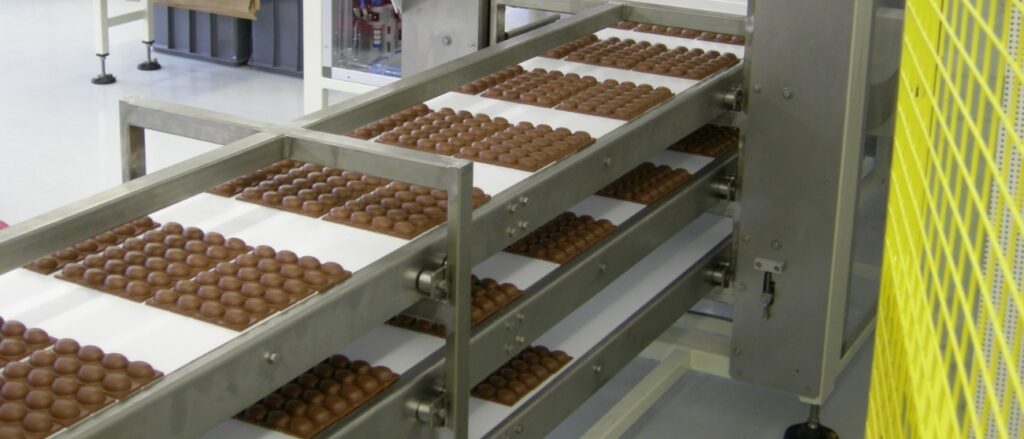
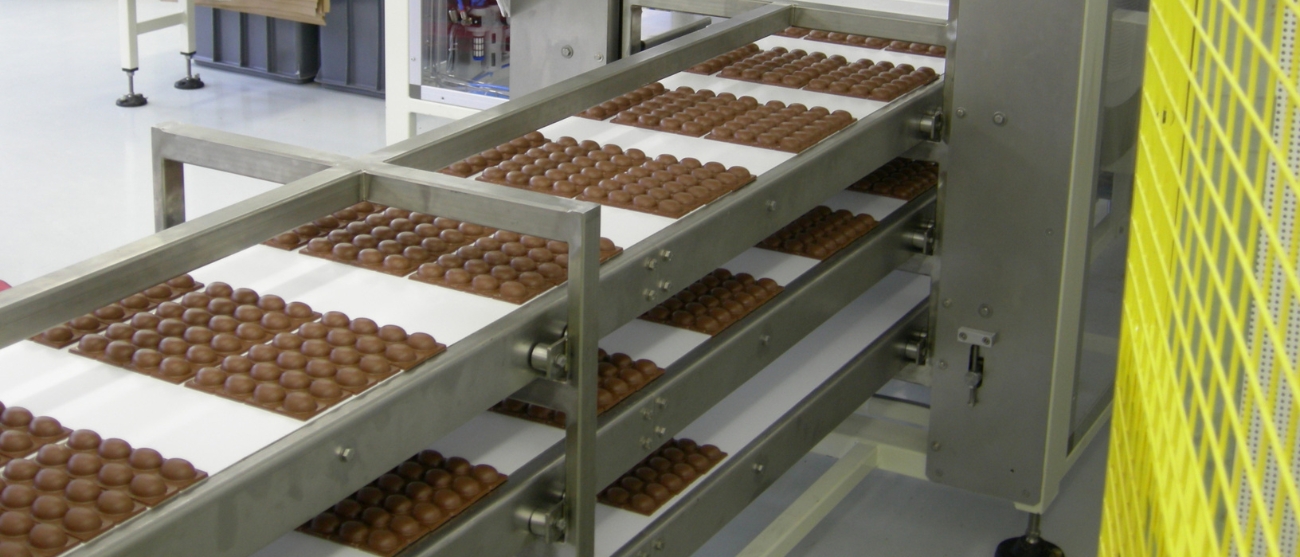
5L FIFO Multilayer Belt

Developed specifically for the confectionery sector, it enables gentle multilane transport upstream of the packaging stations, reducing the risk of product damage.

These solutions are complemented by mergers, dividers, elevators, and intelligent handling units, all designed to ensure increasingly smooth and fully integrated material flows.

Efficiency is much more than speed

Being efficient today does not simply mean “running faster.”

It means designing ergonomic lines that are easy to clean, hygienic, and capable of making the most of the available space.

It means having systems that reduce downtime, optimize energy consumption, and ensure a long-term return on investment.

Our solutions, entirely made in Italy, reflect these values: they are reliable, customized, and built to last.

With nearly forty years of experience in the food and pharma sectors, at M.H. Material Handling we do more than supply individual components.

We always start with layout consulting, analyze material flows, and develop integrated conveying and buffering solutions that transform plants into efficient and competitive ecosystems.

Our goal is simple: to help companies increase productivity and stability while reducing complexity and hidden costs.

If your line “already works well,” ask yourself: is it really expressing its full potential?

A custom-designed conveying system can make the difference between a line that merely runs and one that grows.

Contact us for a personalized consultation and discover how to make your plant more fluid, safe, and efficient—without disruptive changes.

Today’s production lines demand increasingly high standards: higher speeds, lower noise levels, and greater safety.

The historic 879 chain, developed in the late 1980s and established as an industry benchmark, has long proven its strength as a tireless “workhorse” of conveyor lines.

MH Material Handling decided not to settle.

Drawing on nearly forty years of experience and direct, ongoing dialogue with field technicians, USC – UltimateSafeChain was created: an evolution that preserves the robustness of the 879 while integrating with new technologies to meet the real demands of modern industry.

Can something that already works perfectly really be improved?

The strength of the 879 BAT has never been in question: robust, versatile, andlong-lasting, it has earned the trust of operators because it “simply works.”

In particular, tangential drive has proven over time to be the most effective solution for managing LIFO accumulation systems, such as the BAT Buffer, ensuring stability and operational continuity.

However, through extensive field experience and ongoing dialogue with technicians, a key insight emerged: when the foundation is solid, it can be made even safer, quieter, and more efficient.

For this reason, we partnered with Ammeraal Beltech, integrating Safety Finger technology into our new USC chain, a solution already recognized for its strong focus on operator safety.

USC: the reliability you’ve always trusted, even better performance

The new UltimateSafeChain is not a break with the past, but its natural evolution.

It is fully backwards-compatible with existing lines: no system redesign is required—only the chain and sprockets need to be replaced.

The tangible benefits are immediate:

  • Higher operating speeds, increasing productivity without compromising stability.
  • Reduced noise levels, improving operator comfort and supporting compliance with industrial noise regulations.
  • Greater installable length, enabling more flexible and scalable system layouts.
  • Enhanced stability and safety, thanks to the integration of Safety Finger technology, which reduces the risk of accidents and unexpected stoppages.

All of this while preserving what operators already know and value: the reliability of tangential drive, a distinctive feature that continues to deliver top performance in buffering and accumulation systems.

Easy revamping that reduces downtime and hidden costs

One of the most critical aspects of plant modernization is the risk of downtime. Stopping a production line to replace components slows productivity and increases operating costs.

USC was developed with a clear objective: to simplify revamping.

No complex rebuilds, no full replacement projects—just the new chain and the corresponding sprockets are enough to transform an existing system into a more modern, efficient, and safer solution.

This approach fully aligns with the Total Cost of Ownership (TCO) perspective: investing in next-generation components helps reduce hidden costs related to extraordinary maintenance, energy consumption, and unplanned downtime.

Why choose MH Material Handling

At MH Material Handling, every innovation is driven by listening to the real needs of industrial systems.

With USC, we chose to preserve what already works—the robustness and tangential drive of the 879 BAT—and enhance it with new technologies that address today’s requirements: higher speed, greater safety, lower noise, and improved efficiency.

This is not an “off-the-shelf” product, but a solution designed to last over time, reduce risk, and simplify the daily work of those who operate and maintain systems.

That is what sets us apart: transforming conveyors from simple components into true drivers of competitiveness for companies.

If the 879 BAT has been a cornerstone for nearly 40 years, USC – UltimateSafeChain marks the beginning of a new chapter: the same reliability, with higher performance.

Would you like to find out whether USC can make your line more efficient and safer without redesigning the system?

Contact us for a personalized consultation: together, we will assess how a simple upgrade can be turned into an immediate advantage.

At first glance, it may seem like a small detail, just a component connecting one machine to another, nothing more.

In reality, the conveyor is the heart of the line: efficiency, hygiene, safety, and ultimately the quality of the product reaching the consumer all depend on it.

Yet too often, its selection is underestimated, as if one belt were as good as another. But that’s not the case.

Each application is different, every product has its own characteristics, and each plant has its own criticalities.

Treating the conveyor as a “standard” element means opening the door to unexpected downtimes, contamination, waste, safety issues, and hidden costs that grow over time.

A significant share of line stops doesn’t stem from mechanical failures but from synchronization and accumulation problems, a clear sign that conveyors impact production continuity much more than people think.

When the product is “naked” fresh or dry is not enough

Talking about “naked” products means addressing very different worlds. A dry croissant is not the same as a honey-covered bar, just as a filled cake slice cannot be compared to a cracker.

In the fresh sector, hygiene is paramount. Belts must be washable, cavity-free and easy to sanitize. Belts with internal fabric layers are not suitable: if the fabric emerges, it becomes impossible to clean properly.

That’s why monolithic belts are used, more rigid and less flexible, but capable of ensuring the highest hygienic standards.

In the dry sector, the range is broader: brittle products such as biscuits or crackers fit well on modular chain conveyors, which allow easy removal of crumbs.

But when coatings, creams, or jams come into play, PU belts are required, surfaces that can be scraped clean without damaging the belt.

Each product type therefore requires a targeted evaluation.

Packaged products, but where in the line?

Even a packaged product raises specific questions: is it located in a white zone or a grey zone? Does it require washdown capability or not?

Are high speeds, tight transfers, or low noise levels needed?

In general:

  • The tabletop chain conveyor is ideal for heavy loads, high speeds, and complex layouts.
  • The modular chain conveyor offers greater flexibility and smaller wrap diameters, but it’s less robust, has wider curve radii, and requires more maintenance attention.

If we’re in a washdown area, the structure matters too: at least the legs must be in stainless steel, if not the entire frame.

The choice, therefore, concerns not only the belt, but the whole operational context.

The invisible factors that make the difference

Beyond product features and packaging type, there are less visible but decisive variables:

Belt position

On the floor or overhead?

Overhead systems prioritize robustness, since maintenance interventions are more complex.

On-floor conveyors, instead, prioritize operator safety, requiring reduced-pitch chains to minimize risk.

Maintenance

How often will the belt need to be serviced? High frequency calls for easily removable and sanitizable designs.

Format variety

If the line handles multiple product types, flexible and adaptable systems are essential.

Finally, one basic principle must not be forgotten: machines never work in perfect synchronization. That’s why accumulation systems (buffers) are necessary to guarantee continuity and prevent line stops.

At M.H. Material Handling, we know these complexities well. For nearly forty years, we have been designing tailor-made conveyors for every type of line, product, and requirement – from fresh to packaged good.

Our solutions always start from listening: we don’t begin with a standard catalog, but with a real customer problem.

Whether it’s about handling a delicate product, freeing up floor space for operators, or optimizing flows in limited spaces, every project is co-designed together with the customer.

From the washdown SaniFlex line to the BAT system with USC chain, up to the ModulFlex conveyors with modular chains ,each technological choice follows a clear logic: transforming daily challenges into efficient, safe, and long-lasting solutions.

For us, automation doesn’t mean selling a machine, it means designing together the right answer to a real need.

Want to understand which solution best fits your line?

Contact us for a personalized consultation and discover how to make your system smoother, safer, and more efficient.