Today’s food packaging lines are increasingly fast, automated, and high-performing. Individual machines can reach speeds and accuracy levels that were unthinkable just a few years ago.
And yet, in many plants, higher performance does not translate into a real improvement in overall line efficiency.
The reason is simple: a packaging line is not the sum of its machines, but a dynamic system where each station directly affects the others.
It is precisely within this delicate balance that the most common issues arise: unplanned downtime, micro-stoppages, and cascading slowdowns.
In this context, accumulation systems are no longer just an accessory—they are a key element that can truly make the difference in packaging line performance.
The accumulation system: the “lung” of the line
A useful way to understand the role of accumulation is to think of it as the “lung” of the packaging line—this is exactly how we at M.H. Material Handling define it.
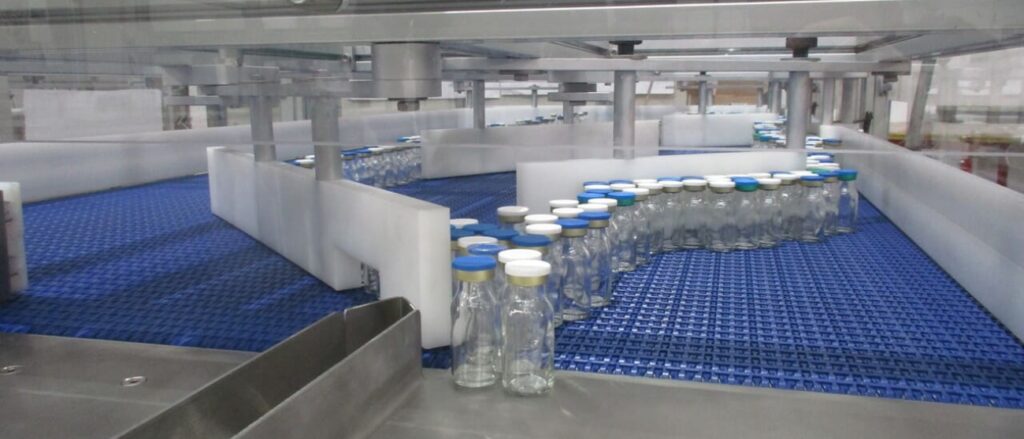
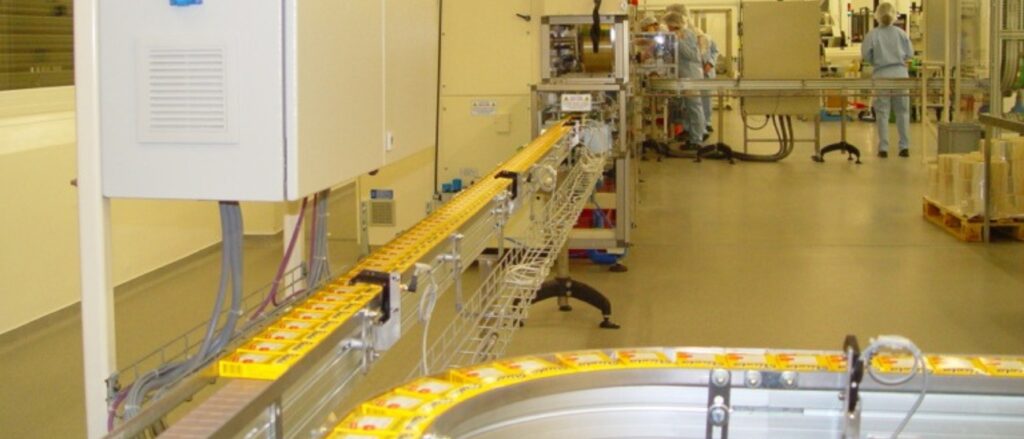
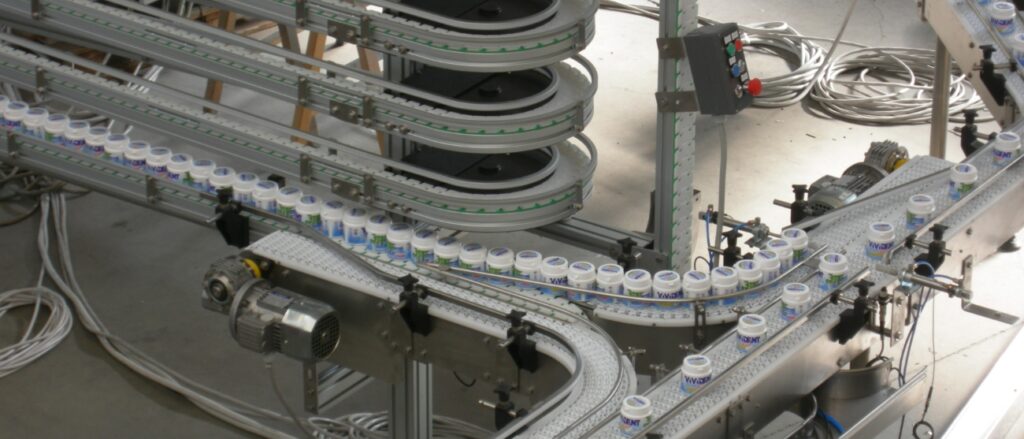
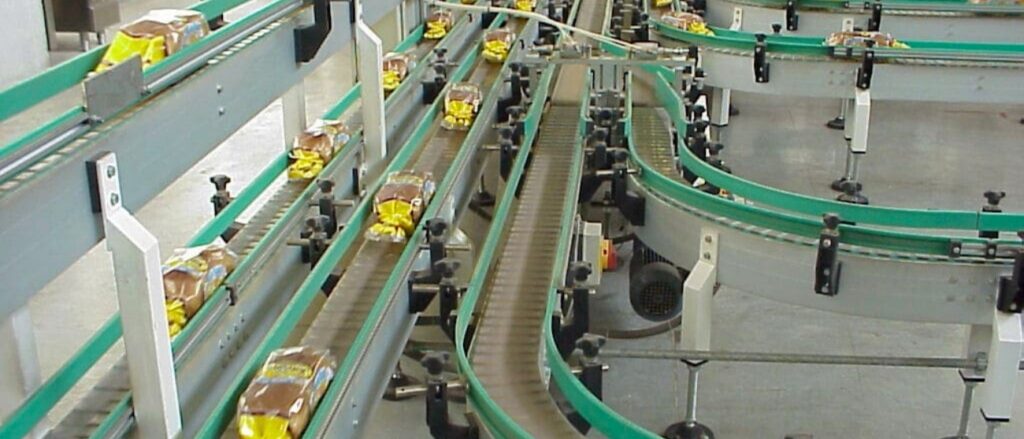
An accumulation system is designed to “give breathing space” to the line, absorbing speed variations and temporary stoppages while maintaining a continuous product flow.
When a downstream machine slows down or stops (for example, during a reel change or adjustment), the accumulation system buffers the excess product, preventing upstream machines from stopping.
When the line restarts, the accumulated product is released in a controlled way, allowing partial recovery of production without stressing the system.
A simple principle, yet with a significant impact on overall line productivity.
The problems accumulation systems solve
In many packaging lines, certain inefficiencies are often accepted as unavoidable. In reality, they are frequently the result of missing or improperly sized accumulation.
1. Reel changes and line stoppages
Every film or packaging material change requires a machine stop. Without an accumulation system, this stop propagates across the entire line, halting even the sections that could otherwise keep running.
2. Different machine speeds
It is rare for all stations in a line to operate at the same speed.
Performance differences generate continuous micro-stoppages that negatively impact the entire process. Even small variations create instability, increasing component wear and reducing process predictability.
This is exactly where accumulation systems come into play.
Why accumulation is even more strategic today
While accumulation used to be considered optional, it has now become a strategic design choice. This is due to several factors:
- higher line speeds
- greater product variability (formats and packaging types)
- limited available space (especially in existing plants and especially in Italy)
- increasing pressure on overall system efficiency.
In this scenario, accumulation becomes a balancing tool, enabling smoother and more predictable product flow.
How to choose the right accumulation solution
One of the most common mistakes is to consider accumulation as a module to be added at the end of the line. In reality, its effectiveness depends on how it is designed and integrated into the system
Key factors to consider include:
- product type and its resistance to pressure
- line speed and differences between machines
- available footprint and vertical space
- required operating logic (FIFO or LIFO)
- working environment (e.g. maintenance and cleaning requirements)
Only by starting from these elements is it possible to define the most suitable accumulation solution, avoiding compromises that become costly over time.
Ultimately, designing accumulation means designing production continuity and line reliability. It cannot be treated as a standalone element: it must be developed based on line configuration, product flow, production targets, space constraints, and real operating conditions.
With M.H. Material Handling, this evaluation is carried out through a structured approach. Thanks to the M.H. Solution Scan, we analyze your packaging line in detail to identify critical areas and determine if, where, and how an accumulation system can improve operational continuity, reduce downtime impact, and increase real process efficiency.
Contact us to request the M.H. Solution Scan and discover how to make your packaging line more stable, efficient, and ready to handle daily production variability.


Co-Owner M.H. Material Handling Spa – For almost twenty years he has been working in the field of product handling during packaging, supporting companies that want to optimize the entire line. Always up-to-date on industry innovations and new materials, he makes his experience available to clients with the ultimate goal of eliminating interruptions and inefficiencies in the packaging process. Voracious reader, overnight writer and content creator.