M.H. – Material Handling

Solutions to specific problems

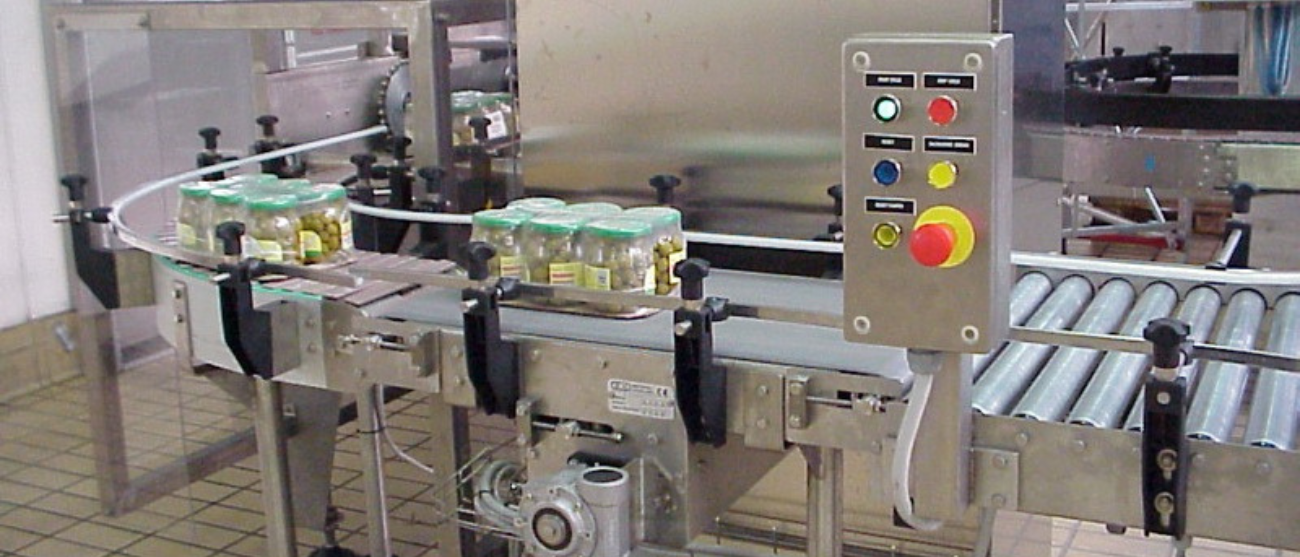
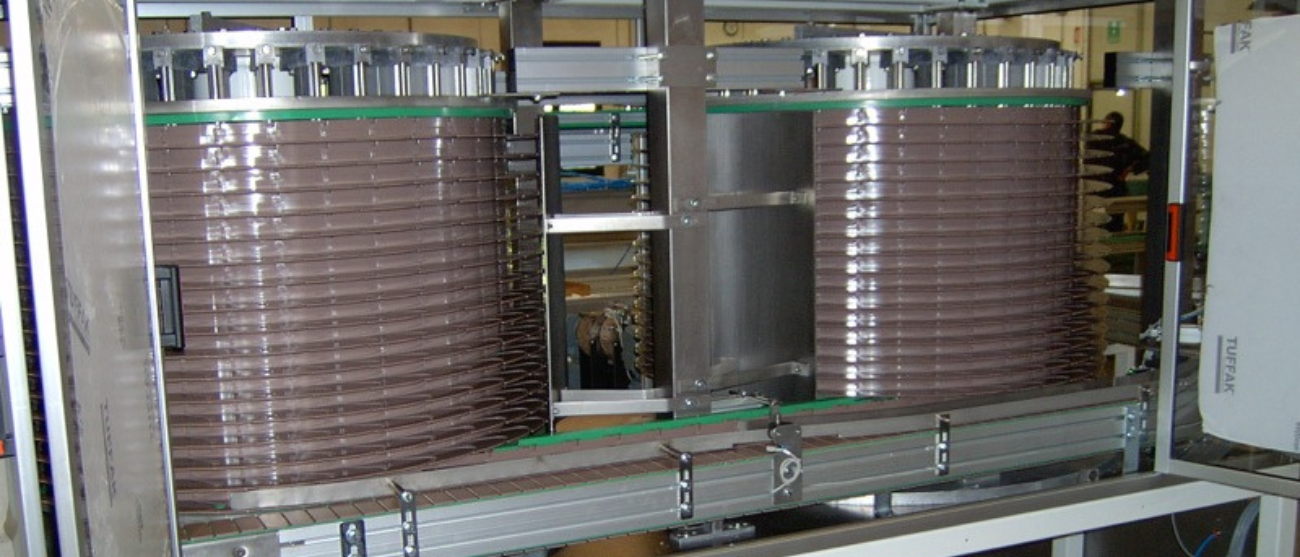
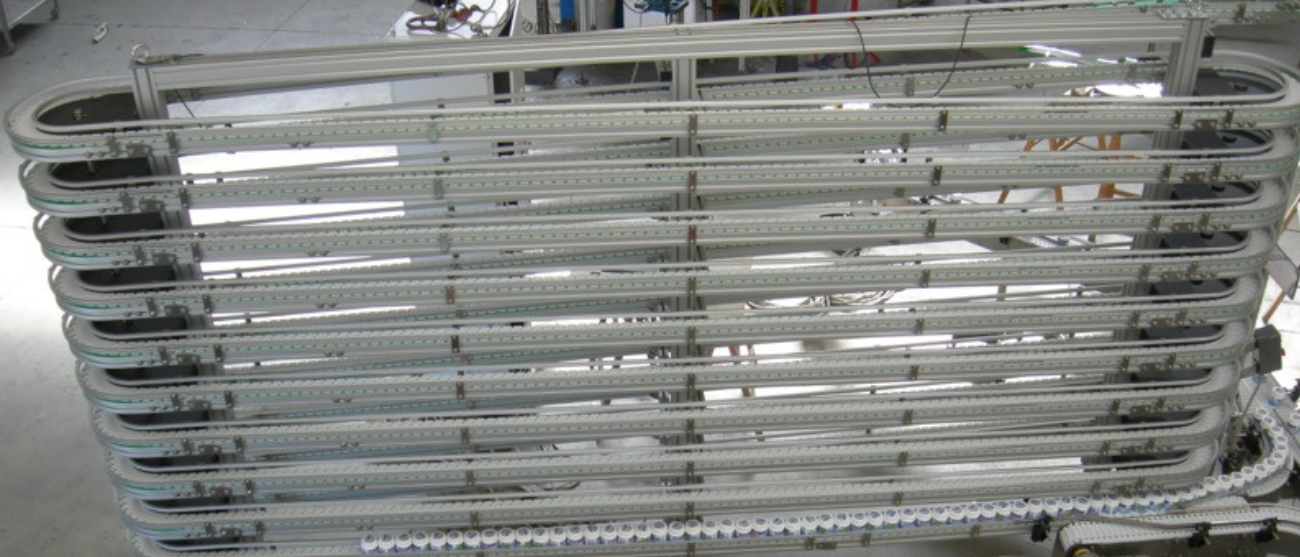
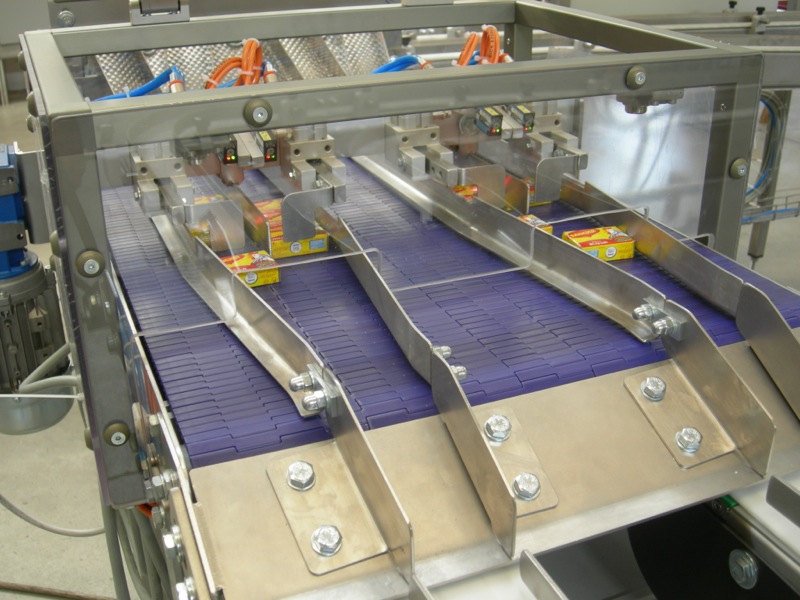
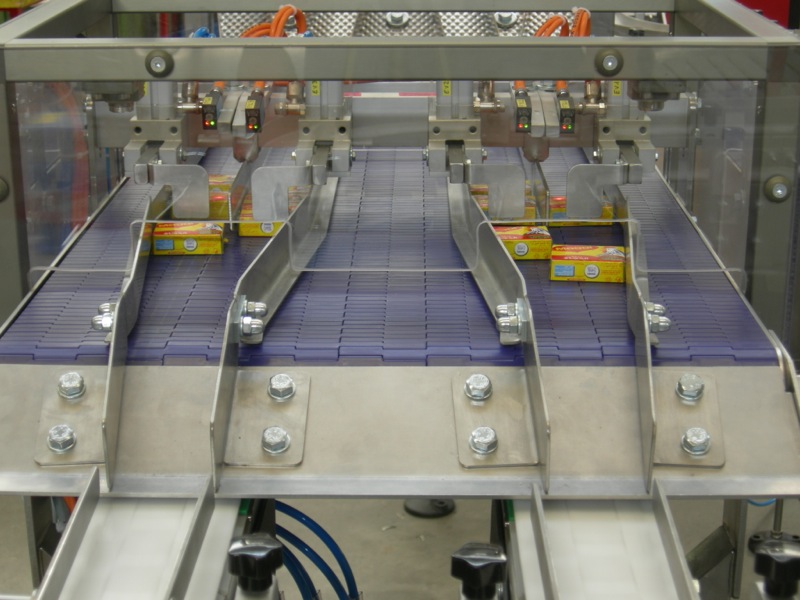
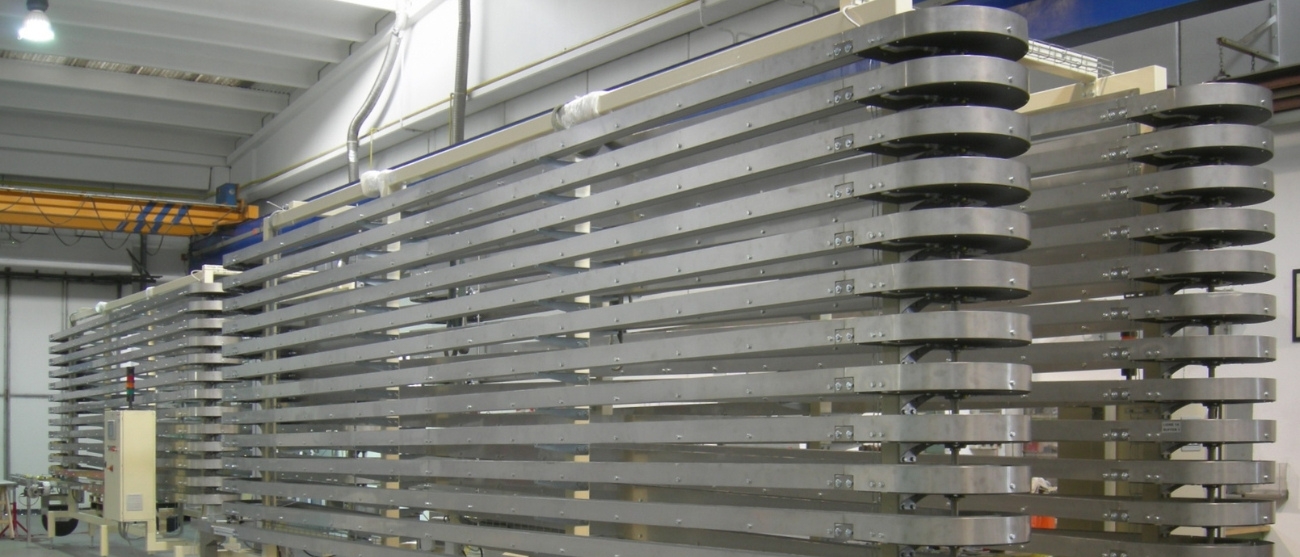
Serpentine buffer systems are among the most traditional methodologies utilized for managing the accumulation of cylindrical products, distinguished by their ability to facilitate an agile and uninterrupted production flow of vials, cans and bottles.

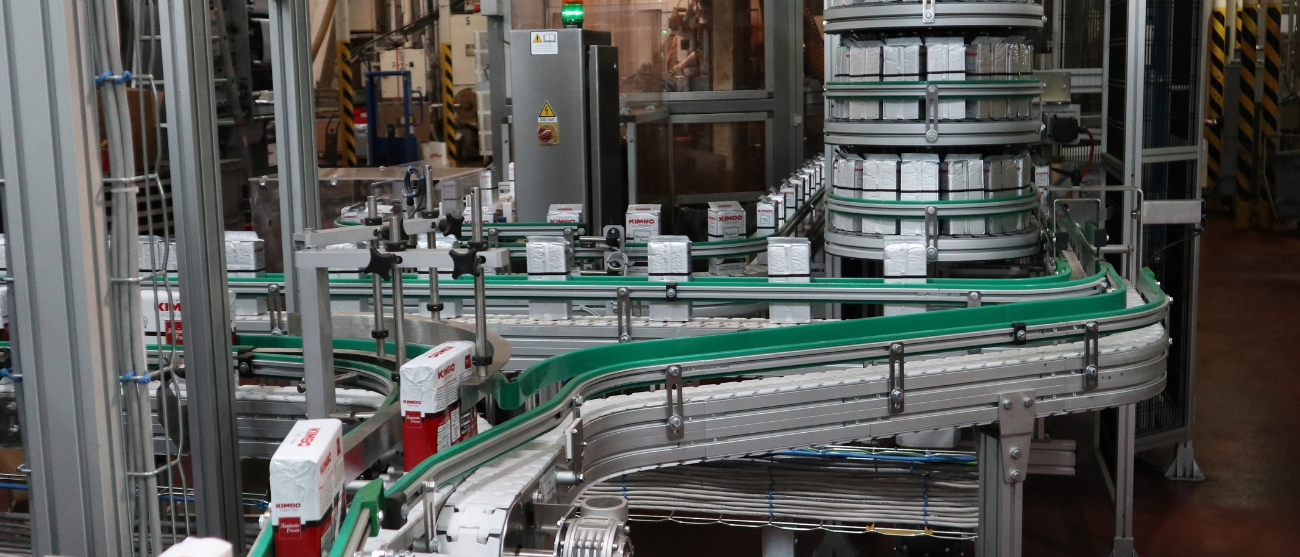
These systems, comprised of a choreography of conveyor belts arranged side by side and oriented in opposite directions, maximize available space and ensure a smooth transport of products.

Precise management of the conveyor speeds allows for maintaining an appropriate interval between moving items, preventing unwanted accumulations and ensuring a balanced work pace.

These systems are designed to ensure that, in the event of slowdowns, products start to accumulate on the last conveyor belt until a control photocell detects the critical point, triggering a stop. This prevents the risk of congestion and damage, preserving the fluidity of production with a controlled and manageable pause.

Once downstream operations are restored, the conveyor belts restart with renewed energy, accelerating movement to quickly clear any accumulated buildup and swiftly reestablish the usual pace of the line. Thanks to this strategy, production can resume its rhythm with the assurance of a system that minimizes downtime and protects every item in the production chain.

Beyond Savings: discover the multiple benefits of serpentine buffer systems

The benefits of spiral accumulation systems are numerous and have a direct impact on the packaging line and operational costs. These systems are notable for their disarming simplicity and innate ability to maximize efficiency without excessively burdening the budget.

> Operational costs optimization

The structural simplicity of serpentine buffer systems translates into a significant economic advantage. Their installation requires a moderate initial investment and, thanks to straightforward maintenance, operational costs remain low over time. Additionally, their durability and reliability ensure a rapid return on investment, making them a cost-effective solution in the long term.

> Smart management of interruptions

In the event of unexpected shutdowns, serpentine buffer systems demonstrate their strength: their ability to agilely manage these moments reduces the risk of prolonged and costly stoppages. There is no need for drastic measures such as completely halting the line; instead, the situation can be resolved with minimal impact on overall productivity.

> Operational Agility

One of the most valued features is the ability of serpentine buffer systems to “empty” upstream machines. This allows the machines to keep operating even when part of the line is inactive, preventing delays from accumulating and turning into additional costs for the company. Production can thus continue more smoothly, handling interruptions with great flexibility.

> Impact on production continuity

The implementation of serpentine buffer systems ensures superior production continuity. These solutions, while simple, support a consistently operational assembly line, maintaining high quality standards for the finished product.

Now that you have explored the strategic advantages of serpentine buffer systems, you may be wondering how to effectively implement them in your production environment. Choosing and optimizing an accumulation system requires a thorough and personalized analysis of your operations, a task that goes beyond simply selecting a technological solution.

At MH, we offer not only our extensive range of serpentine buffer systems but also exclusive access to the “MH Solution Scan.” Our advanced diagnostic tool evaluates your specific production needs, identifying areas for improvement and recommending the most effective implementation for your packaging line.

To discover how the MH Solution Scan can transform your production process, click below.

As I mentioned in a previous video, the need for space is widespread and extremely common. In the last post, I spoke about the benefits of spiral conveyors over traditional conveyors. Today, I’d like to focus on a few alternative solutions.

The bucket elevator belts, intermittent or continuous cleated belts and BAT-Vertical are relevant only in specific situations, and their maintenance costs are higher than those of spiral conveyors; that is why we recommend installing spiral conveyors whenever possible.

If you also have this type of need, do not hesitate to contact us; we are able to create any type of buffer system between packaging machines, paying particular attention to specific production needs, such as optimizing packaging space in a production facility.

I’ve been involved in product conveyor systems for years now, and one of the most frequent recurring challenges is space. Companies often contact me because they need to “find” space so they can optimise their production.

It is critical to start by accurately surveying the site to understand the state of play and evaluating all necessary factors. Only after that can we evaluate where in the production line it is possible and beneficial to install a device that will help to optimise the space, as well as determine the type of device to use.

If you also have this type of need, do not hesitate to contact us; we are able to create any type of buffer system between packaging machines, paying particular attention to specific production needs, such as optimizing packaging space in a production facility.

Heliflex is a particularly interesting LIFO buffer system, because it is able to resolve not only complicated buffer problems, but also address challenges regarding the product’s condition.

This conveyor system is unique in its class and it makes the system an incredibly cost-effective solution. More important still is that the system enables the cooling or heating of the goods, making it incredibly versatile in several ways.

If you also have this type of need, do not hesitate to contact us; we able to create any type of buffer system between packaging machines, paying particular attention to specific production needs, such as temperature maintenance.

BAT Buffer is a LIFO buffer system that we developed to address a series of recurring issues that have come up time and again in our two decades of industry experience.

Its uniqueness lies both in its speed, which can be regulated to ensure numerous benefits, as well as the possibility to continue or discontinue the buffer, making it possible to restore a product to the line at any time.

That makes BAT Buffer the ideal solution to absorb any inefficiencies caused by micro-stops, enabling a 10-20% recovery of productivity; by introducing the system upstream of the packaging machines, it is even possible to continue production without interruptions even if the machine stops.

Once the problem has been resolved, the product can be immediately restored to the packaging line without any further pauses.

With MH Buffer Systems, you will no longer have to worry about inefficiencies. Take advantage of our expertise and technology to become a reference for efficiency in your sector.

Let’s start with a premise: buffer systems can make a difference to the line’s efficiency.
The choice of model depends on various considerations (including financial ones) but there are three variables that must be kept in mind.

It is only by carefully considering these factors that we can move to a rapid consideration of the investment in the purchase of a buffer.

With MH Buffer Systems, you will no longer have to worry about inefficiencies. Take advantage of our expertise and technology to become a reference for efficiency in your sector.

When a company needs to install a merge conveyor, there are a range of variables that make the decision a difficult one.

The need for a merge conveyor in a packaging line is itself enough to indicate a process with a very high degree of complexity and automation throughout.

Choosing the right merge conveyor means taking into account:

  • how it protects the quality of the items;
  • making sure the machines downstream work as intended;
  • the efficiency of the entire packaging line.

It is clear therefore that mistakes could be critical.
The risk of ending up with an ineffective and obsolete packaging line is too high. That is why, whenever a client asks me which model is the best fit, I always start with a thorough analysis of their current operations, needs and expectations.

So, let’s start with a quick overview of these machines, explaining their purpose, their benefits and their limitations.

To start with, there are different types of merge conveyors, but the majority fall into one of two broad categories: mechanical (or buffer) merges and dynamic merges.

Buffer merges

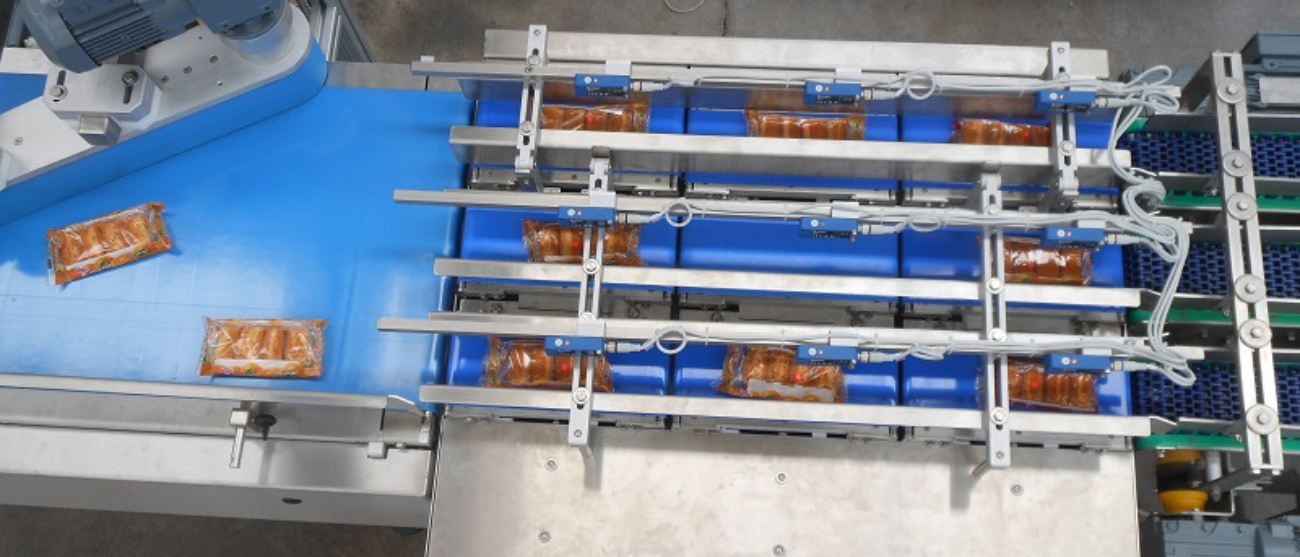
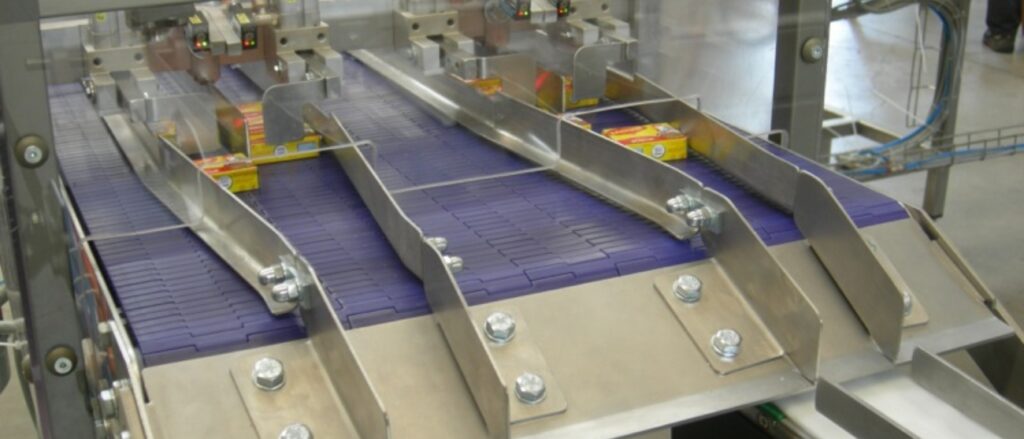
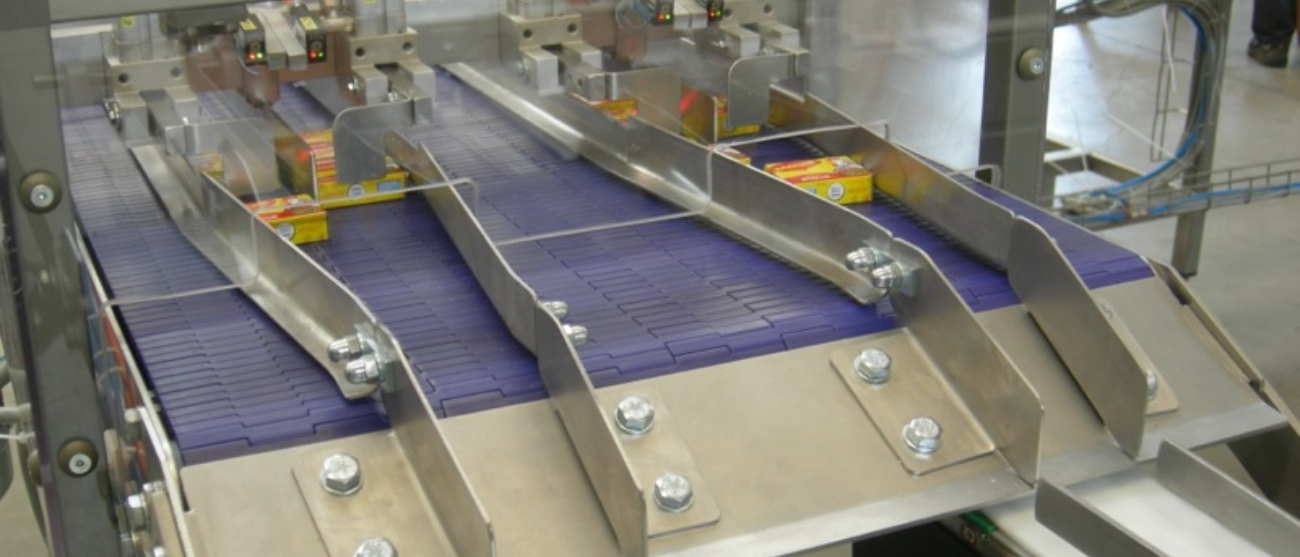
This product is equipped with “gates” at the entry lanes that remain closed until the convergence area is free, at which point they let the items through one after the other.

This is a simple and cost-effective solution that works as long as two conditions are met:

  • the items must be able to withstand the pressure during the buffering phase;
  • the downstream machines must be able to receive the items in a convoy without being triggered to do so.

The first point is related to the integrity of the items, and essentially means that it is appropriate only for boxes, trays and products stacked in tight packaging.

The second point requires greater detail.
As they leave the merge, the items are touching each other, or very close to it, but the speed of the conveyor belt is the same as it would be with products that space out the items with one item’s worth of space between one and the next.
The average productivity of the line doesn’t change, but when the convoy arrives downstream, the machine’s productivity at that moment is doubled.

That is why the machine must be able to manage the flow, otherwise it is necessary to regulate the flow with one conveyor belt to increase the speed and another to decrease it after the merge; however, this solution is naturally bulkier, with two more motors and a more complicated logic controller.

Dynamic merges

When handling items that cannot be buffered for fear of overlap (generally pillow pouch or flowpack packaging) or damage caused by excessive pressure or because downstream machines need the items to arrive at a regular frequency and with a certain distance between one item and the next, then it becomes necessary to install a dynamic system.

A dynamic belt merge is a scalable system consisting of a series of modulating conveyor belts that increase or decrease the speed of the items as they come through, ensuring enough space to avoid a situation where two items reach the convergence point at the same time.

With these devices, the products are always handled one at a time, thereby avoiding having groups of items together and ensuring regular spacing. As the production pace increases, the number of modulators must also increase.

M.H. is an Italian brand with thirty years of experience with handling movement and logistics within production facilities in every sector of industry, with a range of solutions for buffer systems.

When it comes to dynamic merge conveyors, MH’s fastest system isthe HP dynamic system that can reach manufacturing of up to 600 ppm for 150mm flowpacks. Depending on the weight and packaging of the items, it is possible to use up to five phases of conveyors with brushless DC motor and vacuum suction to manage rapid acceleration.

Our wealth of experience means that M.H. is also able to support companies in optimising and streamlining their packaging lines with our innovative and technologically advanced solutions.

he first questions that we have to ask ourselves in these situations are: Are my packaging machines suited to this system? Can my goods be conveyed using this type of merge?


Buffer or mechanical merges are equipped with “gates” at the entry lanes that remain closed until the convergence area is free; once the gates have been opened, these release the products through one after the other.

If you want to find out more about our products or to discover how you can optimise your packaging process

It is necessary to insert a belt merge, which indicates that we’re working with a packaging line with a high degree of complexity and automation.
Process optimization is the goal, improving the packaging machine’s performance. But if you install the “wrong” system, you risk the opposite effect of having to contend with regular unplanned downtime.

When it comes to dynamic belt merges, we at MH have developed the HP dynamic system that can reach manufacturing of 600 ppm for 150mm flowpacks.


This system includes one-by-one timing of the items, created using a multi-belt system with independent power for each of the entry lanes. The machine’s control system enables oversight of the step between the packaging coming out of the system and ensures that the timing occurs without contact, removing the risk of jams, overlaps or damage.

Throughout my career, I have often come across companies who make the mistake of underestimating the importance of the packaging line of their products dei loro prodotti.

The resultReduced efficiency and the risk that machines may not work at maximum capacity, or worse still, grind to a halt.

These situations happen because someone erroneously thinks that product packaging requires buying the primary and, if necessary, secondary packaging machines and nothing more, failing to take into account the systems necessary to connect them.

There is an image that often comes to mind when I have to tackle this kind of problem: I think of the conveyor belts like the circulatory system that carries blood around the body and allows the different organs to function. Different packaging machines have to be connected to each other by an efficient “circulatory system” that is able to iron out any discrepancies that may exist between them.

Underestimating the importance of this “circulatory system” can result in production problems and delays.

When would we need a storage system?

There are two situations in which storage systems are critical:

  • when we need to compensate for operating differences between two machines that are connected in series;
  • when we need to regain productivity during micro-stops of downstream machines.

The first condition typically occurs when an intermittent machine is connected to a continuous one; for example, when an upstream machine produces product groups at regular intervals, while the downstream machine requires an ongoing flow of products equidistant from each other.

In the second case, on the other hand, we have start-ups and shut-downs of two machines that are incompatible with each other.

In these cases a buffer is a simple solution that requires a few metres of conveyor belt to regulate the flow and avoid regular stoppages in the production process.

As you can imagine, the efficiency gains are significant.

Which buffer to choose?

The choice of system depends on various considerations (including financial ones) but there are three variables that must be kept in mind:

  • the operating method of the storage system;
  • the available storage space;
  • the recovery capacity.

It is only by carefully considering these factors that we can move to a rapid consideration of the investment in the purchase of a buffer.

How the buffer works

The buffer can either be LIFO(Last In First Out), in which, as the name suggests, the first product to enter the buffer is the last one to leave it, or FIFO (First In First Out), in which the first product into the buffer is the first one out.

Among FIFO systems, there is a choice of:

  • machines that are external to the production line;
  • machinery that keeps the product within the production line, gradually increasing the available transportation space. In the latter case, the product is fully traceable, and it is considered more of an advanced storage system rather than a buffer.

LIFO buffers are the cheaper and simpler models. They are particularly suited to non-perishable, with long expiry dates, that can wait a long time for final packaging.

FIFO systems, on the other hand, are recommended for fresh products that must pass through the packaging line within a limited time frame in order to retain their freshness. These machines are usually more complex and their price is often not far off that of the packaging machines themselves.

Storage space

The decision regarding the dimensions of the storage space is linked to the efficiency of the upstream and downstream packaging machines and the time it takes to bring them back online in cases of micro-stops. In cases of a longer stop caused by mechanical failure, it is unlikely that a system within the packaging line will be sufficient to avoid any interruption at all.

In most cases, the storage space can correspond to a production time of 2-5 minutes; obviously there may be situations in which the demand for storage is notably higher and in this case it is worth considering the cost-benefit analysis and the impact that the buffer’s presence might have on the time it takes to bring the packaging line back online.

Often, the long time to recover from a micro-stop is because the operator is unable to focus exclusively on fixing the problem, because the upstream products continue to arrive, with the potential for pressure and chaos along the line.
Real-world conditions have shown that the presence of a buffer can help to contain machine downtimes.

Another example might be whereproducts travel a long distance along the packaging line and the client wants the ability to fully empty them. In this case, the necessary space can rise to 20 minutes or more. Such situations are rare but can happen.

Recovery capacity

A properly sized packaging line requires a buffer that is able to recover the product during regular production. The downstream machine must also be able to work at a rate greater than its nominal one, usually 10%-20% faster.

The time for emptying the buffer depends on this recovery capacity.

For more information on this subject, I have published a video dedicated to choosing the right storage system.

M.H. is an Italian brand with thirty years of experience with handling movement and logistics within production facilities in every sector of industry. We offer dedicated solutions for LIFO and FIFO storage systems, tailored to the client’s needs.

Our wealth of experience and our innovative and technologically advanced solutions mean that M.H. is also able to support companies in optimizing and streamlining their packaging lines.

Insights, ideas and news
about product handling

A high-quality packaging line can deliver reliable performance for decades, especially when supported by careful engineering and proper maintenance.

The service life of a system represents significant value, but being fully operational does not always mean it can meet today’s production, technological and regulatory requirements.

New packaging materials, sustainability goals, and increasingly demanding industry standards require systems capable of evolving – a particularly important consideration in the food industry, where hygiene, ease of cleaning, and safety are fundamental requirements.

Do you want to learn how to adapt your system to new regulations and changing production requirments?

Contact us for a technical consultation.

Converging multiple product lanes into a smaller number of lanes may seem like a simple operation. In reality, the way products are collected, timed and delivered to the downstream machine can have a significant impact on the consistency of the entire process.

This is why designing a lane merger is not simply a matter of considering line speed. First of all, it is necessary to understand how the product behaves: its shape, stability, fragility, ability to run in contact with other products, and the pitch required by the downstream machine are all factors that help define the right solution.

Based on these parameters, M.H. Material Handling designs the merging configuration best suited to the characteristics of the line and the product.

The first criterion is the product: can it withstand accumulation?

Even before speed is considered, the assessment starts with the product and its ability to withstand accumulation.

A product that can tolerate accumulation can withstand the pressure generated by products touching and pushing against one another. Boxes, trays and products stacked in tightly packed formats fall into this category.

A fragile product, or one prone to overlapping, cannot withstand this type of stress, and a pressure-based system could compromise its integrity.

This is why resistance to accumulation is the first factor to be assessed, as it determines whether a pneumatic or dynamic lane merger is required even before line throughput is considered.

There is, however, one useful exception to bear in mind.

Even with a product that can withstand accumulation, the presence of many formats with significantly different widths often makes a dynamic solution preferable. This avoids format changeovers using adjustable or automatically controlled guides and, because the products do not come into contact with one another, eliminates the risk of misalignment.

Pneumatic, DU Series or HP Series: the right technology for each product

A pneumatic lane merger is the simplest and most cost-effective solution, but it is suitable only for products that can tolerate accumulation.

It operates using gates on the infeed lanes, which release the product rows in sequence, and requires two conditions: the products must be able to withstand pressure during accumulation, and the downstream machine must be capable of receiving products in a continuous train without being adversely affected.

The second requirement has a specific technical reason. At the outlet, the products are close together or touching. When this train reaches the downstream machine, the instantaneous speed seen by the machine is therefore twice the average speed. Either the downstream equipment must be able to handle this, or the flow must be normalised using a deceleration conveyor followed by an acceleration conveyor, at the cost of a larger footprint, two additional motors and more complex control logic.

The pneumatic solution is also well suited to a particular application: where the carton itself is the primary package, as is common in the pasta industry, in the section between secondary packaging and the case packer, where the product can be accumulated.

When, on the other hand, the product is delicate or must be handled without contact, dynamic lane mergers are used. M.H. offers two series.

The DU Series merges products by reducing the number of lanes through anti-overlap timing belts operating at controlled differential speeds, one for each infeed lane. Products are handled individually and without contact, making the system suitable for fragile products or products prone to overlapping, at speeds of up to approximately 240 pieces per minute.

The HP Series is the evolution of the DU Series, developed specifically for high-speed flow-wrapping lines and for connections between primary and secondary packaging. In this case, pressure is completely eliminated because the products must never come into contact. Each item is individually timed by means of a multi-belt system with independent brushless drives for every infeed lane, combined with blower-generated vacuum for higher acceleration rates, reaching up to 600 pieces per minute at the outlet. In flow-wrapping applications, precise product timing is essentially mandatory, as it is the only way to prevent products from overlapping.

Outlet pitch: a detail that should not be underestimated

As speed increases, it becomes essential to achieve the most consistent possible product pitch at the outlet of the lane merger, because this determines how the downstream machine receives each item.

A product flow delivered in trains can push the downstream machine beyond its production limits because of the instantaneous speed peaks described above. Individual product timing, on the other hand, controls the distance between packs and transfers them without contact, reducing the risk of jams and overlaps.

The choice always starts with the product

In every case, the starting point is always the product. The first step is to determine whether it can withstand accumulation, then assess its fragility and shape, the required production rate and the number of lanes to be merged, and finally the type of downstream machine, particularly whether it is a flow wrapper positioned between primary and secondary packaging.

The right technology emerges from these answers: a pneumatic lane merger for products that can withstand pressure, the DU Series for products requiring contact-free handling, and the HP Series for high-speed flow-wrapping applications.

At M.H. Material Handling, we manufacture material-handling systems and efficiency solutions for packaging lines in the food industry and related sectors. Over more than forty years of field experience, from food & beverage to pharmaceuticals and packaging, we have developed the expertise required to identify where lane merging can make a real difference and where it is unnecessary. On this basis, we design customised pneumatic and dynamic lane mergers from the DU and HP Series, starting with an analysis of the production line.

If you are planning a new line or a revamping project and lane merging is still an open issue, we can assess it together to identify the most suitable configuration.

Is your packaging line inefficient? Just add a buffer and the problem is solved.

Or at least, that’s what many people think.

Adding a buffer to an existing line can turn into an expensive and unnecessary investment. Before proceeding with the installation, carefully assess all the preliminary factors: an in-depth analysis can help you avoid ending up with the same problems you started with.

To identify the most suitable solution for your packaging line, contact us: we’ll analyse your specific case and help you define the most effective solution.

What happens when the connection between the machines in a packaging line is not designed correctly?

The risk is that slowdowns, accumulations, micro-stoppages and disruptions in the flow may occur, affecting the efficiency of the line and, over time, the overall performance of the plant.

This is the idea behind the new video series from ConveyorU, the M.H. Material Handling Academy dedicated to intelligent product handling in packaging lines.

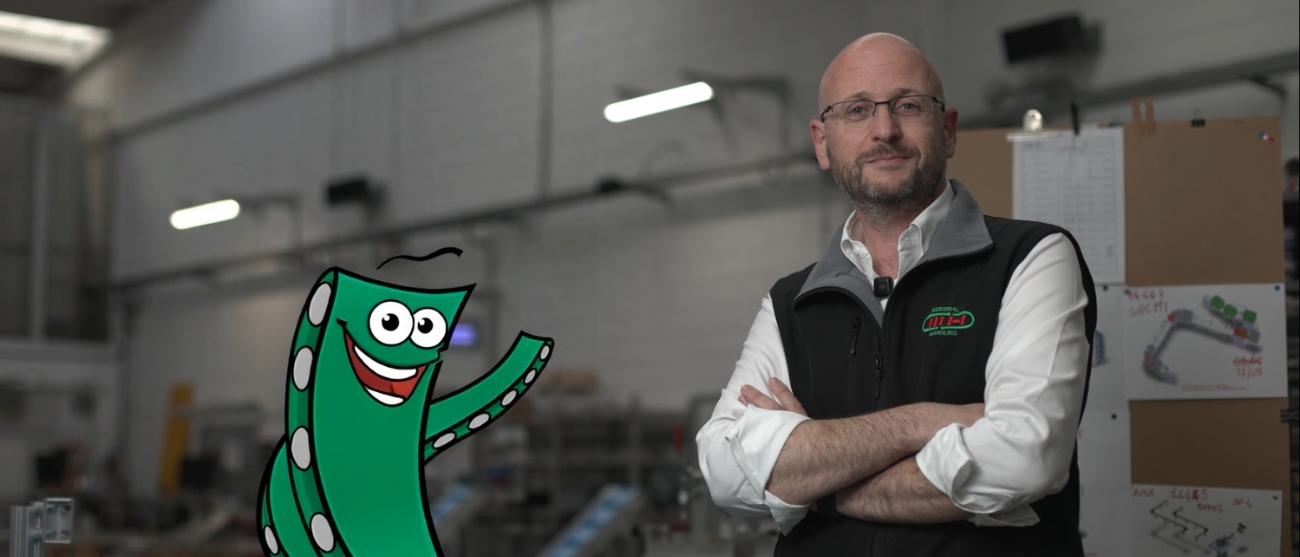
Guiding you through this journey are Convy, the Academy’s mascot, who asks the questions of those who work in production plants every day, and Luca Fontana, CEO of M.H. Material Handling, who answers based on forty years of experience in line design.

In this first episode, they address an apparently simple question: why are conveyors so important?

As the video shows, the value of a conveyor depends on how it is integrated into the line, the required speed, the operating conditions and the specific production requirements.

The required characteristics also vary significantly depending on the industry: a line dedicated to food or pharmaceutical packaging has different priorities compared to an application in logistics, mechanical engineering or the automotive industry.

This is just one of the topics covered by ConveyorU, a journey dedicated to the different aspects of product handling and packaging line efficiency.

Do you want to improve the efficiency of your line?

Every line has different conditions, products and critical issues. To identify areas for improvement, it is therefore necessary to analyse the process as a whole, looking at how the machines interact and how the product is handled.

The M.H. Material Handling team can help you assess your line, identify any critical points and develop a solution based on the actual needs of your plant.

Contact us to discuss your application and discover how to make your product handling more efficient, continuous and easier to manage.

It happens for different reasons. Sometimes it is a decision made by the purchasing department aimed at reducing costs. Sometimes the end customer requests less plastic. Sometimes it is compliance with new European packaging regulations, such as the PPWR Regulation. Sometimes it is all of these things combined.

Whatever the reason, when the primary film gets thinner, the package becomes lighter and more deformable.

On the conveyor, however, this means less stability.

On the conveyor, just a few microns change everything

A 28-micron film creates a very different pack from a 40-micron one. Lighter and more flexible, it is more affected by any type of contact – whether with product guides or with other packs in accumulation zones. The risk of deformation or overlapping inevitably increases.

Downstream, this results in micro-stops and scrap, and often in complaints from customers receiving damaged products.

The packaging machine continues to run as usual, but the entire section between production and packaging is no longer suitable for the new format. As a result, speeds, chain type, side guides, and contact surfaces all need to be reconsidered, because the entire conveying section must be recalibrated according to the new mechanical properties of the pack.

The buffer that worked yesterday may no longer be suitable today

An accumulation system is designed based on the real parameters of the format, such as weight, rigidity and pack dimensions. When these parameters change – for example, when switching to lighter or more flexible packaging – the behaviour of the product inside the buffer changes accordingly. In a pressure-based system, a less rigid pack therefore risks deformation or damage during accumulation if everything is not correctly set.

The MH Material Handling BAT Buffer operates without pressure on the product and is designed to be flexible and configurable across multiple formats and layouts. This makes it suitable even for lightweight and delicate packs.

However, flexibility does not mean that a single setup works for everything: if the format changes significantly and the buffer is not readjusted, the risk of jams and damage remains.

A useful rule of thumb during the design phase is that a buffer should hold between 2 and 5 minutes of production: the time needed to absorb the typical micro-stops of the line without losing productivity. With lighter formats, however, it is worth recalculating both the effective accumulation capacity and the discharge speed, considering that the downstream machine should be able to run at least 10–20% faster than average to recover the accumulated product.

Downstream of the packaging machine is where the real game is played

When package weight and rigidity change, the requirements of the downstream section of the primary packaging also change. All downstream mechanics – aligners, phases and lane combiners – are suddenly handling a product that is no longer matches the original design assumptions.

The packaging machine keeps running, but the downstream area – the one nobody actively monitors – is where efficiency is lost.

That is why every format change requires a check of the feeding and conveying systems, and it must be done before problems arise.

How to adapt the line without stopping production

The process starts with mapping the characteristics of the new package: weight, dimensions, rigidity and coefficient of friction.

The new format is then tested across every section of the line, not only on the packaging machine, because each section reacts differently and must be checked individually.

The most important step is to involve the conveyor supplier already during the design phase, not once the problem has already become evident.

Working in stages – validating one section at a time before moving on to the next – allows production to remain active while reducing risks.

The format changes. The line cannot stay the same

When a company decides to reduce packaging weight or thickness – whether to cut costs or to meet sustainability requirements – the decision usually starts in the purchasing department. A thinner film is selected, the price is negotiated, and the specification is updated in the system. And then it stops here.

The problem is that no one checks the impact of that change on the packaging line. The process engineer is not involved, at least not immediately. They are called in weeks later, when machine downtime starts to increase, scrap rises, and OEE drops without an obvious cause.

The machine is the same. The product is the same. However, the packaging has changed, and that change affects the entire line: from packaging to accumulation, from conveying to palletizing.

For over 40 years, MH Material Handling has been designing conveying and accumulation systems. We work on layout analysis, buffer configuration, feeding system adaptation, and the integration of new solutions into existing lines, ensuring everything works with today’s format, not yesterday’s.

If you are considering a format change, or if you are already facing issues after a reduction in material thickness, let’s talk before inefficiencies become the norm. A preventive technical discussion costs far less than a stopped line.

It’s 6:45 a.m. The line is down for end-of-shift cleaning. The operator directs a high-pressure water jet onto the conveyor, moving the lance from left to right, then shuts off the valve.

On the surface: clean.

In reality: the frame beneath the belt has three enclosed corners where water never reaches. Organic residue builds up there, day after day.

This is not a cleaning issue. It’s a machine design issue. And the difference between a line that passes a hygiene audit and one that barely gets through – every single time – comes down to this.

Washdown: effective on paper, limited in practice

Washdown – high-pressure cleaning with water and detergents – is the most common response to contamination risks in food processing lines.

It’s relatively inexpensive to implement and provides an immediate sense of control.

The problem is that it only works if the machine has been designed to be cleaned. If the frame has enclosed cavities, if chain returns are inaccessible, if joints retain moisture, the water jet doesn’t solve the issue. It just relocates it. The result is increasing consumption of water and chemicals, longer downtime, and a real risk of cross-contamination. Meanwhile, the quality manager signs off on sanitation reports that, in practice, cannot be fully guaranteed.

Hygienic Design eliminates the problem at the source

Hygienic Design, when applied to machinery, is a design approach that starts with a specific question: how can this machine be thoroughly cleaned, under real operating conditions, with the available personnel, in the shortest possible time?

A conveyor built with this logic features open-frame construction, sloped surfaces for effective drainage, tool-less disassembly, food-grade certified chains, and materials resistant to aggressive cleaning agents.

It’s not “washable” because someone claims it is – it’s washable because there are no areas where residue can accumulate.

From an operational standpoint, the impact is significant: sanitation downtime is reduced, water and chemical usage decreases, and contamination risk is minimized. Hygiene audits become a natural outcome of the design – not a recurring uncertainty.

Not every line carries the same risks – that’s why choosing the right approach matters

In practice, the choice between a Hygienic Design approach and a Washdown system depends on where the conveyor is positioned within the line and the type of product it handles.

For unpackaged products – fresh food, meat, dairy, bakery – the contamination risk is extremely high. Here, Hygienic Design is the minimum requirement.

Monolithic belts with no internal fabric, such as the SaniBelt line we design at MH, are specifically developed for this purpose. They have no exposed textile surfaces that can retain residue and can be cleaned in just a few minutes.

When handling packaged products, still within a white area, requirements change. A washdown design can be sufficient, provided stainless steel construction is maintained and flat surfaces and enclosed cavities are avoided. In this case, tool-less belt removal for cleaning is no longer essential. Moving into grey areas, hygiene requirements can be relaxed further, with greater emphasis on robustness and throughput. Depending on the environment, you may still opt for stainless steel frames – for example, where floors are regularly washed with water – or choose anodized aluminum structures where this is not required.

3 practical steps to quickly identify critical points in your line

Before deciding whether to upgrade a single conveyor or redesign an entire section, you need a simple method to identify where the real issues lie.

Here are three key aspects to assess your current situation:

The first step is to map the line by hygiene risk level

Open product, packaged product, and transition zones. For each area, define the conveyor type and the current cleaning regime.

The second step is to inspect critical design points

Enclosed frame corners, cavities beneath chain returns, joints between modules, and moisture-prone areas. If you can’t reach a spot with a cloth, water won’t clean it effectively either.

The third step is to measure actual sanitation time

If it exceeds 20 minutes per conveyor in high-risk areas, you have a design problem. And remember: no stricter cleaning procedure can compensate for a design flaw.

A layout is designed once -but it’s lived with every day

The issue is that most companies address hygiene only when the problem is already visible: a difficult audit, a product recall, or uncontrolled sanitation costs. At that point, the room for action is limited.

At MH Material Handling, we have been designing conveying systems based on these principles for over forty years. From the Saniflex belt for high-risk areas to the BAT system with USC chain for high-speed lines, every solution starts from a real analysis of the customer’s operating conditions – not from a standard catalog. If your sanitation times are too long, if hygiene audits are always uncertain, or if you are designing a new line, get in touch. We can analyze your processes together and identify the most effective solutions to protect product safety and reduce operating costs.