M.H. – Material Handling

Efficiency improvement of the lines

As I mentioned in a previous video, the need for space is widespread and extremely common. In the last post, I spoke about the benefits of spiral conveyors over traditional conveyors. Today, I’d like to focus on a few alternative solutions.

The bucket elevator belts, intermittent or continuous cleated belts and BAT-Vertical are relevant only in specific situations, and their maintenance costs are higher than those of spiral conveyors; that is why we recommend installing spiral conveyors whenever possible.

If you also have this type of need, do not hesitate to contact us; we are able to create any type of buffer system between packaging machines, paying particular attention to specific production needs, such as optimizing packaging space in a production facility.

I’ve been involved in product conveyor systems for years now, and one of the most frequent recurring challenges is space. Companies often contact me because they need to “find” space so they can optimise their production.

It is critical to start by accurately surveying the site to understand the state of play and evaluating all necessary factors. Only after that can we evaluate where in the production line it is possible and beneficial to install a device that will help to optimise the space, as well as determine the type of device to use.

If you also have this type of need, do not hesitate to contact us; we are able to create any type of buffer system between packaging machines, paying particular attention to specific production needs, such as optimizing packaging space in a production facility.

On this blog, I often discuss packaging process optimization and the machinery that can be installed to achieve this goal. Designing a line from scratch, perhaps even with ample space available, is one thing; intervening on an existing line with its mechanisms already in motion is another.

Is it still possible to optimize the process in these cases? Good question! The answer is yes, but there are multiple paths to take.

Today, I want to outline some solutions to this issue because more and more companies already have a packaging line but need to make it more efficient, both in terms of performance and ergonomics.

Recently, we’ve encountered many with this problem… just think of the contacts we made during Cibus Tec at the end of 2023.

What do these production realities need?

  1. To gain space in facilities where square meters are limited and often fully utilized.
  2. To increase packaging speed.
  3. To free up floor space and develop the process vertically (returning to point 1).
  4. To make the phase from primary to secondary packaging more efficient.
  5. To adapt to changes related to seeking greater sustainability in processes.

What are the solutions in these cases?

T o create overpasses and free up floor space, some technologically advanced solutions can be introduced, such as:

  • Operator passages with gate-opening belts;
  • Retractable systems;
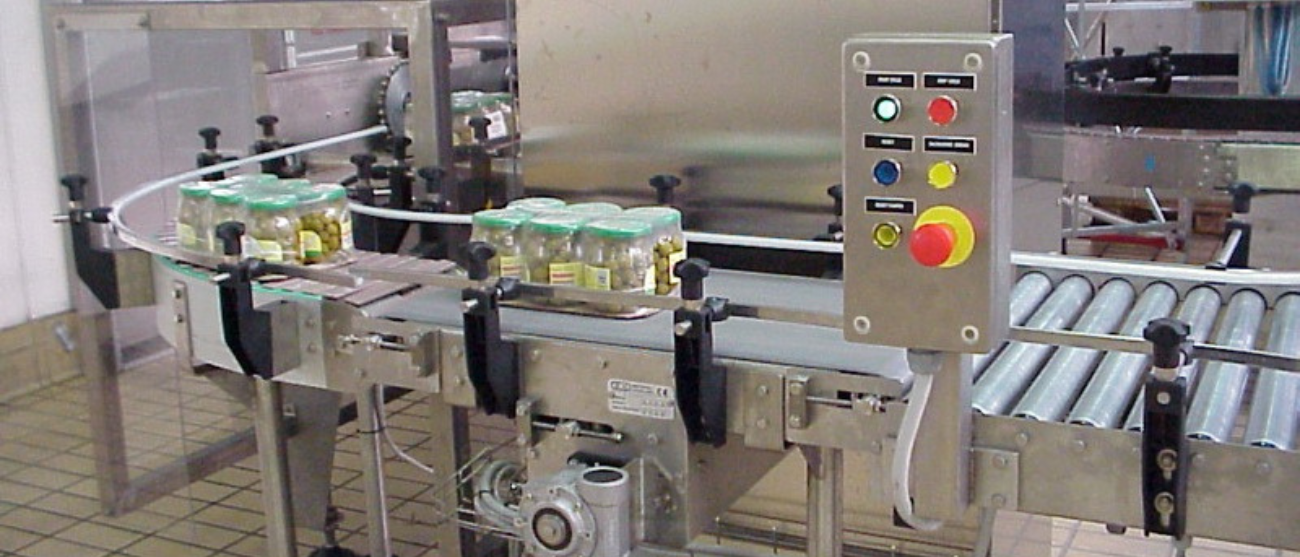
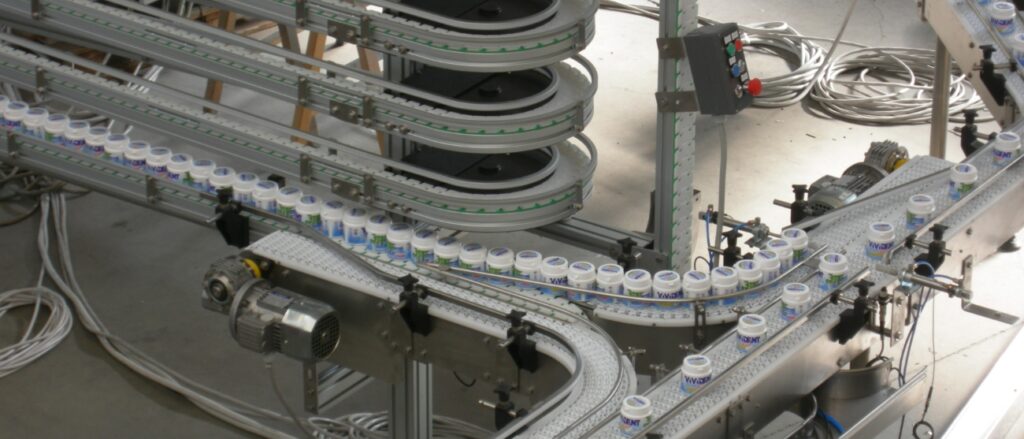
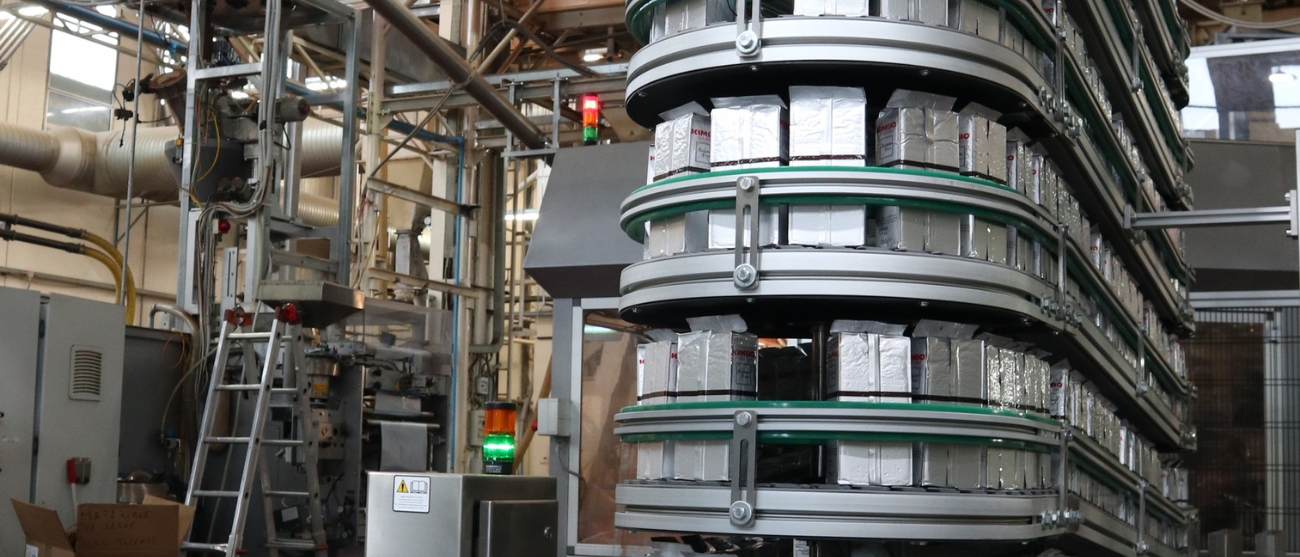
  • Spiral conveyors.

I want to focus on spiral conveyors because, in these cases, I consider them a valid solution.

It’s no coincidence that at Cibus Tec 2023, we presented the SVn-Bare lightweight spiral in collaboration with Ambaflex, specifically designed for agile aerial connections between primary and secondary packaging with significant economic advantage without compromising on quality and achievable peak speeds.

Another “powerful weapon” to improve the efficiency of packaging lines is represented by buffer systems; at MH, we can’t talk about them enough because they can really make a difference.

Buffer systems, for example, allow for:

  • Compensating for operational differences between two machines connected in series;
  • Regularizing the flow and preventing the processing line from constantly stopping;
  • Recovering productivity in the event of micro-stops on downstream machines.

However, integrating a buffer system at a later stage into an existing line is not straightforward; this operation requires significant attention and a series of specific evaluations regarding the performance outcomes to be achieved.

Adaptations to environmentally friendly packaging.

Another highly topical issue leading companies to plan a series of investments to modify their packaging lines is the need to adapt to the use of low-environmental-impact packaging.

When I talk about “low-environmental-impact packaging,” numerous possibilities open up that include solutions aimed at reducing packaging material or actually replacing plastic with paper, cardboard, or compostable material.

In these cases, the packaging process must keep up with progress. And keep in mind that companies will increasingly have to deal with changes imposed by a search for sustainability in processes.

To this end, at M.H., we are continuously investing in research and development of products capable of offering customers innovative and sustainable solutions in line with new market needs and regulatory requirements.

For example, the Sani-Flex hygienic design transport system, our standard for the transport of naked products, is specifically designed to meet stricter regulations; Saniflex takes into account the sanitization needs of some products to help reduce bacterial load during the process.

Another example is our partnership with Intralox for the construction or development of special products such as spiral elevators, ThermoDrive belts, and passive ARB conveyors.

These mentioned are just some of the solutions designed by M.H. to support companies in the process of modernizing their packaging lines.

If you also need to make your lines more functional and efficient, do not hesitate to contact us; we will guide you on a path to optimizing productivity specifically tailored to your needs.

Crackers, rusks and biscuits are goods that require particular care and are always packaged in a stack, one on top of the other.
Because of their form and the method of primary packaging, they require special conveyor systems.

To meet this specific need, in the phase after cooling that usually takes place on wide conveyor belts, we at M.H. Material Handling have developed a dedicated line of conveyors with a modular plastic chain system, FDA certified for use in the food industry.

Compared to traditional belt systems, this solution offers significant benefits in terms of ease of use and maintenance.

Our decade of experience has taught us how much demand there is for systems that can be easily adapted to align with companies’ packaging process and to optimise their productivity.

Let’s start with a premise: buffer systems can make a difference to the line’s efficiency.
The choice of model depends on various considerations (including financial ones) but there are three variables that must be kept in mind.

It is only by carefully considering these factors that we can move to a rapid consideration of the investment in the purchase of a buffer.

With MH Buffer Systems, you will no longer have to worry about inefficiencies. Take advantage of our expertise and technology to become a reference for efficiency in your sector.

When a company needs to install a merge conveyor, there are a range of variables that make the decision a difficult one.

The need for a merge conveyor in a packaging line is itself enough to indicate a process with a very high degree of complexity and automation throughout.

Choosing the right merge conveyor means taking into account:

  • how it protects the quality of the items;
  • making sure the machines downstream work as intended;
  • the efficiency of the entire packaging line.

It is clear therefore that mistakes could be critical.
The risk of ending up with an ineffective and obsolete packaging line is too high. That is why, whenever a client asks me which model is the best fit, I always start with a thorough analysis of their current operations, needs and expectations.

So, let’s start with a quick overview of these machines, explaining their purpose, their benefits and their limitations.

To start with, there are different types of merge conveyors, but the majority fall into one of two broad categories: mechanical (or buffer) merges and dynamic merges.

Buffer merges

This product is equipped with “gates” at the entry lanes that remain closed until the convergence area is free, at which point they let the items through one after the other.

This is a simple and cost-effective solution that works as long as two conditions are met:

  • the items must be able to withstand the pressure during the buffering phase;
  • the downstream machines must be able to receive the items in a convoy without being triggered to do so.

The first point is related to the integrity of the items, and essentially means that it is appropriate only for boxes, trays and products stacked in tight packaging.

The second point requires greater detail.
As they leave the merge, the items are touching each other, or very close to it, but the speed of the conveyor belt is the same as it would be with products that space out the items with one item’s worth of space between one and the next.
The average productivity of the line doesn’t change, but when the convoy arrives downstream, the machine’s productivity at that moment is doubled.

That is why the machine must be able to manage the flow, otherwise it is necessary to regulate the flow with one conveyor belt to increase the speed and another to decrease it after the merge; however, this solution is naturally bulkier, with two more motors and a more complicated logic controller.

Dynamic merges

When handling items that cannot be buffered for fear of overlap (generally pillow pouch or flowpack packaging) or damage caused by excessive pressure or because downstream machines need the items to arrive at a regular frequency and with a certain distance between one item and the next, then it becomes necessary to install a dynamic system.

A dynamic belt merge is a scalable system consisting of a series of modulating conveyor belts that increase or decrease the speed of the items as they come through, ensuring enough space to avoid a situation where two items reach the convergence point at the same time.

With these devices, the products are always handled one at a time, thereby avoiding having groups of items together and ensuring regular spacing. As the production pace increases, the number of modulators must also increase.

M.H. is an Italian brand with thirty years of experience with handling movement and logistics within production facilities in every sector of industry, with a range of solutions for buffer systems.

When it comes to dynamic merge conveyors, MH’s fastest system isthe HP dynamic system that can reach manufacturing of up to 600 ppm for 150mm flowpacks. Depending on the weight and packaging of the items, it is possible to use up to five phases of conveyors with brushless DC motor and vacuum suction to manage rapid acceleration.

Our wealth of experience means that M.H. is also able to support companies in optimising and streamlining their packaging lines with our innovative and technologically advanced solutions.

he first questions that we have to ask ourselves in these situations are: Are my packaging machines suited to this system? Can my goods be conveyed using this type of merge?


Buffer or mechanical merges are equipped with “gates” at the entry lanes that remain closed until the convergence area is free; once the gates have been opened, these release the products through one after the other.

If you want to find out more about our products or to discover how you can optimise your packaging process

It is necessary to insert a belt merge, which indicates that we’re working with a packaging line with a high degree of complexity and automation.
Process optimization is the goal, improving the packaging machine’s performance. But if you install the “wrong” system, you risk the opposite effect of having to contend with regular unplanned downtime.

When it comes to dynamic belt merges, we at MH have developed the HP dynamic system that can reach manufacturing of 600 ppm for 150mm flowpacks.


This system includes one-by-one timing of the items, created using a multi-belt system with independent power for each of the entry lanes. The machine’s control system enables oversight of the step between the packaging coming out of the system and ensures that the timing occurs without contact, removing the risk of jams, overlaps or damage.

Those who work with baked goods on a daily basis know all too well the critical importance of the packaging step.

Mistakes are not an option, and can lead to problems on the packaging line, compromising the integrity of the products and jeopardising the hard work done in preparing them.

All of these can lead to unplanned production downtime which, as you will know, potentially creates delays, problems and significant financial consequences.

Let’s begin by accepting the premise that often, especially in our country,food producers have two vital needs:

  • maximising space, as the available surface area reserved for production — and especially packaging — is limited and precious;
  • streamlining the packaging process as much as possible.

Taking these considerations into account, it is clear that conveyor belts have a vital role to play in packaging. The right conveyor belt can make all the difference.

So, let’s take a look at the different types of conveyor belts and when we might use them, taking into account that with baked goods it is worth distinguishing between different categories of products.

Regarding the cooling method, it can either be natural, in water (immersion or spray) or in a controlled environment (with dozens of different technological solutions available). The conveyor belts that make up the cooling system can be either spiral belts (adapted to reduce the necessary space for the cooling system), large conveyor belts or conveyors for baking trays.

Bread and dough products

When we talk about bread and dough products, they can take countless different forms: it goes without saying that each form has its own “rules” for conveying and packaging.

A recurring process requires a cooling system with a spiral conveyor followed by chicane aligners downstream that feed into the primary packaging machine.

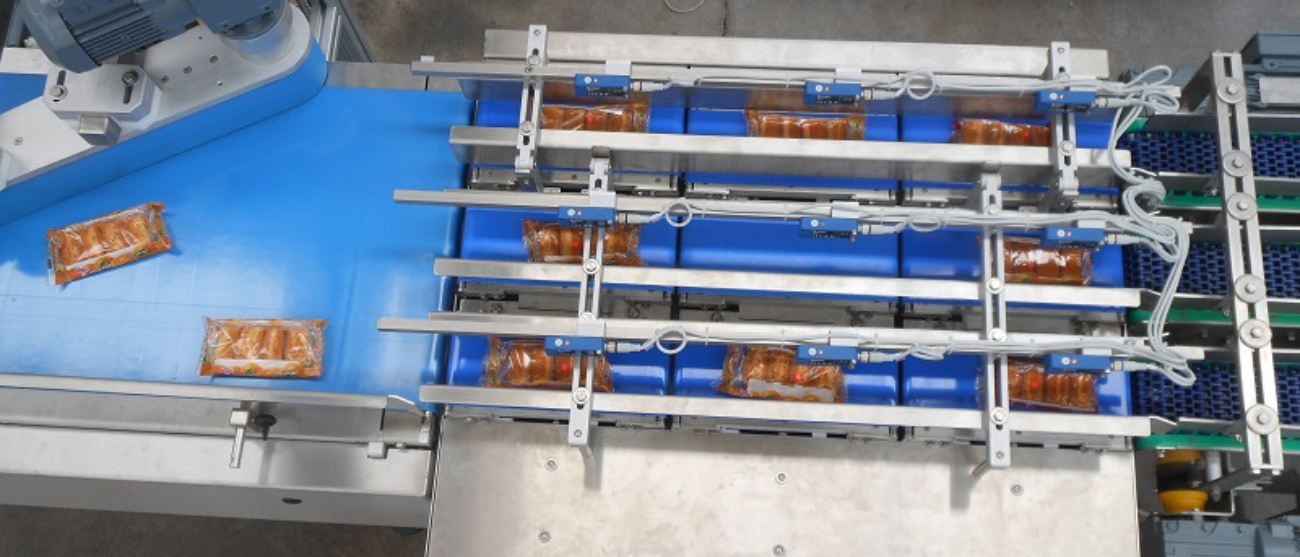
The aligner consists of a series of wide belts with increasing speed, equipped with bulkheads and motorised diverters that channel the items through a series of chicanes that carry them through one or more neat lines.

The packaging machines could be either horizontal flowpacks, or vertical in the case of mini bread rolls, for example.

With Pullman sandwich loaves, the loaves pass through slicing machines that slice the bread before it’s packaged.

Bread in its various different forms very rarely comes in secondary packaging. It would far more commonly be placed directly in cardboard boxes or crates (depending on whether it is destined for large-scale retail or HoReCa). Here, merges and item layering systems may be useful, as they can naturally be buffered “with pressure”.

Crackers, rusks and biscuits

These goods require particular care and are always packaged in a stack, one on top of the other.

They therefore require special conveyor systems.

To meet this need, in the phase after cooling that usually takes place on wide conveyor belts, M.H. Material Handling has developed a dedicated line of FDA-certified conveyors with a modular plastic chain system for use in the food industry.

This solution offers significant benefits in terms of ease of use and maintenance compared to traditional belt systems. Thanks to its modular design, this type of belt guarantees extensive flexibility in designing the layout of the conveyor belts.

After this step, the goods are ready to be loaded as “packs” into the horizontal flowpack or wrapping machine.

Shortbread

As above, here too the cooling takes place on broad conveyor belts, but downstream the system that funnels the goods into the packaging machines varies greatly depending on the type of packaging required.

If the shortbread is individually packaged, they will have to be stacked one on top of the other; here too conveyor belts with a modular plastic chain offer the ideal solution.

However, if the shortbread is packaged in bags, the packaging machines funnel them in from above. Here we would recommend special conveyor belts that place the shortbread one on top of the other; there are then lift conveyor belts that load the shortbread onto weighing machines above the packaging machines.

Lift conveyor systems with modular chains are highly reliable and far easier to use and maintain than traditional bucket lift systems. They are ideal for continuous feeding of overhead lines[p1] , vertical packaging machines and multi-head weighing machines.

Cakes and pastries

Typical patisserie products, of the kind you might have for breakfast, are more durable than you might think.
They are cooled on spiral conveyors and packaged in horizontal flowpacks (as with bread, except with mini goods that are packaged vertically) and loaded using aligners.

These categories of goods are by far the most common within this sector; with certain exceptions, such as breadsticks, that have their own dedicated packaging lines.

Another scenario is that of frozen baked goods, as the presence of a constant level of humidity in the packaging line requires stainless steel conveyor belts that are resistant to corrosion and can be washed down.

As this brief overview has hopefully demonstrated, there are many factors to take into consideration and each category of baked goods has its own requirements. To complicate matters further, the precise specifications of the packaging machine impact the type of conveyors that work with them.

To optimise the packaging process of baked goods, you must be confident that the conveyor belts in use offer technologically advanced solutions that are also compatible with the packaging machines in the line.

M.H. is an Italian brand with thirty years of experience with handling movement and logistics within production facilities in every sector of industry, providing conveyor belts, merge and sort buffer systems, item rotators and flippers, lifts, destackers and other accessories necessary in the packaging and product manufacturing process.
Thanks to their modular design, M.H.’s products are interchangeable and easy to integrate into existing lines.

To find out more about how to improve the efficiency of the entire packaging process of your products, GET IN TOUCH TO DISCUSS.

Those whose business involves chocolate (in all its many forms) know all too well the importance of the stage in which the “moulded” products are transferred to the primary packaging machine.

This is the moment in which a series of variables enter the picture, tied to the form of the product and the feeding system of the packaging machine. Added to this is a problem of available space: production facilities are not always overly generous with space to dedicate to packaging.

Bearing this in mind, it is not hard to see how important it is to have an ad hoc conveyor system that takes into account:

  • the type of product to be transported;
  • the feeding system of the primary packaging machine;
  • available space;
  • any devices that may be able to increase the efficiency of the line.

That is why, in this blog post I would like to provide an overview of the main feeding systems for primary packaging of chocolate.

All products, from the classic chocolate bars, through “hollow” forms (such as Easter eggs and bunnies, for example), all the way to the most carefully crafted pralines share a fundamentally similar production process, known as moulding. This is the most fascinating moment in the process, the one in which the chocolate takes shape.

Moulding generally involves the products travelling through special moulds and trays, so there are no particular differences between one product and the next in terms of the conveyor technology required.

When the chocolate is removed from the moulds (known in jargon as “demoulding”) the differences begin to be felt between the different types of products and packaging.

There are essentially three types of feeding system.

Hollow eggs and delicate/intricate pralines

In these cases, the product remains in trays known as counterplates until the moment they are loaded into the packaging machine, usually using a so-called “pick and place” system.

This process generally involves the following equipment:

  • Conveyor belts

These can be of different types and they carry the plates either along the short or long sides, facing forwards.

  • Expulsion system

Placed after the metal detector and activated by pneumatic cylinders or brushless motors, this is responsible for ejecting plates with contaminated products. The plates must then be cleaned and reinserted manually (in the majority of cases).
Only lines that handle products with high margins can justify a fully automated recovery system.

  • Elevators

Bucket or ledge elevators are the ideal solutions for lines with relatively long work cycles. The ideal solution incorporates a motorised brushless axis to control the positioning and acceleration, offering a solution that ensures fluid and risk-free motion even when the plates are full.

  • Buffer

For these types of products, the natural choice is LIFO buffer systems (Last In — First Out) such as Pater Noster

  • Plate rotator

This device is usually the last one in the return line. The plate is presumed empty, but the packaging loader may have missed a few pieces that are still in the mould; therefore, before returning it to the demoulding position, it must be turned upside down and shaken to ensure any residual pieces fall out.
Once the plate has been definitively emptied, it can return to the start of the line and restart the cycle.

Small flat-bottomed chocolates

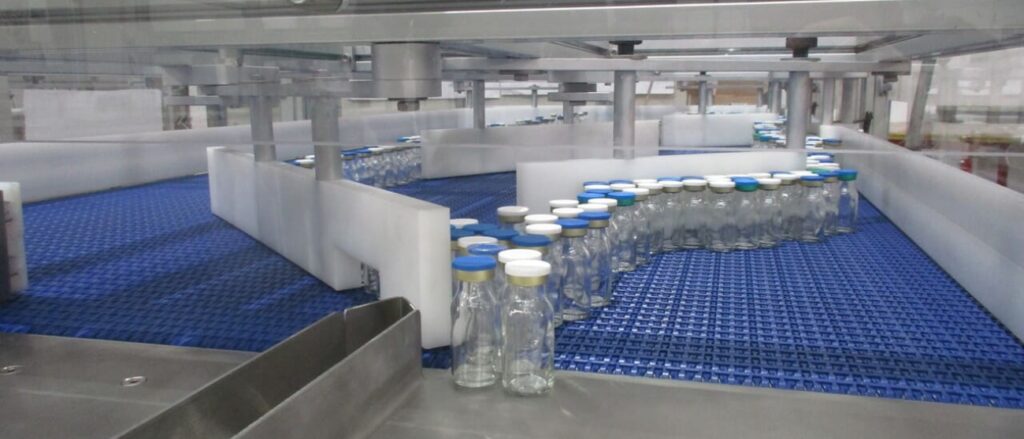
These usually use chicane conveyor belts that align the product and divert it towards the different wrappers.

Chocolate bars

This uses the classic rank feeding system that can load both wrapping paper and flowpack. In these cases, the products must be arranged in single file at one or more exits before they enter the machine.

To meet this need, merge and align groups for unpackaged products are used.

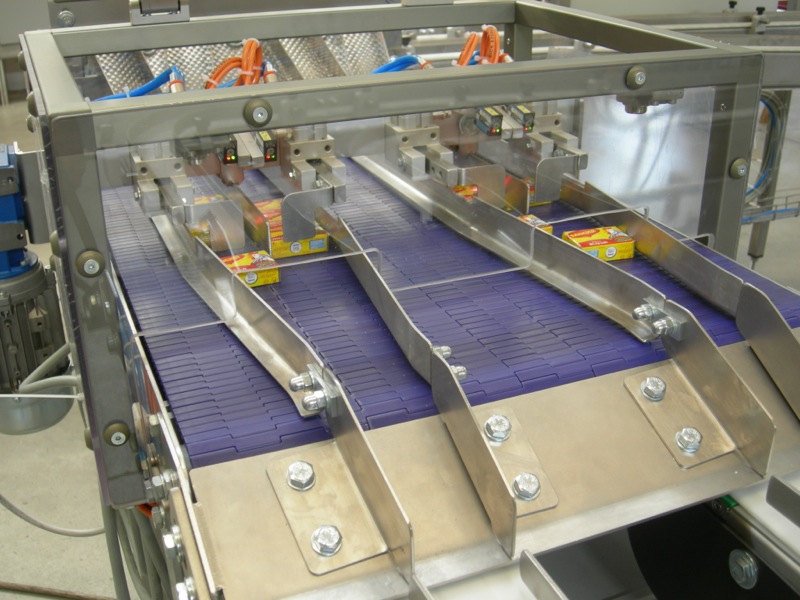
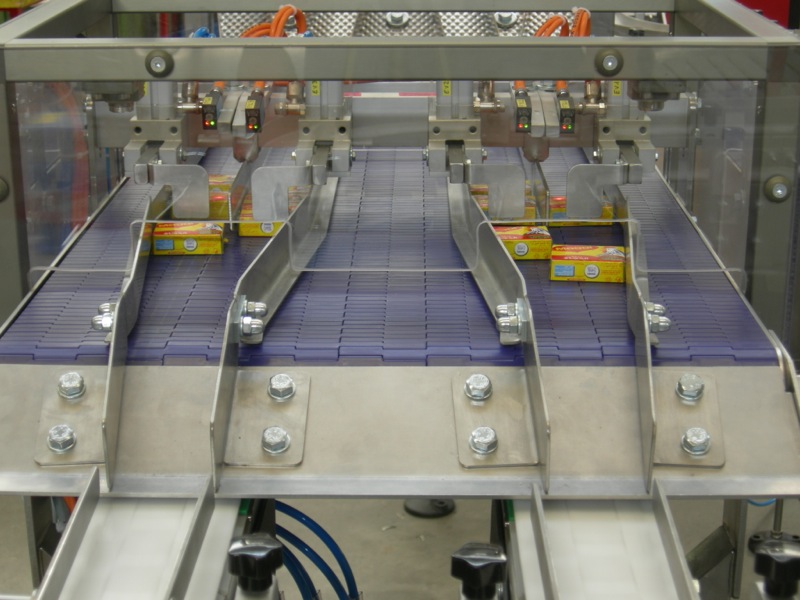
The standard merge group consists of three belt or modular chain conveyors that operate at different speeds, to separate the arriving products. Above the belts there are a few pairs of fixed guides or motorised belt diverters with adjustable inclines, that slow some products down and allow those they do not touch to pass, thereby breaking up the threading process.

To buffer large volumes of the unpackaged product by rank, we need a multiple cleave belt that follows the FIFO principle (First In — First Out); the cleaves can either be fixed, fed by a tilting conveyor or organised in a single rack that can be raised and lowered. This second solution is critical in production facilities where available space is at a premium.

The packaging machines are fed by exit lines that are perpendicular to the primary transportation line. The exit lanes receive the product from the primary transportation line through oscillating devices.

Before they can reach the primary packaging, the products must often be rotated and separated to ensure the efficiency of the line. The task is carried out using a series of conveyor belts that carry out successive jumps in speed, to ensure adequate spacing between the products.

M.H. produces all of the solutions described above, focusing first and foremost on the specific needs of each client, to tailor and optimise the entire packaging process for them.

M.H. is an Italian brand with thirty years of experience with handling movement and logistics within production facilities in every sector of industry, providing conveyor belts, merge and sort accumulation systems, item rotators and flippers, lifts, destackers and other accessories necessary in the packaging and product manufacturing process.
Thanks to their modular design, M.H.’s products are interchangeable and easy to integrate into existing lines.

Improve the efficiency of your packaging line with our MH Scan Solution

Insights, ideas and news
about product handling

When it comes to “Hygienic Design”, many people immediately think of stainless-steel equipment, free of gaps and easy to wash down.
This is a correct image — but only a partial one.

The reality is that Hygienic Design does not start — and does not end — with the equipment.
It is a structured approach that takes shape much earlier, beginning with how the facility is conceived, built, and organized.

Only by considering the entire production ecosystem — from building structures and material flows to raw material handling and personnel procedures — can safety, efficiency, and sustainability be truly ensured.
Machines come later: their role is to protect and preserve what has been designed upstream, not to compensate for shortcomings at earlier stages.

The facility as the first link in the chain

Every Hygienic Design project therefore starts with the building layout.

Its location in relation to the external environment, the distance from potential sources of contamination, floor slopes designed to promote proper drainage, and thermal insulation all directly affect the ability to maintain hygienic conditions.

Selections of materials is equally critical: walls and surfaces must be easy to clean and durable over time

If a facility is not designed with these principles in mind from the outset, the cost will be significant: more washdowns, higher water and chemical consumption, and increased operating costs.

This is not a problem that can be solved with a high-quality machine alone, but with couscous design decisions made from the very beginning.

People, raw materials, and products: the flows that make the difference

The second level focuses on internal movements.

Ingredients, semi-finished products, and personnel must not share high-risk pathways. Any overlap increases the likelihood of cross-contamination.

For this reason, more advanced manufacturers implement a hygienic segregation of production areas, physically separating high-risk zones from low-risk ones and enforcing strict procedures: garment changes, controlled access points, and physical barriers. This approach, commonly referred to as hygienic zoning, is one of the most effective tools for reducing contamination risks within food processing facilities.

Machines are the protagonists, but procedures are the script

Only at this stage does the focus shift to machinery. Their role is not to “create hygiene,” but to preserve the hygienic conditions established upstream.

Features such as cleanable surfaces, open-frame designs, tool-free removable components, and food-grade certified materials are not optional details — they are essential requirements. A single poorly designed critical point is enough to turn a machine into a source of risk.

The cost of a mistake can be substantial: Commercial Food Sanitation estimates that a product recall caused by contamination costs, on average, €1.67 million in operational losses and reputational damage.

This is why Hygienic Design is not a technical detail, but a strategic investment.

We don’t sell machines — we design safety

At MH Material Handling, we believe that Hygienic Design is not something to be applied downstream, but a philosophy that must guide every decision throughout the entire process. This is why, although we specialize in the design of conveyor systems such as Saniflex, we do not limit ourselves to supplying a machine.

Our consulting approach always starts with a comprehensive analysis of the plant: we assess layout, material and personnel flows, sanitation practices, and production requirements in order to integrate the conveying solution into a context that is truly coherent, safe, and efficient.

Saniflex is not an off-the-shelf product, but a modular and customizable system, engineered to simplify cleaning, withstand aggressive detergents, and ensure operational continuity.

What truly makes it effective, however, is its ability to fit into a broader approach in which every design choice contributes to reducing risks, costs, and operational complexity.

Would you like to understand whether your line truly complies with Hygienic Design principles — and how Saniflex can enhance it to the fullest?

Contact us for a tailored consultation: together we will analyze your processes and identify the most effective solutions to protect product safety and strengthen your business competitiveness.

It already works well as it is… do we really need to change?

This is the question many plant managers ask themselves when they look at their packaging line.

If the machines are running, orders are being fulfilled, and production continues, why intervene in something that appears to be working?

The truth is that “working” does not always mean “working at its best.”

A small bottleneck, an unexpected buildup, one manual step too many: details that often go unnoticed, yet over time erode productivity, margins, and delivery reliability.

Today, the efficiency of a line is not determined by the power of individual machines, but by the ability to integrate and harmonize every component into a balanced, seamless flow.

Conveyors: the circulatory system of the line

Just as blood carries oxygen through the body, conveyors represent the circulatory system of a packaging line.

They are responsible for synchronizing machinery, absorbing fluctuations, and preventing bottlenecks.

If the flow is not continuous and well balanced, even the most advanced machine loses its effectiveness and the risk of downtime increases.

Yet these systems are often underestimated already at the design stage, resulting in inefficiencies that are difficult to correct later on.

Different solutions for different needs

At M.H. Material Handling, we know that no two lines are the same. That is why our solutions are designed to adapt to very different products, spaces, and processes.

Heliflex LIFO Spiral System

Ideal for large product accumulation with heights not exceeding 90 mm. This double-spiral system finds its optimal sizing with between 200 and 500 meters of available space.

BAT-Buffer Modular System

Modular and compact, it is perfect for handling different product types and plant layouts. It is versatile, easy to integrate into existing lines, and has relatively limited footprint requirements. Its ideal size ranges between 100 and 150 meters of available space.

5L FIFO Multilayer Belt

Developed specifically for the confectionery sector, it enables gentle multilane transport upstream of the packaging stations, reducing the risk of product damage.

These solutions are complemented by mergers, dividers, elevators, and intelligent handling units, all designed to ensure increasingly smooth and fully integrated material flows.

Efficiency is much more than speed

Being efficient today does not simply mean “running faster.”

It means designing ergonomic lines that are easy to clean, hygienic, and capable of making the most of the available space.

It means having systems that reduce downtime, optimize energy consumption, and ensure a long-term return on investment.

Our solutions, entirely made in Italy, reflect these values: they are reliable, customized, and built to last.

With nearly forty years of experience in the food and pharma sectors, at M.H. Material Handling we do more than supply individual components.

We always start with layout consulting, analyze material flows, and develop integrated conveying and buffering solutions that transform plants into efficient and competitive ecosystems.

Our goal is simple: to help companies increase productivity and stability while reducing complexity and hidden costs.

If your line “already works well,” ask yourself: is it really expressing its full potential?

A custom-designed conveying system can make the difference between a line that merely runs and one that grows.

Contact us for a personalized consultation and discover how to make your plant more fluid, safe, and efficient—without disruptive changes.

Today’s production lines demand increasingly high standards: higher speeds, lower noise levels, and greater safety.

The historic 879 chain, developed in the late 1980s and established as an industry benchmark, has long proven its strength as a tireless “workhorse” of conveyor lines.

MH Material Handling decided not to settle.

Drawing on nearly forty years of experience and direct, ongoing dialogue with field technicians, USC – UltimateSafeChain was created: an evolution that preserves the robustness of the 879 while integrating with new technologies to meet the real demands of modern industry.

Can something that already works perfectly really be improved?

The strength of the 879 BAT has never been in question: robust, versatile, andlong-lasting, it has earned the trust of operators because it “simply works.”

In particular, tangential drive has proven over time to be the most effective solution for managing LIFO accumulation systems, such as the BAT Buffer, ensuring stability and operational continuity.

However, through extensive field experience and ongoing dialogue with technicians, a key insight emerged: when the foundation is solid, it can be made even safer, quieter, and more efficient.

For this reason, we partnered with Ammeraal Beltech, integrating Safety Finger technology into our new USC chain, a solution already recognized for its strong focus on operator safety.

USC: the reliability you’ve always trusted, even better performance

The new UltimateSafeChain is not a break with the past, but its natural evolution.

It is fully backwards-compatible with existing lines: no system redesign is required—only the chain and sprockets need to be replaced.

The tangible benefits are immediate:

  • Higher operating speeds, increasing productivity without compromising stability.
  • Reduced noise levels, improving operator comfort and supporting compliance with industrial noise regulations.
  • Greater installable length, enabling more flexible and scalable system layouts.
  • Enhanced stability and safety, thanks to the integration of Safety Finger technology, which reduces the risk of accidents and unexpected stoppages.

All of this while preserving what operators already know and value: the reliability of tangential drive, a distinctive feature that continues to deliver top performance in buffering and accumulation systems.

Easy revamping that reduces downtime and hidden costs

One of the most critical aspects of plant modernization is the risk of downtime. Stopping a production line to replace components slows productivity and increases operating costs.

USC was developed with a clear objective: to simplify revamping.

No complex rebuilds, no full replacement projects—just the new chain and the corresponding sprockets are enough to transform an existing system into a more modern, efficient, and safer solution.

This approach fully aligns with the Total Cost of Ownership (TCO) perspective: investing in next-generation components helps reduce hidden costs related to extraordinary maintenance, energy consumption, and unplanned downtime.

Why choose MH Material Handling

At MH Material Handling, every innovation is driven by listening to the real needs of industrial systems.

With USC, we chose to preserve what already works—the robustness and tangential drive of the 879 BAT—and enhance it with new technologies that address today’s requirements: higher speed, greater safety, lower noise, and improved efficiency.

This is not an “off-the-shelf” product, but a solution designed to last over time, reduce risk, and simplify the daily work of those who operate and maintain systems.

That is what sets us apart: transforming conveyors from simple components into true drivers of competitiveness for companies.

If the 879 BAT has been a cornerstone for nearly 40 years, USC – UltimateSafeChain marks the beginning of a new chapter: the same reliability, with higher performance.

Would you like to find out whether USC can make your line more efficient and safer without redesigning the system?

Contact us for a personalized consultation: together, we will assess how a simple upgrade can be turned into an immediate advantage.

At first glance, it may seem like a small detail, just a component connecting one machine to another, nothing more.

In reality, the conveyor is the heart of the line: efficiency, hygiene, safety, and ultimately the quality of the product reaching the consumer all depend on it.

Yet too often, its selection is underestimated, as if one belt were as good as another. But that’s not the case.

Each application is different, every product has its own characteristics, and each plant has its own criticalities.

Treating the conveyor as a “standard” element means opening the door to unexpected downtimes, contamination, waste, safety issues, and hidden costs that grow over time.

A significant share of line stops doesn’t stem from mechanical failures but from synchronization and accumulation problems, a clear sign that conveyors impact production continuity much more than people think.

When the product is “naked” fresh or dry is not enough

Talking about “naked” products means addressing very different worlds. A dry croissant is not the same as a honey-covered bar, just as a filled cake slice cannot be compared to a cracker.

In the fresh sector, hygiene is paramount. Belts must be washable, cavity-free and easy to sanitize. Belts with internal fabric layers are not suitable: if the fabric emerges, it becomes impossible to clean properly.

That’s why monolithic belts are used, more rigid and less flexible, but capable of ensuring the highest hygienic standards.

In the dry sector, the range is broader: brittle products such as biscuits or crackers fit well on modular chain conveyors, which allow easy removal of crumbs.

But when coatings, creams, or jams come into play, PU belts are required, surfaces that can be scraped clean without damaging the belt.

Each product type therefore requires a targeted evaluation.

Packaged products, but where in the line?

Even a packaged product raises specific questions: is it located in a white zone or a grey zone? Does it require washdown capability or not?

Are high speeds, tight transfers, or low noise levels needed?

In general:

  • The tabletop chain conveyor is ideal for heavy loads, high speeds, and complex layouts.
  • The modular chain conveyor offers greater flexibility and smaller wrap diameters, but it’s less robust, has wider curve radii, and requires more maintenance attention.

If we’re in a washdown area, the structure matters too: at least the legs must be in stainless steel, if not the entire frame.

The choice, therefore, concerns not only the belt, but the whole operational context.

The invisible factors that make the difference

Beyond product features and packaging type, there are less visible but decisive variables:

Belt position

On the floor or overhead?

Overhead systems prioritize robustness, since maintenance interventions are more complex.

On-floor conveyors, instead, prioritize operator safety, requiring reduced-pitch chains to minimize risk.

Maintenance

How often will the belt need to be serviced? High frequency calls for easily removable and sanitizable designs.

Format variety

If the line handles multiple product types, flexible and adaptable systems are essential.

Finally, one basic principle must not be forgotten: machines never work in perfect synchronization. That’s why accumulation systems (buffers) are necessary to guarantee continuity and prevent line stops.

At M.H. Material Handling, we know these complexities well. For nearly forty years, we have been designing tailor-made conveyors for every type of line, product, and requirement – from fresh to packaged good.

Our solutions always start from listening: we don’t begin with a standard catalog, but with a real customer problem.

Whether it’s about handling a delicate product, freeing up floor space for operators, or optimizing flows in limited spaces, every project is co-designed together with the customer.

From the washdown SaniFlex line to the BAT system with USC chain, up to the ModulFlex conveyors with modular chains ,each technological choice follows a clear logic: transforming daily challenges into efficient, safe, and long-lasting solutions.

For us, automation doesn’t mean selling a machine, it means designing together the right answer to a real need.

Want to understand which solution best fits your line?

Contact us for a personalized consultation and discover how to make your system smoother, safer, and more efficient.

Increasing the performance and efficiency of your production line often requires a significant investment in both money and space.

However, there are aspects of your packaging line that can be optimized to make the most of the available space and boost productivity — all while staying within your planned budget.

Streamlining the product flow through your packaging process allows you to enhance the productivity of your entire production line. With the right solution, you can achieve this while respecting space constraints and maintaining sustainable costs.

If you want to find out which solutions best suit your needs, contact us and request our MH Scan Solution service: we will analyze your packaging line to identify how to refine and optimize your production setup.

In the food industry, hygiene isn’t just good practice—it’s an essential requirement for ensuring safety, quality, and regulatory compliance.

But is designing machines that are “easy to clean” really enough?

The answer is no.

Preventing contamination and protecting the end consumer requires a much more advanced, structured, and systematic approach.

That’s why today we’re talking about Hygienic Design: a set of construction criteria, design choices, and specific materials developed to eliminate risk areas, simplify sanitation, and guarantee the highest standards in food safety.

Hygienic Design in the Spotlight: Why It’s Transforming Food Production

In recent years, tighter regulations and a growing focus on food safety have brought Hygienic Design to center stage.

Food manufacturers are dealing with increasingly automated processes—and maintaining high hygiene standards throughout the entire line, including the most complex phases like internal transport and handling, is now a top priority.

Key challenges include:

  • Preventing cross-contamination, both microbiological and chemical.
  • Ensuring fast and effective cleaning of every product-contact surface.
  • Reducing water and detergent consumption to meet both sustainability goals and cost control.
  • Complying with EHEDG (European Hygienic Engineering and Design Group) guidelines, now a benchmark across the European industry.

Hygienic Design Is More Than Just Stainless Steel

Many think Hygienic Design simply means using stainless steel—but that’s only part of the story.

A proper approach starts with material selection but extends to surface geometry, accessibility for cleaning, the absence of gaps and stagnation areas, and tool-free disassembly of washable components.

Among the most common materials, AISI 304 stainless steel with bead-blasted or 2B finishes is standard for frames and load-bearing structures.

But plastic materials also play a key role. For instance, M.H.’s Saniflex system uses polypropylene chains with polyketone pins—highly resistant to the chemical agents used during sanitation.

Saniflex: Designing Hygiene with No Compromise

M.H. Material Handling developed the Saniflex system specifically to meet the toughest requirements of the food industry, particularly in dairy production.

In these environments—where processing fresh and packaged cheese demands absolute cleanliness—standard solutions simply aren’t enough.

Saniflex stands out thanks to:

  • Fully open frame design that prevents build-up and supports efficient drainage.
  • Tool-free removable components for fast and easy daily or deep cleaning.
  • Chains resistant to aggressive detergents but fully compliant with food-grade regulations.
  • Reduction in water and detergent use compared to traditional systems.

The result?

A solution that enhances productivity, guarantees hygienic safety, and supports environmental sustainability targets.

Invisible Contamination: The “Forever Chemicals” Risk

Hygienic Design isn’t just about bacteria and mold.

Today, manufacturers must also consider chemical contamination from persistent substances like PFAS (per- and polyfluoroalkyl substances), often called “forever chemicals.” These may come from the environment, industrial coatings, or even the detergents used on production lines.

Designing equipment that’s easy to clean also means reducing surface exposure to these chemicals.

With Saniflex, manufacturers can:

  • Reduce washing cycles.
  • Use gentler, less aggressive detergents.
  • Minimize the risk of transferring harmful substances onto the product.

When Hygienic Design Becomes a Competitive Advantage

Hygienic Design is a strategic investment that brings measurable benefits:

  • shorter downtimes,
  • longer equipment lifespan,
  • lower cleaning costs,
  • stronger food safety,
  • regulatory compliance.

At M.H. Material Handling, these principles are a cornerstone of our engineering.

With solutions like Saniflex, we combine technological innovation, operational efficiency, and full adherence to the strictest international guidelines.

Wondering if your production line meets today’s hygiene standards?

Book a free consultation with our experts via our MH Scan Solution service: we’ll assess your system’s critical points and show you how to optimize safety, efficiency, and sustainability.