M.H. – Material Handling

Luca Fontana

A few months ago at Cibus Tec, the fair dedicated to food and beverage technology, some topics were discussed that are of interest to the various players in the sector at this historical moment.

These themes include:

  • Food Safety, characterized by increasingly stringent regulations;
  • Environmental Sustainability: a constant commitment for food companies striving to develop effective strategies to reduce their environmental impact.

Over the past two years, the convergence of these issues has driven companies to innovate and introduce new products, often requiring novel packaging solutions. Current results are promising in terms of material reduction, use of environmentally friendly materials and proper disposal methods.

As a result, those of us involved in packaging need to be aware of the new challenges facing the food sector and be able to respond to market needs in a timely manner.

New types of packaging and regulations on food contamination have made our field of research extremely challenging, as in many cases these two aspects are not always easy to reconcile. On the contrary, recent developments in the sector have highlighted how the relationship between food safety and environmental sustainability can also become contradictory.

Consider, for example, the different approaches of EU countries to this issue: Italy is a pioneer in recycling technologies, while the European Union, pushed by the Nordic countries, wants to focus more on reuse, without taking into account that reuse raises a number of important issues related to the contamination of materials.

In addition to these problems, there are also issues that we have always had to deal with, such as optimising factory floor space, making processes more efficient, improving the management of complex lines, and so on.

Well, the issue is complex and therefore the answers to these problems are different. At M.H., we have addressed these issues by presenting a series of innovations at Cibus Tec, the success of which confirms that we are on the right track.

Given the complexity of the issue, our contribution does not end here. In addition to developing new products, we have initiated a book that will focus on current challenges and will be published next year.

M.H.’s Answer: Saniflex

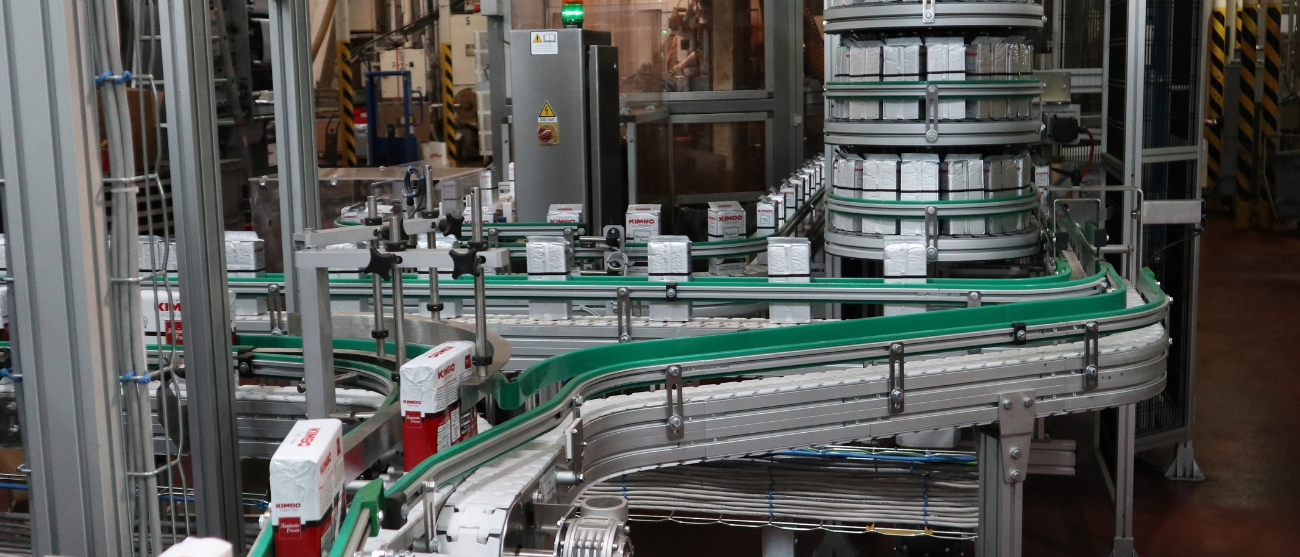
One of the solutions that we have developed to meet these new requirements and that we presented at Cibus Tec is Saniflex.

Saniflex is our standard for the transport of naked products, specially designed to meet the most stringent requirements, and has been created taking into account certain typical situations that occur when there is a need to reduce the bacterial load of the production and packaging line.

First of all, the product handling structure must be completely washable in all its parts; therefore, there must be no areas that are difficult to access for the cleaning system. In addition to an open and accessible structure, the operator carrying out the washing must be able to disassemble the components requiring more thorough sanitisation without the use of tools.

Secondly, the materials that make up the handling systems must “withstand” the frequent washes that are usually carried out with rather aggressive chemical products in order to guarantee the reduction of the bacterial load.

In fact, when a customer expresses this need to us, we pay particular attention to the materials and mechanical components of the product to be proposed: for this reason, many of our conveyor belts can also be manufactured in stainless steel.

All these characteristics influence the technological aspects of the production process: packaging and handling machines must not only fulfil their primary function, but also preserve the organoleptic characteristics of the products.

Taking all this into account, we have created Saniflex, which is characterised by:

  • the use of materials certified for direct contact with food;
  • cavity-free components to simplify the sanitising process;
  • all threads are covered,
  • all fasteners and spacers are fitted with gaskets.

In addition, the system is designed to be easily dismantled without the need for tools, in order to simplify and speed up washing and sanitising operations as much as possible.

Saniflex is just one of the solutions proposed by M.H. to meet the current needs of the food packaging sector, but thanks to its thirty years of experience it is able to create any type of connection between packaging machines, including all the product handling accessories to feed the machines properly.

This includes elevators or descent systems to free up floor space and optimise material flow, unitising and sorting systems to handle the most complex lines, and specific accumulation systems to maximise line efficiency.

If you want to optimise your packaging process and would like a free consultation

Let’s start with a premise: buffer systems can make a difference to the line’s efficiency.
The choice of model depends on various considerations (including financial ones) but there are three variables that must be kept in mind.

It is only by carefully considering these factors that we can move to a rapid consideration of the investment in the purchase of a buffer.

With MH Buffer Systems, you will no longer have to worry about inefficiencies. Take advantage of our expertise and technology to become a reference for efficiency in your sector.

When a company needs to install a merge conveyor, there are a range of variables that make the decision a difficult one.

The need for a merge conveyor in a packaging line is itself enough to indicate a process with a very high degree of complexity and automation throughout.

Choosing the right merge conveyor means taking into account:

  • how it protects the quality of the items;
  • making sure the machines downstream work as intended;
  • the efficiency of the entire packaging line.

It is clear therefore that mistakes could be critical.
The risk of ending up with an ineffective and obsolete packaging line is too high. That is why, whenever a client asks me which model is the best fit, I always start with a thorough analysis of their current operations, needs and expectations.

So, let’s start with a quick overview of these machines, explaining their purpose, their benefits and their limitations.

To start with, there are different types of merge conveyors, but the majority fall into one of two broad categories: mechanical (or buffer) merges and dynamic merges.

Buffer merges

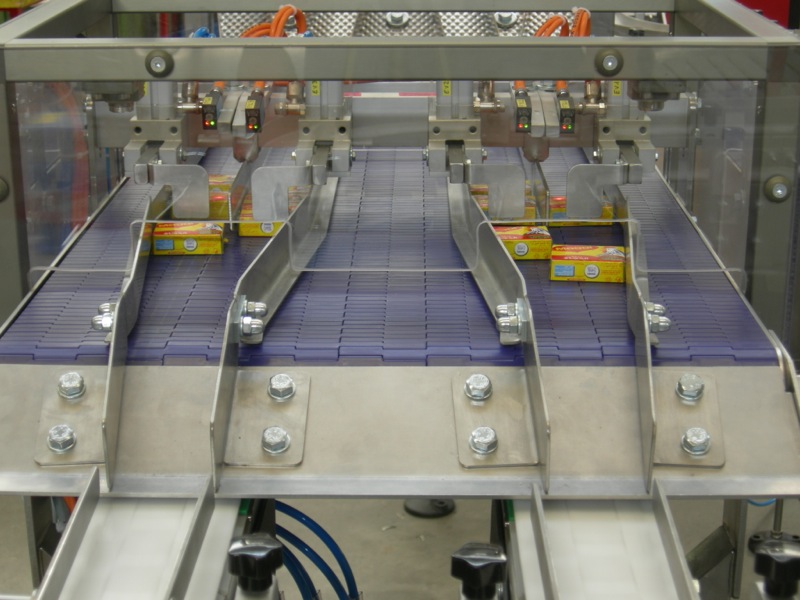
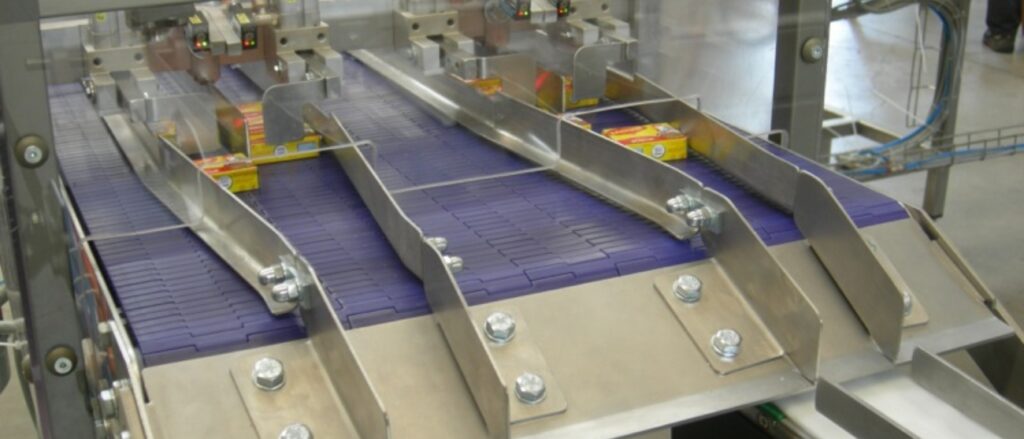
This product is equipped with “gates” at the entry lanes that remain closed until the convergence area is free, at which point they let the items through one after the other.

This is a simple and cost-effective solution that works as long as two conditions are met:

  • the items must be able to withstand the pressure during the buffering phase;
  • the downstream machines must be able to receive the items in a convoy without being triggered to do so.

The first point is related to the integrity of the items, and essentially means that it is appropriate only for boxes, trays and products stacked in tight packaging.

The second point requires greater detail.
As they leave the merge, the items are touching each other, or very close to it, but the speed of the conveyor belt is the same as it would be with products that space out the items with one item’s worth of space between one and the next.
The average productivity of the line doesn’t change, but when the convoy arrives downstream, the machine’s productivity at that moment is doubled.

That is why the machine must be able to manage the flow, otherwise it is necessary to regulate the flow with one conveyor belt to increase the speed and another to decrease it after the merge; however, this solution is naturally bulkier, with two more motors and a more complicated logic controller.

Dynamic merges

When handling items that cannot be buffered for fear of overlap (generally pillow pouch or flowpack packaging) or damage caused by excessive pressure or because downstream machines need the items to arrive at a regular frequency and with a certain distance between one item and the next, then it becomes necessary to install a dynamic system.

A dynamic belt merge is a scalable system consisting of a series of modulating conveyor belts that increase or decrease the speed of the items as they come through, ensuring enough space to avoid a situation where two items reach the convergence point at the same time.

With these devices, the products are always handled one at a time, thereby avoiding having groups of items together and ensuring regular spacing. As the production pace increases, the number of modulators must also increase.

M.H. is an Italian brand with thirty years of experience with handling movement and logistics within production facilities in every sector of industry, with a range of solutions for buffer systems.

When it comes to dynamic merge conveyors, MH’s fastest system isthe HP dynamic system that can reach manufacturing of up to 600 ppm for 150mm flowpacks. Depending on the weight and packaging of the items, it is possible to use up to five phases of conveyors with brushless DC motor and vacuum suction to manage rapid acceleration.

Our wealth of experience means that M.H. is also able to support companies in optimising and streamlining their packaging lines with our innovative and technologically advanced solutions.

he first questions that we have to ask ourselves in these situations are: Are my packaging machines suited to this system? Can my goods be conveyed using this type of merge?


Buffer or mechanical merges are equipped with “gates” at the entry lanes that remain closed until the convergence area is free; once the gates have been opened, these release the products through one after the other.

If you want to find out more about our products or to discover how you can optimise your packaging process

It is necessary to insert a belt merge, which indicates that we’re working with a packaging line with a high degree of complexity and automation.
Process optimization is the goal, improving the packaging machine’s performance. But if you install the “wrong” system, you risk the opposite effect of having to contend with regular unplanned downtime.

When it comes to dynamic belt merges, we at MH have developed the HP dynamic system that can reach manufacturing of 600 ppm for 150mm flowpacks.


This system includes one-by-one timing of the items, created using a multi-belt system with independent power for each of the entry lanes. The machine’s control system enables oversight of the step between the packaging coming out of the system and ensures that the timing occurs without contact, removing the risk of jams, overlaps or damage.

Those who work with baked goods on a daily basis know all too well the critical importance of the packaging step.

Mistakes are not an option, and can lead to problems on the packaging line, compromising the integrity of the products and jeopardising the hard work done in preparing them.

All of these can lead to unplanned production downtime which, as you will know, potentially creates delays, problems and significant financial consequences.

Let’s begin by accepting the premise that often, especially in our country,food producers have two vital needs:

  • maximising space, as the available surface area reserved for production — and especially packaging — is limited and precious;
  • streamlining the packaging process as much as possible.

Taking these considerations into account, it is clear that conveyor belts have a vital role to play in packaging. The right conveyor belt can make all the difference.

So, let’s take a look at the different types of conveyor belts and when we might use them, taking into account that with baked goods it is worth distinguishing between different categories of products.

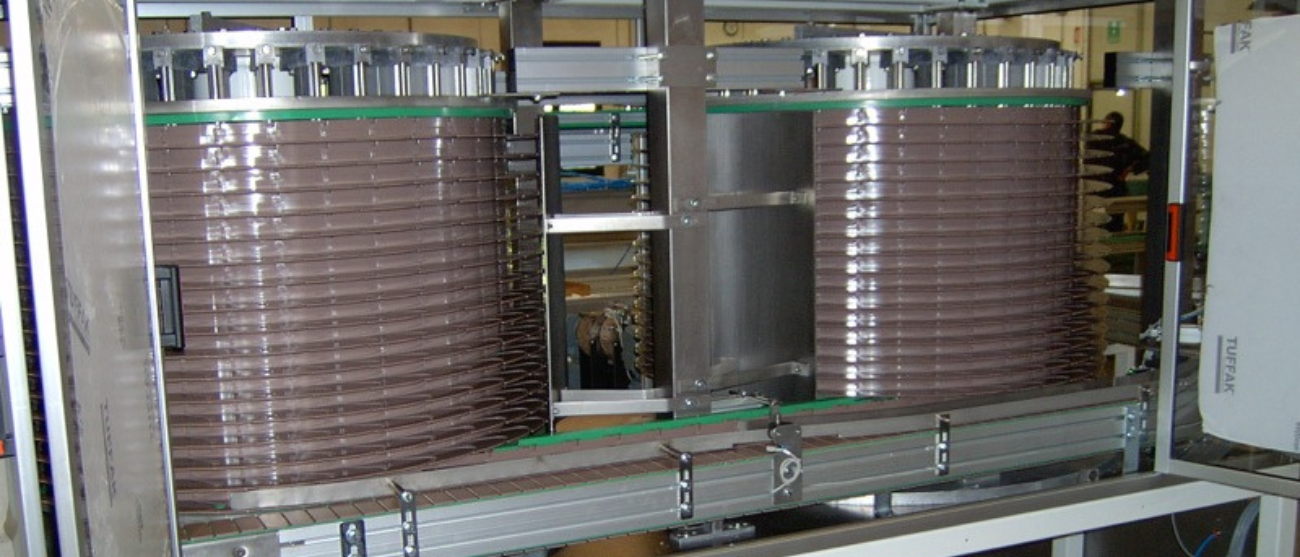
Regarding the cooling method, it can either be natural, in water (immersion or spray) or in a controlled environment (with dozens of different technological solutions available). The conveyor belts that make up the cooling system can be either spiral belts (adapted to reduce the necessary space for the cooling system), large conveyor belts or conveyors for baking trays.

Bread and dough products

When we talk about bread and dough products, they can take countless different forms: it goes without saying that each form has its own “rules” for conveying and packaging.

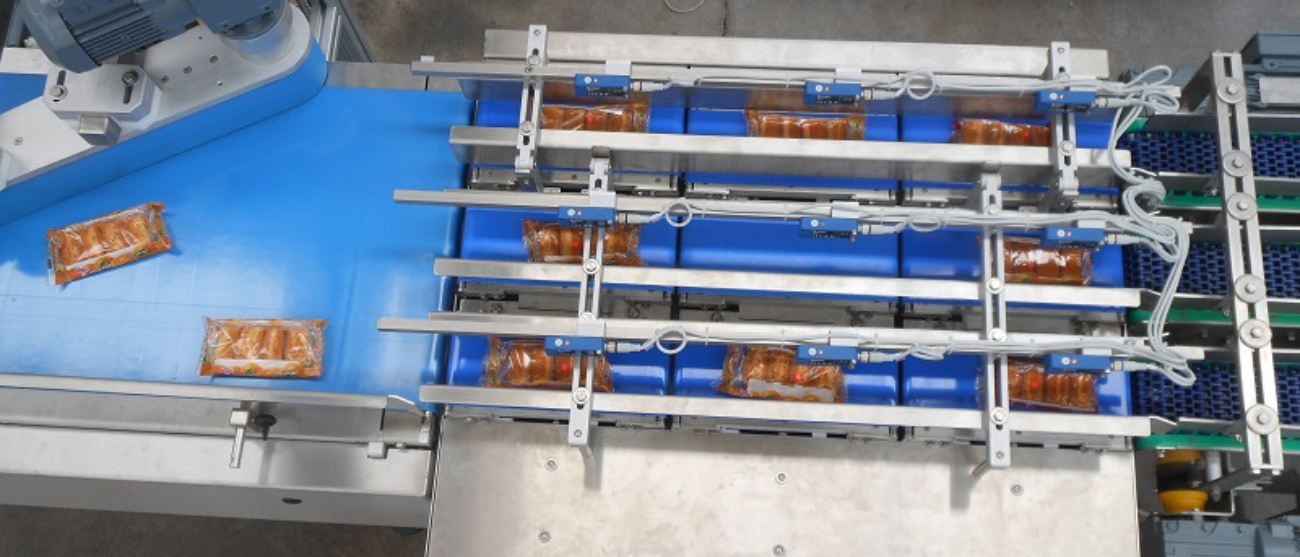
A recurring process requires a cooling system with a spiral conveyor followed by chicane aligners downstream that feed into the primary packaging machine.

The aligner consists of a series of wide belts with increasing speed, equipped with bulkheads and motorised diverters that channel the items through a series of chicanes that carry them through one or more neat lines.

The packaging machines could be either horizontal flowpacks, or vertical in the case of mini bread rolls, for example.

With Pullman sandwich loaves, the loaves pass through slicing machines that slice the bread before it’s packaged.

Bread in its various different forms very rarely comes in secondary packaging. It would far more commonly be placed directly in cardboard boxes or crates (depending on whether it is destined for large-scale retail or HoReCa). Here, merges and item layering systems may be useful, as they can naturally be buffered “with pressure”.

Crackers, rusks and biscuits

These goods require particular care and are always packaged in a stack, one on top of the other.

They therefore require special conveyor systems.

To meet this need, in the phase after cooling that usually takes place on wide conveyor belts, M.H. Material Handling has developed a dedicated line of FDA-certified conveyors with a modular plastic chain system for use in the food industry.

This solution offers significant benefits in terms of ease of use and maintenance compared to traditional belt systems. Thanks to its modular design, this type of belt guarantees extensive flexibility in designing the layout of the conveyor belts.

After this step, the goods are ready to be loaded as “packs” into the horizontal flowpack or wrapping machine.

Shortbread

As above, here too the cooling takes place on broad conveyor belts, but downstream the system that funnels the goods into the packaging machines varies greatly depending on the type of packaging required.

If the shortbread is individually packaged, they will have to be stacked one on top of the other; here too conveyor belts with a modular plastic chain offer the ideal solution.

However, if the shortbread is packaged in bags, the packaging machines funnel them in from above. Here we would recommend special conveyor belts that place the shortbread one on top of the other; there are then lift conveyor belts that load the shortbread onto weighing machines above the packaging machines.

Lift conveyor systems with modular chains are highly reliable and far easier to use and maintain than traditional bucket lift systems. They are ideal for continuous feeding of overhead lines[p1] , vertical packaging machines and multi-head weighing machines.

Cakes and pastries

Typical patisserie products, of the kind you might have for breakfast, are more durable than you might think.
They are cooled on spiral conveyors and packaged in horizontal flowpacks (as with bread, except with mini goods that are packaged vertically) and loaded using aligners.

These categories of goods are by far the most common within this sector; with certain exceptions, such as breadsticks, that have their own dedicated packaging lines.

Another scenario is that of frozen baked goods, as the presence of a constant level of humidity in the packaging line requires stainless steel conveyor belts that are resistant to corrosion and can be washed down.

As this brief overview has hopefully demonstrated, there are many factors to take into consideration and each category of baked goods has its own requirements. To complicate matters further, the precise specifications of the packaging machine impact the type of conveyors that work with them.

To optimise the packaging process of baked goods, you must be confident that the conveyor belts in use offer technologically advanced solutions that are also compatible with the packaging machines in the line.

M.H. is an Italian brand with thirty years of experience with handling movement and logistics within production facilities in every sector of industry, providing conveyor belts, merge and sort buffer systems, item rotators and flippers, lifts, destackers and other accessories necessary in the packaging and product manufacturing process.
Thanks to their modular design, M.H.’s products are interchangeable and easy to integrate into existing lines.

To find out more about how to improve the efficiency of the entire packaging process of your products, GET IN TOUCH TO DISCUSS.

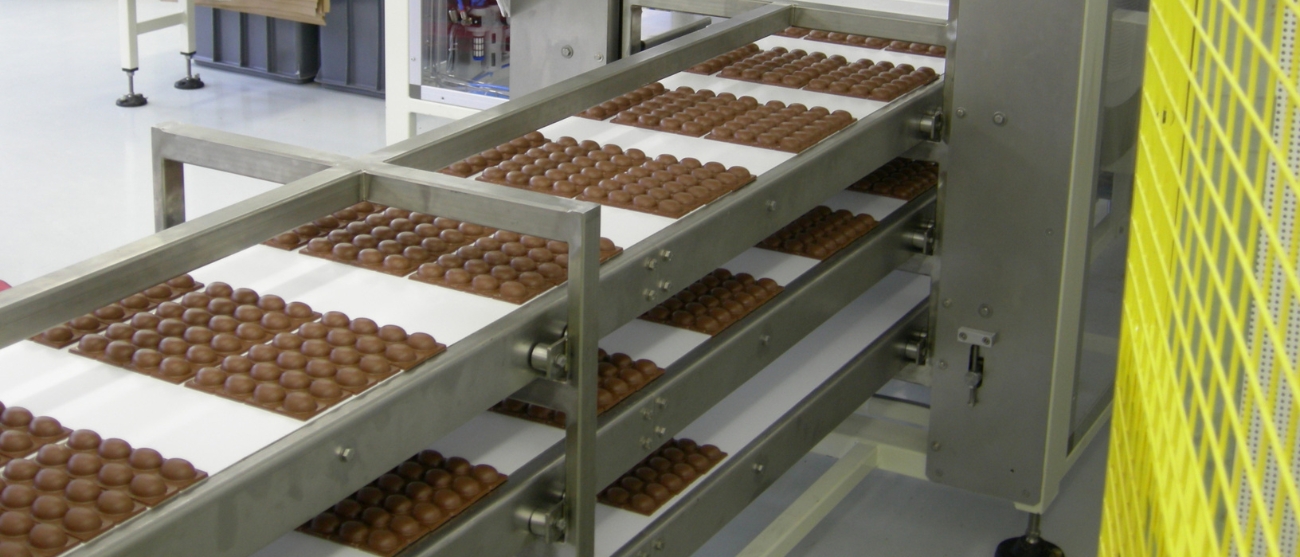
Those whose business involves chocolate (in all its many forms) know all too well the importance of the stage in which the “moulded” products are transferred to the primary packaging machine.

This is the moment in which a series of variables enter the picture, tied to the form of the product and the feeding system of the packaging machine. Added to this is a problem of available space: production facilities are not always overly generous with space to dedicate to packaging.

Bearing this in mind, it is not hard to see how important it is to have an ad hoc conveyor system that takes into account:

  • the type of product to be transported;
  • the feeding system of the primary packaging machine;
  • available space;
  • any devices that may be able to increase the efficiency of the line.

That is why, in this blog post I would like to provide an overview of the main feeding systems for primary packaging of chocolate.

All products, from the classic chocolate bars, through “hollow” forms (such as Easter eggs and bunnies, for example), all the way to the most carefully crafted pralines share a fundamentally similar production process, known as moulding. This is the most fascinating moment in the process, the one in which the chocolate takes shape.

Moulding generally involves the products travelling through special moulds and trays, so there are no particular differences between one product and the next in terms of the conveyor technology required.

When the chocolate is removed from the moulds (known in jargon as “demoulding”) the differences begin to be felt between the different types of products and packaging.

There are essentially three types of feeding system.

Hollow eggs and delicate/intricate pralines

In these cases, the product remains in trays known as counterplates until the moment they are loaded into the packaging machine, usually using a so-called “pick and place” system.

This process generally involves the following equipment:

  • Conveyor belts

These can be of different types and they carry the plates either along the short or long sides, facing forwards.

  • Expulsion system

Placed after the metal detector and activated by pneumatic cylinders or brushless motors, this is responsible for ejecting plates with contaminated products. The plates must then be cleaned and reinserted manually (in the majority of cases).
Only lines that handle products with high margins can justify a fully automated recovery system.

  • Elevators

Bucket or ledge elevators are the ideal solutions for lines with relatively long work cycles. The ideal solution incorporates a motorised brushless axis to control the positioning and acceleration, offering a solution that ensures fluid and risk-free motion even when the plates are full.

  • Buffer

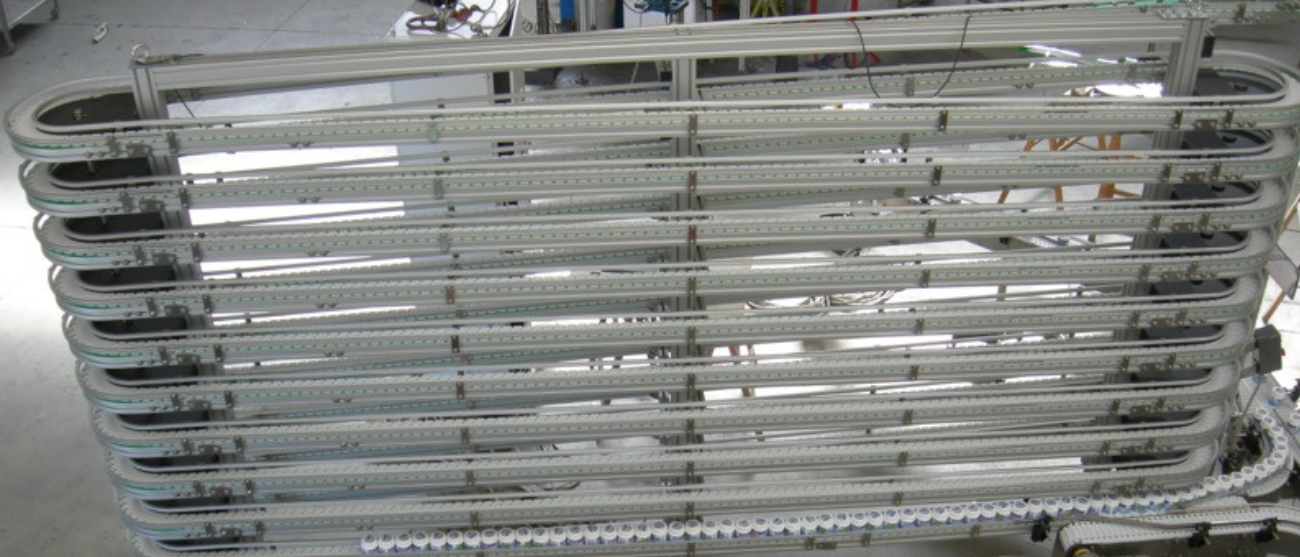
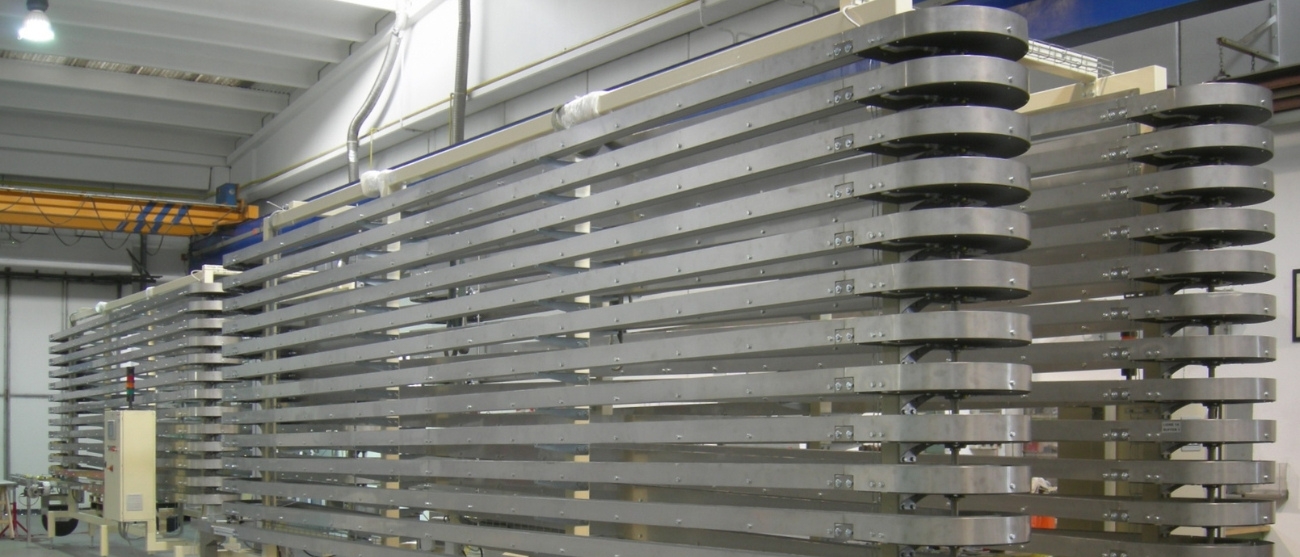
For these types of products, the natural choice is LIFO buffer systems (Last In — First Out) such as Pater Noster

  • Plate rotator

This device is usually the last one in the return line. The plate is presumed empty, but the packaging loader may have missed a few pieces that are still in the mould; therefore, before returning it to the demoulding position, it must be turned upside down and shaken to ensure any residual pieces fall out.
Once the plate has been definitively emptied, it can return to the start of the line and restart the cycle.

Small flat-bottomed chocolates

These usually use chicane conveyor belts that align the product and divert it towards the different wrappers.

Chocolate bars

This uses the classic rank feeding system that can load both wrapping paper and flowpack. In these cases, the products must be arranged in single file at one or more exits before they enter the machine.

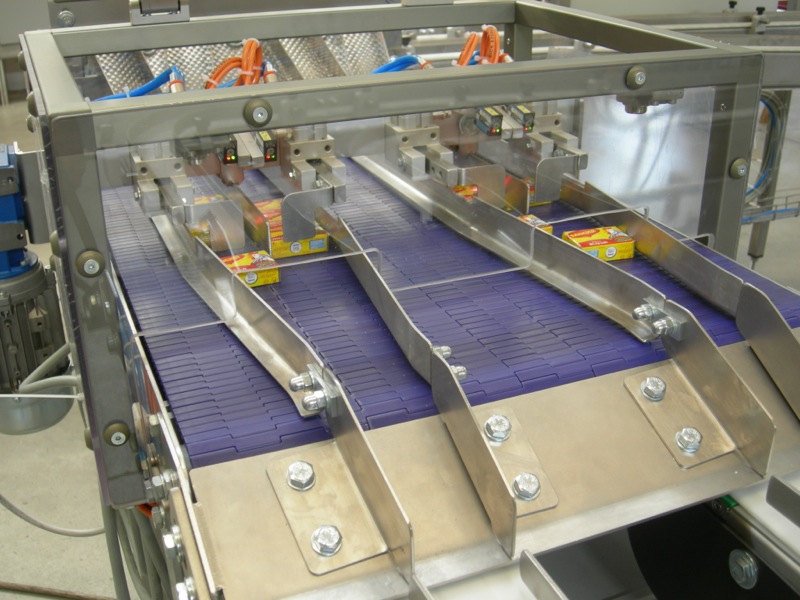
To meet this need, merge and align groups for unpackaged products are used.

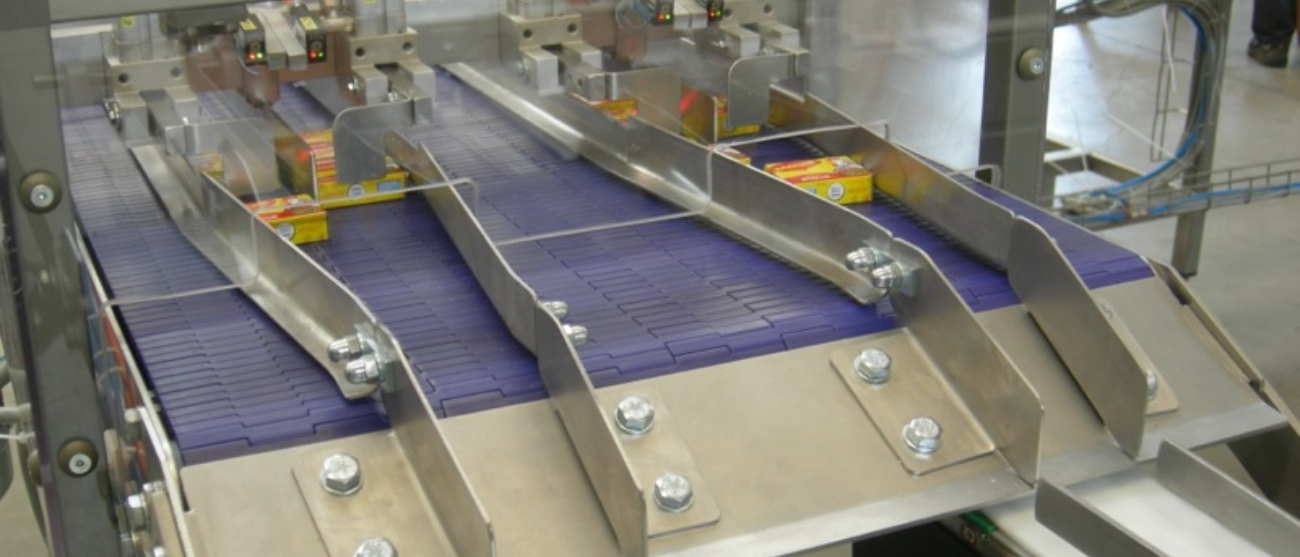
The standard merge group consists of three belt or modular chain conveyors that operate at different speeds, to separate the arriving products. Above the belts there are a few pairs of fixed guides or motorised belt diverters with adjustable inclines, that slow some products down and allow those they do not touch to pass, thereby breaking up the threading process.

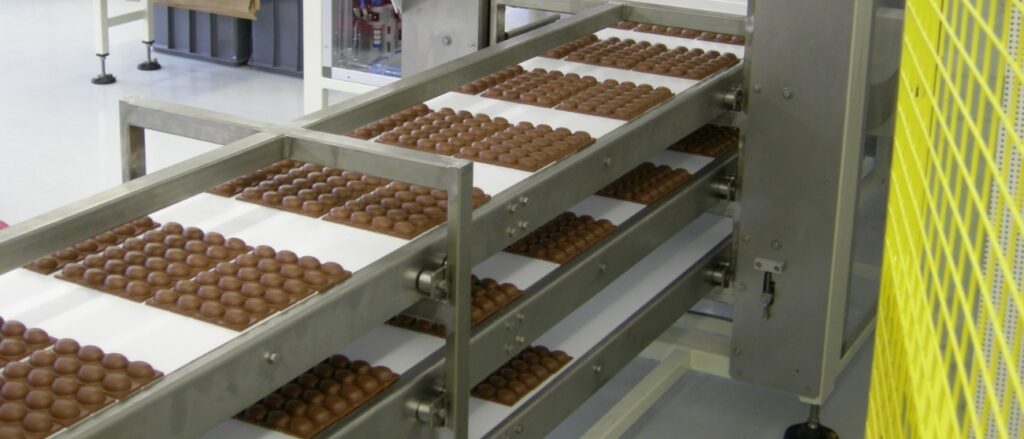
To buffer large volumes of the unpackaged product by rank, we need a multiple cleave belt that follows the FIFO principle (First In — First Out); the cleaves can either be fixed, fed by a tilting conveyor or organised in a single rack that can be raised and lowered. This second solution is critical in production facilities where available space is at a premium.

The packaging machines are fed by exit lines that are perpendicular to the primary transportation line. The exit lanes receive the product from the primary transportation line through oscillating devices.

Before they can reach the primary packaging, the products must often be rotated and separated to ensure the efficiency of the line. The task is carried out using a series of conveyor belts that carry out successive jumps in speed, to ensure adequate spacing between the products.

M.H. produces all of the solutions described above, focusing first and foremost on the specific needs of each client, to tailor and optimise the entire packaging process for them.

M.H. is an Italian brand with thirty years of experience with handling movement and logistics within production facilities in every sector of industry, providing conveyor belts, merge and sort accumulation systems, item rotators and flippers, lifts, destackers and other accessories necessary in the packaging and product manufacturing process.
Thanks to their modular design, M.H.’s products are interchangeable and easy to integrate into existing lines.

Improve the efficiency of your packaging line with our MH Scan Solution

Throughout my career, I have often come across companies who make the mistake of underestimating the importance of the packaging line of their products dei loro prodotti.

The resultReduced efficiency and the risk that machines may not work at maximum capacity, or worse still, grind to a halt.

These situations happen because someone erroneously thinks that product packaging requires buying the primary and, if necessary, secondary packaging machines and nothing more, failing to take into account the systems necessary to connect them.

There is an image that often comes to mind when I have to tackle this kind of problem: I think of the conveyor belts like the circulatory system that carries blood around the body and allows the different organs to function. Different packaging machines have to be connected to each other by an efficient “circulatory system” that is able to iron out any discrepancies that may exist between them.

Underestimating the importance of this “circulatory system” can result in production problems and delays.

When would we need a storage system?

There are two situations in which storage systems are critical:

  • when we need to compensate for operating differences between two machines that are connected in series;
  • when we need to regain productivity during micro-stops of downstream machines.

The first condition typically occurs when an intermittent machine is connected to a continuous one; for example, when an upstream machine produces product groups at regular intervals, while the downstream machine requires an ongoing flow of products equidistant from each other.

In the second case, on the other hand, we have start-ups and shut-downs of two machines that are incompatible with each other.

In these cases a buffer is a simple solution that requires a few metres of conveyor belt to regulate the flow and avoid regular stoppages in the production process.

As you can imagine, the efficiency gains are significant.

Which buffer to choose?

The choice of system depends on various considerations (including financial ones) but there are three variables that must be kept in mind:

  • the operating method of the storage system;
  • the available storage space;
  • the recovery capacity.

It is only by carefully considering these factors that we can move to a rapid consideration of the investment in the purchase of a buffer.

How the buffer works

The buffer can either be LIFO(Last In First Out), in which, as the name suggests, the first product to enter the buffer is the last one to leave it, or FIFO (First In First Out), in which the first product into the buffer is the first one out.

Among FIFO systems, there is a choice of:

  • machines that are external to the production line;
  • machinery that keeps the product within the production line, gradually increasing the available transportation space. In the latter case, the product is fully traceable, and it is considered more of an advanced storage system rather than a buffer.

LIFO buffers are the cheaper and simpler models. They are particularly suited to non-perishable, with long expiry dates, that can wait a long time for final packaging.

FIFO systems, on the other hand, are recommended for fresh products that must pass through the packaging line within a limited time frame in order to retain their freshness. These machines are usually more complex and their price is often not far off that of the packaging machines themselves.

Storage space

The decision regarding the dimensions of the storage space is linked to the efficiency of the upstream and downstream packaging machines and the time it takes to bring them back online in cases of micro-stops. In cases of a longer stop caused by mechanical failure, it is unlikely that a system within the packaging line will be sufficient to avoid any interruption at all.

In most cases, the storage space can correspond to a production time of 2-5 minutes; obviously there may be situations in which the demand for storage is notably higher and in this case it is worth considering the cost-benefit analysis and the impact that the buffer’s presence might have on the time it takes to bring the packaging line back online.

Often, the long time to recover from a micro-stop is because the operator is unable to focus exclusively on fixing the problem, because the upstream products continue to arrive, with the potential for pressure and chaos along the line.
Real-world conditions have shown that the presence of a buffer can help to contain machine downtimes.

Another example might be whereproducts travel a long distance along the packaging line and the client wants the ability to fully empty them. In this case, the necessary space can rise to 20 minutes or more. Such situations are rare but can happen.

Recovery capacity

A properly sized packaging line requires a buffer that is able to recover the product during regular production. The downstream machine must also be able to work at a rate greater than its nominal one, usually 10%-20% faster.

The time for emptying the buffer depends on this recovery capacity.

For more information on this subject, I have published a video dedicated to choosing the right storage system.

M.H. is an Italian brand with thirty years of experience with handling movement and logistics within production facilities in every sector of industry. We offer dedicated solutions for LIFO and FIFO storage systems, tailored to the client’s needs.

Our wealth of experience and our innovative and technologically advanced solutions mean that M.H. is also able to support companies in optimizing and streamlining their packaging lines.

Insights, ideas and news
about product handling

Is your packaging line inefficient? Just add a buffer and the problem is solved.

Or at least, that’s what many people think.

Adding a buffer to an existing line can turn into an expensive and unnecessary investment. Before proceeding with the installation, carefully assess all the preliminary factors: an in-depth analysis can help you avoid ending up with the same problems you started with.

To identify the most suitable solution for your packaging line, contact us: we’ll analyse your specific case and help you define the most effective solution.

What happens when the connection between the machines in a packaging line is not designed correctly?

The risk is that slowdowns, accumulations, micro-stoppages and disruptions in the flow may occur, affecting the efficiency of the line and, over time, the overall performance of the plant.

This is the idea behind the new video series from ConveyorU, the M.H. Material Handling Academy dedicated to intelligent product handling in packaging lines.

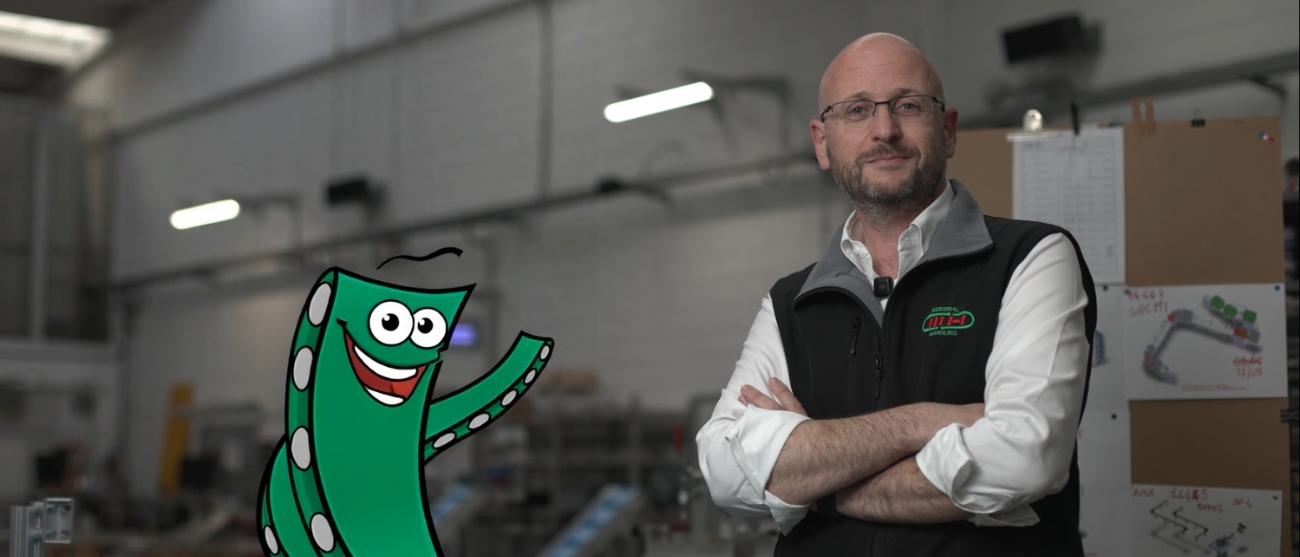
Guiding you through this journey are Convy, the Academy’s mascot, who asks the questions of those who work in production plants every day, and Luca Fontana, CEO of M.H. Material Handling, who answers based on forty years of experience in line design.

In this first episode, they address an apparently simple question: why are conveyors so important?

As the video shows, the value of a conveyor depends on how it is integrated into the line, the required speed, the operating conditions and the specific production requirements.

The required characteristics also vary significantly depending on the industry: a line dedicated to food or pharmaceutical packaging has different priorities compared to an application in logistics, mechanical engineering or the automotive industry.

This is just one of the topics covered by ConveyorU, a journey dedicated to the different aspects of product handling and packaging line efficiency.

Do you want to improve the efficiency of your line?

Every line has different conditions, products and critical issues. To identify areas for improvement, it is therefore necessary to analyse the process as a whole, looking at how the machines interact and how the product is handled.

The M.H. Material Handling team can help you assess your line, identify any critical points and develop a solution based on the actual needs of your plant.

Contact us to discuss your application and discover how to make your product handling more efficient, continuous and easier to manage.

It happens for different reasons. Sometimes it is a decision made by the purchasing department aimed at reducing costs. Sometimes the end customer requests less plastic. Sometimes it is compliance with new European packaging regulations, such as the PPWR Regulation. Sometimes it is all of these things combined.

Whatever the reason, when the primary film gets thinner, the package becomes lighter and more deformable.

On the conveyor, however, this means less stability.

On the conveyor, just a few microns change everything

A 28-micron film creates a very different pack from a 40-micron one. Lighter and more flexible, it is more affected by any type of contact – whether with product guides or with other packs in accumulation zones. The risk of deformation or overlapping inevitably increases.

Downstream, this results in micro-stops and scrap, and often in complaints from customers receiving damaged products.

The packaging machine continues to run as usual, but the entire section between production and packaging is no longer suitable for the new format. As a result, speeds, chain type, side guides, and contact surfaces all need to be reconsidered, because the entire conveying section must be recalibrated according to the new mechanical properties of the pack.

The buffer that worked yesterday may no longer be suitable today

An accumulation system is designed based on the real parameters of the format, such as weight, rigidity and pack dimensions. When these parameters change – for example, when switching to lighter or more flexible packaging – the behaviour of the product inside the buffer changes accordingly. In a pressure-based system, a less rigid pack therefore risks deformation or damage during accumulation if everything is not correctly set.

The MH Material Handling BAT Buffer operates without pressure on the product and is designed to be flexible and configurable across multiple formats and layouts. This makes it suitable even for lightweight and delicate packs.

However, flexibility does not mean that a single setup works for everything: if the format changes significantly and the buffer is not readjusted, the risk of jams and damage remains.

A useful rule of thumb during the design phase is that a buffer should hold between 2 and 5 minutes of production: the time needed to absorb the typical micro-stops of the line without losing productivity. With lighter formats, however, it is worth recalculating both the effective accumulation capacity and the discharge speed, considering that the downstream machine should be able to run at least 10–20% faster than average to recover the accumulated product.

Downstream of the packaging machine is where the real game is played

When package weight and rigidity change, the requirements of the downstream section of the primary packaging also change. All downstream mechanics – aligners, phases and lane combiners – are suddenly handling a product that is no longer matches the original design assumptions.

The packaging machine keeps running, but the downstream area – the one nobody actively monitors – is where efficiency is lost.

That is why every format change requires a check of the feeding and conveying systems, and it must be done before problems arise.

How to adapt the line without stopping production

The process starts with mapping the characteristics of the new package: weight, dimensions, rigidity and coefficient of friction.

The new format is then tested across every section of the line, not only on the packaging machine, because each section reacts differently and must be checked individually.

The most important step is to involve the conveyor supplier already during the design phase, not once the problem has already become evident.

Working in stages – validating one section at a time before moving on to the next – allows production to remain active while reducing risks.

The format changes. The line cannot stay the same

When a company decides to reduce packaging weight or thickness – whether to cut costs or to meet sustainability requirements – the decision usually starts in the purchasing department. A thinner film is selected, the price is negotiated, and the specification is updated in the system. And then it stops here.

The problem is that no one checks the impact of that change on the packaging line. The process engineer is not involved, at least not immediately. They are called in weeks later, when machine downtime starts to increase, scrap rises, and OEE drops without an obvious cause.

The machine is the same. The product is the same. However, the packaging has changed, and that change affects the entire line: from packaging to accumulation, from conveying to palletizing.

For over 40 years, MH Material Handling has been designing conveying and accumulation systems. We work on layout analysis, buffer configuration, feeding system adaptation, and the integration of new solutions into existing lines, ensuring everything works with today’s format, not yesterday’s.

If you are considering a format change, or if you are already facing issues after a reduction in material thickness, let’s talk before inefficiencies become the norm. A preventive technical discussion costs far less than a stopped line.

It’s 6:45 a.m. The line is down for end-of-shift cleaning. The operator directs a high-pressure water jet onto the conveyor, moving the lance from left to right, then shuts off the valve.

On the surface: clean.

In reality: the frame beneath the belt has three enclosed corners where water never reaches. Organic residue builds up there, day after day.

This is not a cleaning issue. It’s a machine design issue. And the difference between a line that passes a hygiene audit and one that barely gets through – every single time – comes down to this.

Washdown: effective on paper, limited in practice

Washdown – high-pressure cleaning with water and detergents – is the most common response to contamination risks in food processing lines.

It’s relatively inexpensive to implement and provides an immediate sense of control.

The problem is that it only works if the machine has been designed to be cleaned. If the frame has enclosed cavities, if chain returns are inaccessible, if joints retain moisture, the water jet doesn’t solve the issue. It just relocates it. The result is increasing consumption of water and chemicals, longer downtime, and a real risk of cross-contamination. Meanwhile, the quality manager signs off on sanitation reports that, in practice, cannot be fully guaranteed.

Hygienic Design eliminates the problem at the source

Hygienic Design, when applied to machinery, is a design approach that starts with a specific question: how can this machine be thoroughly cleaned, under real operating conditions, with the available personnel, in the shortest possible time?

A conveyor built with this logic features open-frame construction, sloped surfaces for effective drainage, tool-less disassembly, food-grade certified chains, and materials resistant to aggressive cleaning agents.

It’s not “washable” because someone claims it is – it’s washable because there are no areas where residue can accumulate.

From an operational standpoint, the impact is significant: sanitation downtime is reduced, water and chemical usage decreases, and contamination risk is minimized. Hygiene audits become a natural outcome of the design – not a recurring uncertainty.

Not every line carries the same risks – that’s why choosing the right approach matters

In practice, the choice between a Hygienic Design approach and a Washdown system depends on where the conveyor is positioned within the line and the type of product it handles.

For unpackaged products – fresh food, meat, dairy, bakery – the contamination risk is extremely high. Here, Hygienic Design is the minimum requirement.

Monolithic belts with no internal fabric, such as the SaniBelt line we design at MH, are specifically developed for this purpose. They have no exposed textile surfaces that can retain residue and can be cleaned in just a few minutes.

When handling packaged products, still within a white area, requirements change. A washdown design can be sufficient, provided stainless steel construction is maintained and flat surfaces and enclosed cavities are avoided. In this case, tool-less belt removal for cleaning is no longer essential. Moving into grey areas, hygiene requirements can be relaxed further, with greater emphasis on robustness and throughput. Depending on the environment, you may still opt for stainless steel frames – for example, where floors are regularly washed with water – or choose anodized aluminum structures where this is not required.

3 practical steps to quickly identify critical points in your line

Before deciding whether to upgrade a single conveyor or redesign an entire section, you need a simple method to identify where the real issues lie.

Here are three key aspects to assess your current situation:

The first step is to map the line by hygiene risk level

Open product, packaged product, and transition zones. For each area, define the conveyor type and the current cleaning regime.

The second step is to inspect critical design points

Enclosed frame corners, cavities beneath chain returns, joints between modules, and moisture-prone areas. If you can’t reach a spot with a cloth, water won’t clean it effectively either.

The third step is to measure actual sanitation time

If it exceeds 20 minutes per conveyor in high-risk areas, you have a design problem. And remember: no stricter cleaning procedure can compensate for a design flaw.

A layout is designed once -but it’s lived with every day

The issue is that most companies address hygiene only when the problem is already visible: a difficult audit, a product recall, or uncontrolled sanitation costs. At that point, the room for action is limited.

At MH Material Handling, we have been designing conveying systems based on these principles for over forty years. From the Saniflex belt for high-risk areas to the BAT system with USC chain for high-speed lines, every solution starts from a real analysis of the customer’s operating conditions – not from a standard catalog. If your sanitation times are too long, if hygiene audits are always uncertain, or if you are designing a new line, get in touch. We can analyze your processes together and identify the most effective solutions to protect product safety and reduce operating costs.

When designing a packaging line, attention immediately goes to the machines: which packaging machine to choose, what type of labelling machine to install, where to place inspection systems.

However, there is one element that determines the efficiency of the entire system even before thinking about the machines: the layout.

A well-designed layout is almost invisible. Operations flow smoothly, maintenance is quick, and operators move without obstacles.

On the contrary, a poorly designed layout makes itself felt every day, with downtime, bottlenecks, cleaning difficulties, and waste of space and time.

Many issues that seem to originate from the machines actually arise during the layout design phase.

A recurring machine stoppage at the same time every day, for example, may not be due to a technical fault, but to a buffer positioned in the wrong point of the line.

A cleaning process that takes twice as long as expected may be the result of conveyors placed too close to each other, not a surface sanitization issue.

Operators losing valuable minutes moving materials from one area of the line to another may indicate a flow design error, not a lack of staff.

The layout determines how machines interact, how materials move, and how operators work. And when the layout is wrong, even the best machines struggle to perform at their full potential.

Let’s look at the most common mistakes that compromise the performance of a food processing line.

1.   Underestimating space for maintenance and sanitation

This is one of the most frequent mistakes: machines and conveyors positioned too close to each other, without considering that they will need to be accessed for cleaning, inspection, and component replacement.

In the food industry, this becomes a critical issue, as sanitation is not an occasional activity but an integral part of daily operations.

If a conveyor belt is trapped between two machines with insufficient lateral space, cleaning becomes superficial. Operators struggle to reach critical areas, downtime increases, and hygiene risks grow.

Even the most advanced Hygienic Design loses effectiveness if the layout does not support it. An open frame designed for drainage is of little use if there is no physical space to access the surfaces to be cleaned. For this reason, it is essential to consider not only the machine itself, but also the operational space around it: the room needed to open frames, remove components, allow operators to access with cleaning equipment, and move freely during sanitation procedures.

2.   Ignoring material and operator flows

An efficient layout defines clear paths. Raw materials, semi-finished products, finished goods, and waste must each follow a precise flow, ideally unidirectional, from “dirty” to “clean”. When these flows intersect, the risk of cross-contamination increases exponentially.

The same applies to operator movement. If reaching a quality control station requires crossing the entire line and passing near the waste discharge area, there is a design flaw.

Every unnecessary movement is lost time and a potential food safety risk.

Physical separation between areas with different hygiene levels should be planned from the outset. The positioning of buffers and accumulation systems also makes a difference: a BAT Buffer placed in the right position can absorb downstream micro-stoppages without blocking the entire line. Placed incorrectly, it becomes just an obstacle.

3.   Failing to plan for flexibility in format changes and future expansion

Food processing lines are not static. Formats change, production evolves, and volumes grow. Yet many layouts are designed without considering future developments. As a result, when it’s time to introduce a new format or add an inspection station, physical constraints become a barrier. There may be no space to integrate new elements, even if the modularity of conveyors would allow it.

Modularity is not just a feature of machines—it is a design principle that should also guide layout planning.

Systems like BAT are built on this logic: standard components that adapt to different configurations.

However, the layout must also include “growth areas” identified from the beginning—spaces where buffers, additional stations, or line diversions can be added.

Planning for flexibility may involve a slightly higher initial cost, but it leads to significant savings in the medium term, when production changes can be implemented in hours instead of weeks of downtime.

4.   Choosing the wrong accumulation system (or not including one at all)

Every line includes machines operating at different speeds. Without an accumulation system, even a micro-stoppage of a few seconds can halt the entire production flow.

Yet many layouts either do not include buffers or size them incorrectly.

An oversized buffer takes up valuable space without delivering real benefits.
An undersized buffer cannot absorb flow variations and becomes ineffective.

Then there is the choice of system type: accumulation systems with product-to-product contact can damage fragile items such as biscuits or packaged snacks, even when using low-pressure solutions.

The BAT Buffer was developed precisely to address these issues: compact, zero-pressure accumulation that ensures operational continuity even during micro-stoppages.

However, the key point is this: buffers must be planned during the layout design phase and positioned strategically—not added later as a patch once problems arise.

5.   Overlooking heights and elevation changes

It may seem like a minor detail, but operating heights make the difference between an efficient line and one that strains operators. Conveyors placed too high or too low force unnatural postures, increase the risk of errors and injuries, and slow down operations.

Height differences between conveyors must also be carefully calculated.

A sudden drop can destabilize fragile or unstable products.

In some cases, when horizontal space is limited, spiral conveyors provide an effective solution, allowing elevation changes without occupying valuable floor space.

Ergonomics becomes an investment that translates into fewer errors, fewer stoppages, and higher productivity.

And it must be considered from the layout design phase—not added later with stairs, platforms, and walkways that complicate the system and increase costs.

The layout is designed once, but its impact is experienced every day

An effective layout is not the result of compromises between existing constraints—it is a strategic choice that impacts the efficiency, safety, and scalability of a packaging line for years.

Design mistakes come at a cost every single day: downtime, waste, operational difficulties, and complex maintenance. And in many cases, these are avoidable errors—preventable with a broader perspective and collaboration with experts who understand the production dynamics of the food industry. At M.H. Material Handling we support our clients from the earliest layout design stages, combining conveyor system supply with consultancy that starts from flow analysis and extends to space optimization. If you are designing a new line or looking to improve an existing one, get in touch with us: we can assess the most effective solutions for your plant together.

Today’s food packaging lines are increasingly fast, automated, and high-performing. Individual machines can reach speeds and accuracy levels that were unthinkable just a few years ago.

And yet, in many plants, higher performance does not translate into a real improvement in overall line efficiency.

The reason is simple: a packaging line is not the sum of its machines, but a dynamic system where each station directly affects the others.

It is precisely within this delicate balance that the most common issues arise: unplanned downtime, micro-stoppages, and cascading slowdowns.

In this context, accumulation systems are no longer just an accessory—they are a key element that can truly make the difference in packaging line performance.

The accumulation system: the “lung” of the line

A useful way to understand the role of accumulation is to think of it as the “lung” of the packaging line—this is exactly how we at M.H. Material Handling define it.

An accumulation system is designed to “give breathing space” to the line, absorbing speed variations and temporary stoppages while maintaining a continuous product flow.

When a downstream machine slows down or stops (for example, during a reel change or adjustment), the accumulation system buffers the excess product, preventing upstream machines from stopping.

When the line restarts, the accumulated product is released in a controlled way, allowing partial recovery of production without stressing the system.

A simple principle, yet with a significant impact on overall line productivity.

The problems accumulation systems solve

In many packaging lines, certain inefficiencies are often accepted as unavoidable. In reality, they are frequently the result of missing or improperly sized accumulation.

1. Reel changes and line stoppages

Every film or packaging material change requires a machine stop. Without an accumulation system, this stop propagates across the entire line, halting even the sections that could otherwise keep running.

2. Different machine speeds

It is rare for all stations in a line to operate at the same speed.

Performance differences generate continuous micro-stoppages that negatively impact the entire process. Even small variations create instability, increasing component wear and reducing process predictability.

This is exactly where accumulation systems come into play.

Why accumulation is even more strategic today

While accumulation used to be considered optional, it has now become a strategic design choice. This is due to several factors:

  • higher line speeds
  • greater product variability (formats and packaging types)
  • limited available space (especially in existing plants and especially in Italy)
  • increasing pressure on overall system efficiency.

In this scenario, accumulation becomes a balancing tool, enabling smoother and more predictable product flow.

How to choose the right accumulation solution

One of the most common mistakes is to consider accumulation as a module to be added at the end of the line. In reality, its effectiveness depends on how it is designed and integrated into the system

Key factors to consider include:

  • product type and its resistance to pressure
  • line speed and differences between machines
  • available footprint and vertical space
  • required operating logic (FIFO or LIFO)
  • working environment (e.g. maintenance and cleaning requirements)

Only by starting from these elements is it possible to define the most suitable accumulation solution, avoiding compromises that become costly over time.

Ultimately, designing accumulation means designing production continuity and line reliability. It cannot be treated as a standalone element: it must be developed based on line configuration, product flow, production targets, space constraints, and real operating conditions.

With M.H. Material Handling, this evaluation is carried out through a structured approach. Thanks to the M.H. Solution Scan, we analyze your packaging line in detail to identify critical areas and determine if, where, and how an accumulation system can improve operational continuity, reduce downtime impact, and increase real process efficiency.

Contact us to request the M.H. Solution Scan and discover how to make your packaging line more stable, efficient, and ready to handle daily production variability.